-

Common vegetables eaten the wrong way? You've definitely made these mistakes
In recent years, green diets and vegetarianism have gradually become popular. Although you often eat vegetables, did you know? There is actually a lot to pay attention to when eating vegetables! When eating vegetables, you need to avoid...
-

How is reagent-grade starch made from potatoes?
Using potatoes, reagent-grade starch can be produced with low cost and high economic benefit. Production method 1. Washing and making potato pulp: Wash the potatoes with water 2 to 3 times, remove all mud and sand, and cut away potato pieces with hoe injuries and rotten holes. Start the crusher, feed in the washed potato pieces, and the potato pulp will flow out immediately. Because fresh potatoes themselves contain about 75% water, no additional water is needed when pulping. 2. Filtering the pulp and rinsing the starch: Filter the potato pulp by machine or by hand, and store the starch milk (water containing starch) in a tank to clarify. Wait for the starch in the tank to settle to the bottom
-
Latest research progress made in the potato genome project
News from New York on March 31: the Potato Genome Sequencing Consortium (PGSC) said that the Dutch government will contribute 3 million euros (about 3.6 million US dollars) to sequence the first potato chromosome, and, in cooperation with research organizations from other countries, complete the sequencing of the potato genome (840 Mb) in 2010, making a contribution to the future global food supply. PGSC
-
How Potato Chips and Puffed Potato Products Are Made
1. Potato chips (1) Production process: Potatoes → sorting → washing → slicing → color protection → dehydration → vacuum frying → de-oiling → cooling → sorting → packaging → finished product. (2) Key production points ① Slicing and color protection. Because potatoes are rich in starch and have a high solids content, the slice thickness should not exceed 2mm. After slicing, starch quickly exudes onto the surface of the potato slices, and browning occurs if they are left in the air too long, so they should be immediately placed in 98°C hot water for 2min-3min
-
Important breakthrough made in hybrid japonica rice breeding
On the 18th, the reporter learned from the Shanghai Academy of Agricultural Sciences that agricultural scientists in Shanghai have made a breakthrough in hybrid japonica rice breeding in the Yangtze River Basin. Following the acquisition of the first hybrid late japonica rice restorer line in the Yangtze River Basin to obtain national plant variety protection rights, the first southern hybrid late japonica rice combination to pass national variety approval has also been bred. At present, a series of strongly heterotic combinations have become an important support for the "seed source" of hybrid japonica rice in the Yangtze River Basin. Researchers from the Crop Breeding Institute of the Shanghai Academy of Agricultural Sciences used intermediate materials between indica and japonica subspecies as "bridge parents"
-
How is honey-crisp ginger made? A detailed explanation of the processing technology for honey-crisp ginger
This product is a wet-type candied fruit. Although it is mainly purely sweet in flavor, because the product is crisp and has a strong fresh tender ginger flavor, it is a popular candied snack food. The processing technology is as follows: 1. Raw material: use the youngest and most tender part of fresh young ginger, cut off to be about the size of a thumb, pink in color; the raw material appears delicate and small, and the price? 2. Peeling: each piece of young ginger is about 1-2 cm long, and the ginger skin can be removed by manual rubbing. 3. Color protection and hardening measures: soak in 0.1% calcium dichloride and 0.1% sodium sulfite solution for 8 hours.
-
How is ginger candy made? A detailed explanation of ginger candy processing techniques
The ginger candy referred to here is a dry-state candied fruit, and it still holds a certain position in today's food market. The processing techniques are as follows: 1. Raw materials: Select fresh ginger with thick, plump flesh that is tender and crisp, and remove rotten ginger as well as parts affected by pests and diseases. 2. Washing: Wash clean and remove rotten parts. 3. Peeling: For small-scale production, peel by hand scraping. Slicing: Slices should be uniform in thickness, generally 2-3 mm thick is suitable. Color protection: Soak the sliced ginger in a 0.1% sodium sulfite solution for 4-5 hours. 6. Sugar boiling: Scoop out the ginger
-
How is Baoqing shredded ginger chili sauce made? Detailed technical tutorial
Baoqing is present-day Shaoyang, Hunan. People from Shaoyang love spicy food, so a famous dish from Shaoyang - Baoqing shredded ginger chili sauce - is both pungent and spicy, with an aroma rushing toward the face and refreshing the heart. Baoqing shredded ginger chili sauce has now spread across the country and is quite popular. Its production technique is introduced as follows: 1. Raw material preparation: 100 kg shredded ginger, 100 kg fresh red chili peppers, 34-36 kg salt, 36 kg wheat, 12 kg soybeans, 12 kg glutinous rice. Before production, first cut the washed ginger blocks into shredded ginger and put them in the sun
-
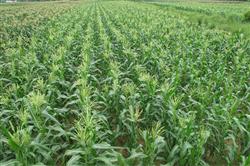
How can large-scale summer corn planting be made to increase yields?
How can large-scale summer corn planting be made to increase yields? Please explain the methods. To achieve a high yield when growing corn, you need to start with the following points: (1) Select good varieties according to local conditions. According to the planting purpose and production area, choose approved varieties, dominant varieties released by the government, and excellent varieties selected from local official demonstrations; ...
条件筛选