-
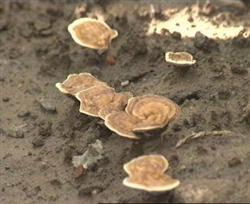
How to prevent and control physiological diseases of reishi mushroom? Detailed explanation of cultivation techniques
How to prevent and control physiological diseases of reishi mushroom? Please provide an introduction to the methods. Physiological diseases of reishi mushroom are caused by the action of abiotic factors, which often lead to disorders of physiological metabolism in reishi mushroom and thus cause disease. Symptoms: after the occurrence of physiological diseases, deformed reishi mushrooms grow, mycelium stops growing or grows poorly and shows shrinkage, and there is also excessive vegetative growth...
-
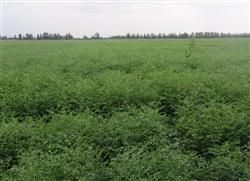
What Does Licorice Look Like? A Detailed Guide to Its Morphological Characteristics and Suitable Growing Environment
[Morphological Characteristics]Licorice (Glycyrrhiza) is a perennial herb, 30-100 cm tall. The entire plant is covered with short white pubescence and glandular hairs. The above-ground stem is upright, woody at the lower part, and the branchlets are angular and green. The leaves are alternate and odd-pinnately compound. There are 3-8 pairs of leaflets, ovate or ovate-elliptic, with entire margins, and the terminal leaflet is larger. The raceme...
-

Detailed Explanation of the Morphological Characteristics and Suitable Growing Environment of Pinellia ternata
[Morphological Characteristics] A perennial herb, 15-30 cm tall. The tuber is spherical or flattened-spherical. Leaves are basal, with long petioles; seedlings have a single leaf that is ovate-cordate, with a pointed tip and entire margin; from the 2nd and 3rd years onward, the leaves are trifoliolate compound leaves, elliptical to lanceolate. On the inner side of the lower part of the petiole, bulbils are produced, which can be used as propagation material. Monoecious; flowers are small and pale green. [Suitable Growing Environment] It prefers moisture and fears drought; it is averse to strong light; it is shade-tolerant and cold-tolerant, and the tubers can overwinter naturally. It is advisable to choose moist, fertile, deep, neutral sandy loam soil.
-
What kind of ecological environment does Codonopsis pilosula need to grow?
One-year-old Codonopsis pilosula seedlings are trailing and rarely flower. Plants more than two years old are twining and generally flower. During the growing period, it has strong adaptability to the environment. Wild Codonopsis pilosula is distributed vertically at altitudes of 1400-2100 m, growing in zones with half shade and half sun or on shady slopes, with a slope of about 15°-20°. Codonopsis pilosula is a deep-rooted plant, suitable for growing in deep, loose, well-drained sandy loam rich in humus. The soil pH should preferably be neutral or slightly acidic, generally with a pH value between 5.5 and 7.5. Codon
-
What are the biological characteristics of Codonopsis pilosula? A comprehensive guide
Codonopsis pilosula has strong adaptability and prefers a mild, cool climate. Its requirements for water, temperature, and sunlight differ at different growth stages. The suitable temperature for seed germination is 18-20°C. Seedlings prefer shade, while mature plants prefer light. It can tolerate high temperatures of 33°C and can also overwinter safely at -30°C. Root rot is prone to occur under poor drainage and high temperature and humidity conditions. Codonopsis pilosula is a deep-rooted plant, and the ideal soil pH is 6.5-7.0. It is not suitable for continuous cropping, and generally should be replanted after an interval of 3-4 years. The previous crop is best as legumes or grasses. Codonopsis
-
Detailed Explanation of the Morphological Characteristics and Suitable Growing Environment of Codonopsis pilosula
[Morphological characteristics] Codonopsis pilosula is a perennial herbaceous vine. The root is cylindrical, with a light gray surface layer and a chrysanthemum-heart pattern inside. The stem twines, and its cut surface exudes white milky sap; the stem is long and much branched, with short rough hairs on the lower part and smooth on the upper part. The leaves are opposite or alternate, stalked, with ovate or broadly ovate blades and entire margins. The flowers are borne singly in leaf axils or at the tips; the corolla is broadly bell-shaped, pale yellow-green, with pale purple spots, 5-lobed at the apex, with triangular lobes. The capsule is conical. The seeds are small, brown, and glossy. The flowering period is August to September, and the fruiting period is September to October.
-
What pharmacological effects does goji berry have? A detailed explanation in one article
Goji berry is a deciduous shrub, with a tree height of 1.5 m-2 m and a growth period of 35-50 years. It bears small eggplant-red or pale red flowers and produces bright red fruits the size of jujube pits. It is a rare and precious traditional Chinese medicinal herb and a fine tonic, with effects of tonifying, treating deficiency, anti-aging, protecting the liver, and promoting and regulating immune function. As a medicinal material, goji berry has a long history in China. In addition to the records in the Book of Songs, Su Dongpo of the Song Dynasty wrote in the poem "Xiaopu Goji": "Roots, stems, flowers, and fruits, nothing is discarded when gathered,"
-
A Detailed Guide to the Morphological Characteristics of Goji Berry and Its Suitable Growing Environment
[Morphological Characteristics] The goji berry (Lycium chinense) is a deciduous shrub, 1.5-2 m tall. The bark is grayish-white and smooth when young; dark brown with furrowed cracks when old. The crown is open and spreading, with slender branches that usually bend and droop at the tips and often become thorn-like. The leaves are alternate or clustered in groups of several, ovate-lanceolate or narrowly obovate, with entire margins. The flowers are solitary or clustered in the leaf axils, with pink or pale purplish-red corollas. The berry is elliptical or ovoid, turning red or orange-red when ripe. [Suitable Environment] It prefers a cool climate, likes light, and is cold-tolerant, drought-tolerant, and salt-alkali-tolerant, with strong adaptability. It does best in deep, fertile
-
Identification and Control Methods of Physiological Diseases of Reishi Mushroom
Due to the action of abiotic factors, the physiological metabolism of reishi mushroom is often disrupted, leading to disease. Symptoms After physiological diseases occur, deformed mushrooms grow, and the mycelium stops growing or grows poorly and shrinks, and excessive vegetative growth can also occur. Causes During cultivation, improper management leads to poor nutrition of the mushroom body; the temperature in the cultivation room is too high or too low, and ventilation is poor; the water content of the substrate is too high or too low, or the pH is unsuitable; lighting is inconsistent; the bed contains excessively concentrated harmful gases; pesticides and growth regulators are used improperly.
-
A Complete Analysis of the Chemical Components, Effects and Pharmacological Actions of Reishi Mushroom
Reishi mushroom [Ganoderma lucidum (Fr.) Karst] is a fungus of the genus Ganoderma in the class Basidiomycetes. Since ancient times it has been known as the "immortal herb" and "auspicious herb". It is a precious traditional Chinese medicine for strengthening the vital essence and consolidating the constitution, and for nourishing and invigorating the body. It has a long history of medicinal use in our country and extremely high medicinal value, and is regarded as a precious Chinese medicinal material and a treasure in the treasury of traditional Chinese medicine. In the Eastern Han dynasty, the (Shennong Bencao Jing) listed reishi mushroom as a top-grade substance, holding that "taken over a long time, it lightens the body, prevents aging, and prolongs life like an immortal." Modern medicine has proven that reishi mushroom contains a variety of physiological
条件筛选