-

Symptom Identification and Control Methods for Southern Blight in Impatiens
Southern blight in impatiens attacks the roots, stems and fruits of plants, causing damping-off, root rot, basal rot and fruit rot. This disease can also harm plants such as iris, orchids, peonies, peaches and plums. Symptoms: In the early stage of the disease, a brownish-black wet rot appears at the base of infected plants, later followed by white silky mycelium and the formation of sclerotia the size of rapeseeds. In the late stage of the disease, severely infected plants collapse with damping-off. Pathogen: The pathogen is Sclerotium rolfsii Sacc., belonging to the Deuteromycotina
-
How to prevent and control garlic leaf blight? These methods you need to master
Control measures for garlic leaf blight: 1) Promptly remove damaged leaves and flower stalks; 2) Strengthen field management, plant at a reasonable density, drain promptly after rain, and improve the host's disease resistance; 3) Starting at the early stage of the disease, spray 75% chlorothalonil wettable powder at 600 times dilution, or 50% iprodione wettable powder at 1500 times dilution, 64% oxadixyl-mancozeb wettable powder at 500 times dilution, 50% copper sulfate-ammonium salt wettable powder at 500 times dilution, 60% fosetyl-aluminum wettable powder at 500 times dilution, 14% copper ammonia complex aqueous solution at 300 times dilution, 1:1
-
What are the control techniques for azalea leaf blight
1. Main symptoms: It occurs on the leaves, mostly at the leaf tips. In the early stage, the lesions are chlorotic yellow spots, and the lesions spread from the edges inward, taking an irregular shape; in the later stage, the lesions are yellowish-brown, and in severe cases the diseased leaves dry up. 2. Causes of the disease: It is a fungal disease. The pathogen survives on diseased plant debris and spreads through watering, insects, human activities, etc. In indoor environments, it can occur year-round, and high temperature, dryness, and poor ventilation easily trigger the disease. Plants that are weak in growth or affected by pests (especially aphids, scale insects, and whiteflies)
-
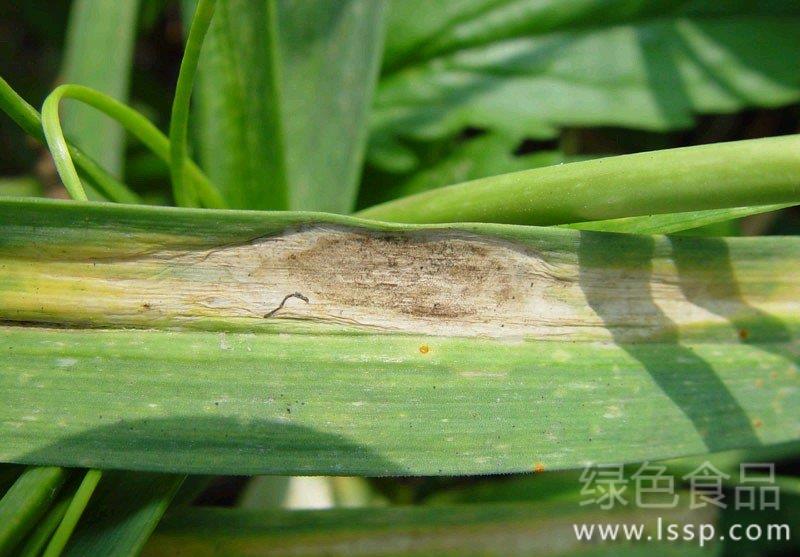
Garlic leaves turning from green to brown and yellow: master the control methods for garlic leaf blight
Garlic leaves turning from green to brown and yellow: control methods for garlic leaf blight
-
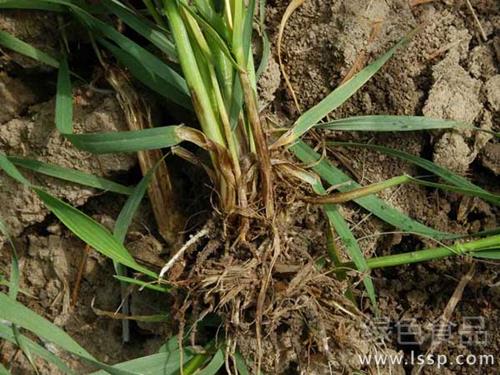
How to prevent and control wheat root rot? Identification of symptoms of root rot, stem blight and yellow leaves, and medication
How to prevent and control wheat root rot when roots rot, stems wither and leaves turn yellow
-
Identification and Control Methods of Cotton Stem Blight
Symptoms The disease occurs more severely in the Northeast cotton region, the Yellow River basin and the Yangtze River basin, and the cotton regions along the rivers and coast. Cotton can be affected throughout the entire growth period, with the seedling stage and bud stage suffering the most severe damage. When cotyledons and true leaves are infected, small round spots initially appear with purplish-red edges and grayish-white centers, after which the lesions expand or merge into irregular-shaped lesions. Some lesions develop concentric rings in the center, scattered with small black granules, which are the pathogen's pycnidia. The diseased parts often break apart and fall off. Under high humidity, water-soaked lesions appear on young tender leaves, then spread rapidly as if scalded by boiling water,
-
Introduction to Yulan magnolia light-skinned Chinese quince and its cultivar characteristics
Yulan magnolia light-skinned Chinese quince. The fruit is oblong-oval with a few ridge-like protrusions. The peel is yellow-green during the growing period and turns yellow after ripening; the skin is thick, smooth, covered with a waxy layer, and bears relatively abundant bloom. The flesh is yellow-white, moderately juicy, with a high juice yield and a relatively strong fragrance. The single fruit weighs 500-1000 g, with the largest reaching 2100 g. The fruit ripens from late September to early October and stores well, keeping until February to March of the following year. The tree vigor is moderate, the tree posture is semi-spreading, the budbreak rate is relatively high, the branching ability is relatively strong, and the latent buds are long-lived; it has the habit of bearing fruit on axillary flower buds, mainly on relatively thick short fruiting branches and very short fruiting branches. It does not drop fruit before harvest and is early-bearing, high-yielding, and consistently productive.
-
Symptom Identification and Control Methods for Ginger Leaf Blight
[Pathogen scientific name] Septoria zingiberis [Host crop] Ginger. [Disease diagnosis] It affects the leaves. When the leaves become diseased, small water-soaked spots appear at first, and after gradually expanding, the lesions become nearly fusiform, light brown, with a grayish-white center; later the lesions extend upward and downward into long streaks. Many small black dots are scattered on the lesions. In severe cases, the lesions may split longitudinally, and the leaves die. The pathogenic fungus is Septoria zingiberis. The pycnidia are superficial or borne on both sides of the leaf, spherical or subspherical, dark brown, and contain
-
What to do when cotton develops red leaf blight during the boll-setting stage
Control measures for cotton red leaf blight: 1. Apply fertilizer reasonably, and skillfully apply the cotton topping fertilizer; nitrogen, phosphorus and potassium should be applied together or foliar fertilizer should be applied. 2. Strengthen field management, cultivate frequently, improve root respiration conditions, promote root development, prune and remove side branches in time, remove old leaves and control pests and diseases. 3. Spray for protection, using 70% mancozeb or 75% chlorothalonil 600-800 times solution or 70% thiophanate-methyl 800-1000 times solution plus foliar fertilizer (potassium dihydrogen phosphate, Lvzhiyuan, etc.) for spraying, once every 5-
-
Occurrence Patterns and Control Methods of Cotton Red Leaf and Stem Blight
Disease symptoms and occurrence patterns: Cotton red leaf and stem blight is an explosive disease that frequently occurs in the middle and late stages of cotton growth. It can cause leaves to turn red from bottom to top until they drop off. The leaf veins remain green, the leaf mesophyll turns red, and the leaves become thicker, brittle, and wilted before finally dropping. When the stem is cut open, it does not change color, which distinguishes it from cotton Fusarium and Verticillium wilt. Generally, in old cotton-growing areas, the disease is more severe in cotton fields with continuous cropping year after year, sandy soil, too shallow a plow layer, or insufficient fertilizer lacking potassium fertilizer. Drought in the middle and late stages, along with severe potassium and zinc deficiency in the soil, can also easily accelerate the occurrence of this disease.
条件筛选