-

What are the control methods for spruce red blight?
In recent years, with the increase in the number of spruce plantings, spruce red blight has become severe, reaching up to 50% in some dense forest belts, seriously weakening tree vigor and even causing tree death. The disease develops rapidly, spreading from the lower part of the tree to the upper part, from the outer edge of the crown inward, and from the base of the compound leaves to the tip. In as many as 10 days, or as few as 1 week, the entire tree's leaves can turn yellow and then fall off. The disease is caused by fungi. When temperature changes abruptly and humidity increases, the tree shows symptoms. Diseased leaves first develop small brown spots, which later expand and turn dark brown; when wet from rain, the lesions produce
-
What are the symptoms of Metasequoia red blight?
The symptoms of Metasequoia red blight are: the disease generally starts on the lower branches and leaves of the dawn redwood (Metasequoia glyptostroboides) first, then gradually spreads upward, eventually causing the whole plant to die. On infected branches and leaves, small brown spots appear initially, later expanding into dark brown patches, after which the small twigs and dead branches turn brown and die. The disease can also spread to green twigs, forming sunken brown canker spots; if these encircle the main stem, the upper part dies; if they do not encircle the main stem, they still fail to heal over a long period, and as the main stem grows, the canker site sinks deep into the trunk, forming furrow rot, and irregular grooves develop at the base of young trees, resulting in deformity. Under humid conditions, the lesions
-
Detailed Explanation of High-Light-Efficiency Tree Shape Renovation Techniques for Kernel Apricot
In regions where kernel apricots are cultivated, we found that due to the influence of traditional habits, most fruit growers either do not prune or prune unreasonably. Each tree has an average of 8 to 10 large branches, the tree shape is chaotic, the proportion of complete flowers is low, the fruiting zone moves outward, the canopy is closed and shaded, and the small fruit-bearing branches in the lower part die prematurely due to shading, resulting in late fruiting, low yield and poor quality of kernel apricots. Therefore, high-light-efficiency tree shape renovation must be carried out to improve quality and efficiency. High-light-efficiency tree structure for kernel apricots After several years of exploration and practice, we believe that the high-light-efficiency tree shape for apricot should be
-
Analysis of the Reasons Why Pepper Phytophthora Blight Is Never Cured
In Dongyi Village, Daotian Town, Shouguang City, a fairly wide variety of crops is grown, with tomatoes, peppers and cucumbers each showing their strengths. Old Wang in the village got a taste of success from growing peppers last year, so this year he planted peppers again. But recently, Old Wang has not been able to "taste the sweetness." Why? The peppers he planted showed symptoms of wilting, and this frightened him badly. "Peppers are most afraid of phytophthora blight; if it is not handled well, most of the plants in this greenhouse could be lost," said Old Wang. What puzzled Old Wang most was that he had done no small amount of disease prevention work in the early stage, right? He chose disease-resistant
-
How is non-polluting control of pepper Phytophthora blight carried out?
I. Field damage symptoms The peak incidence of Phytophthora blight in sweet (hot) peppers grown in open fields is from mid-July to the end of August. It is a fungal disease, and the incidence rate in vegetable fields is above 85%. The pathogen has a short incubation period, infects quickly, and spreads rapidly. In mild cases, yield is reduced by 30%; in severe cases, large areas of plants die, with a plant death rate of 20%-80%, or even total crop loss, causing devastating disaster. Symptoms: In affected areas there are obvious primary infected plants. In the early stage of the disease, plants wilt, while leaves and fruits do not drop and do not change color. Upon careful observation, it can be found that the plant
-
Key Technical Points and Methods for Light Pruning of Tea Plants
Light pruning is a shaping and pruning operation carried out on the basis of formative pruning, with the aim of continuing to develop the tea plant canopy and the plucking surface. The cutting position is generally raised 4-8 cm above the previous year's cut. For spring tea harvested with leaves retained, keep the spring shoots and cut off the summer and autumn shoots. For spring tea harvested without leaves retained while summer tea is harvested with leaves retained, cut off the shoot position above the true leaves retained from the summer and autumn shoots. If both spring and summer tea are harvested with leaves retained, pruning should be based on the net increase in height of the canopy surface, and the stubble left should not be too high. Light pruning is done with horizontal shears in a single pass to cut level, and the cuts should be smooth. Light pruning is best carried out in late autumn or
-
Moderate to slightly light occurrence of the second generation of rice stem borers in Suijiang County in 2007
Rice stem borers in our county include the yellow stem borer (Scirpophaga incertulas), the striped stem borer (Chilo suppressalis), and the giant stem borer (Sesamia inferens). In the riverside area, 3 generations occur per year; in the mid-mountain area, 2 generations occur per year. At present, the first generation in the riverside area has ended, and the second generation is beginning to occur successively. According to observations at our station's Fengchi pest and disease monitoring point, this year's second-generation moth flight began on June 10, 1 day earlier than last year and 2 days later than normal years, with the peak day on June 18, 1 day later than last year and 8 days earlier than the historical average; by June 25, a cumulative total of 234 moths had been trapped, with the yellow stem borer, striped stem borer, and giant stem borer accounting for 94.9
-
Identification and Control Methods of Southern Blight in Japanese Euonymus
Southern blight in Japanese euonymus is caused by a fungus and is characterized by being highly destructive and spreading rapidly. If not controlled properly, it can cause the death of all seedlings. Based on past work, we have summarized the characteristics and control methods of southern blight in Japanese euonymus. Symptoms: In the early stage of the disease, the stem or leaf base near the soil turns brown and rots. After a few days of sun exposure, white silky mycelium appears on the diseased parts and soil surface, spreading radially through the rhizosphere soil. Later, brown, rapeseed-shaped small sclerotia grow on the stem near the soil surface, often causing the death of the entire plant.
-
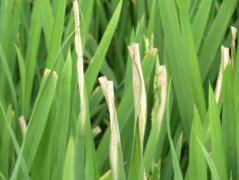
Success in Controlling Rice Bacterial Leaf Blight: Xingda Releases 2 Disease-Resistant Rice Varieties
Rice bacterial leaf blight, be gone! Xingda releases 2 disease-resistant rice varieties. Do you know which two rice varieties they are? Let's take a look. When farmers grow rice, what they fear most is encountering bacterial leaf blight, rice blast and sheath blight. The appearance of these diseases means reduced yields and affected rice qual
-
How to Grow Fagraea ceilanica? A Detailed Guide to Light, Water, Fertilizer, Propagation, and Pest and Disease Control
Fagraea ceilanica has dense branches and lush, glossy dark green leaves, making it an excellent indoor foliage plant. This article introduces cultivation and management methods for Fagraea ceilanica, covering light and humidity adjustment, watering, fertilizing and pruning, cutting propagation, and the control of anthracnose, sunscald, thrips, and other pests and diseases.
条件筛选