-
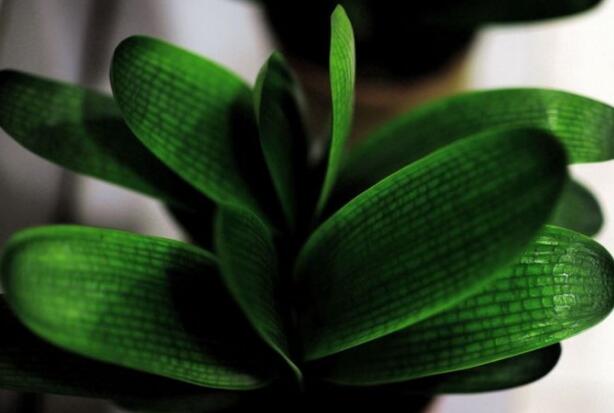
How to grow Clivia leaves so they are glossy: sufficient light, suitable temperature / wipe the leaves with clean water
Clivia, an ornamental flowering plant, kept at home not only beautifies the environment, but looking at its emerald green leaves when you get up in the morning is also very refreshing and pleasing to the eye. Because the Clivia flowering period is short, 6 parts of its beauty is shown in the leaves, so to make Clivia highly ornamental, making its leaves glossy is very important
-
Is oleander poisonous? Just how strong is its toxicity?
Is oleander poisonous? Poisoning occurs from accidentally eating oleander leaves or stems. The leaves of oleander are used clinically as a cardiac stimulant to treat heart disease. It is also an abortifacient; using its leaves as a decoction and giving it to pregnant women to drink can cause strong uterine contractions, is harmful to the fetus, and can trigger miscarriage.
-
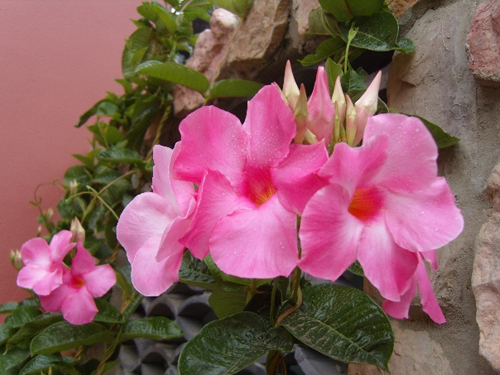
How to grow Mandevilla (also known as Dipladenia, red mandevilla, and Chilean jasmine)
Mandevilla (Dipladenia, red mandevilla, Chilean jasmine) Scientific name: mandevillasanderi Aliases: red wrinkled vine, double gland vine, Dipladenia, red mandevilla, Chilean jasmine Family and genus: Apocynaceae Morphological characteristics: perennial evergreen vine, with slender rhizomes. Leaves opposite, long ovate, apex acute, leathery
-

Can the fat-to-lean ratio of pigs be regulated? The answer is yes.
After nearly ten years of scientific and technological research, scientists in China have discovered the mechanism of differentiation and regulation of pork fat cells, achieving a major breakthrough in research on using biotechnology to control the fat content of pork. The study adopted a variety of techniques such as cell biology and molecular biology to measure and analyze the growth and development of fat cells, adipose tissue metabolism and related genes among different pig breeds, and obtained a series of research results. This major achievement recently passed the appraisal organized by the Ministry of Education.
-
Cleaner Shrimp
Scientific name: Lysmata amboinensis Origin: Pacific Ocean Water temperature: 20-26°C Food: Omnivorous Temperament: Peaceful Suitability for soft coral tank: Suitable Body length: 6cm Keeping difficulty: Easy A shrimp known for cleaning parasites off the body surfaces of fish. Even if you just put your hand into the tank, they will come over and skillfully clean with their tiny scissors. These shrimp also
-
Do rabbit droppings need to be cleaned up every day? A detailed explanation of rabbit dropping cleaning frequency
Teacher Xu Shangjin, a rabbit-raising expert from Heilongjiang, China, said he discovered that rabbit droppings have a thin film on the outside, and about ten minutes after the droppings fall onto the dropping board, this thin film dries up. If you do not break it, the droppings do not smell or give off odor! If you insist on a system of cleaning the droppings once every day, it will inevitably cause the dropping pellets to break and release foul and unusual odors. In addition, it also shows that cleaning droppings inside the rabbit house every day will inevitably affect the rabbits' rest. If rabbits do not rest well, they will not grow well. Therefore, cleaning droppings every day is not recommended, and at the same time it is strictly forbidden to
-
How to prevent and control pests and diseases of oleander? A detailed guide to practical methods
1. After aphids are found, spray the plants with a 40% dichlorvos emulsion at 800 times dilution, or with water in which cigarette butts have been soaked; when there are only a few, they can also be brushed off. For other control methods, refer to the pest and disease control section for Chinese rose and scarlet sage. 2. Scale insects damage the branches and leaves. Control method: spray the plants with Jiesha at 2000 times dilution. For other control methods, refer to pest and disease control for crape myrtle. 3. Black spot disease This disease occurs easily under high temperature and high humidity and damages the leaves. After it appears, spray with 50% carbendazim at 500 times dilution or thiophanate-methyl at 600 times dilution. For other control methods
-
The aliases of oleander are willow-leaf peach and half-year red.
Aliases: willow-leaf peach, half-year red. Family and genus: belongs to the Apocynaceae family, Nerium genus. Origin: native to Iran, now widely planted in tropical and subtropical regions; cultivated in all provinces and regions of our country. Morphological characteristics: evergreen large shrub, up to 5 m tall, containing sap, hairless. Leaves in whorls of 3-4, opposite on the lower part of the branches, narrowly lanceolate, 11-15 cm long, 2-2.5 cm wide, light green beneath; lateral veins flat, densely arranged and parallel. Cymes terminal; calyx upright; corolla dark red, fragrant, double-petaled.
-
What kind of plant is the yellow oleander?
Name: Yellow oleander | Aliases: Cup of gold flower | Gout plant | Latin name: Thevetia peruviana Schum | Family: Apocynaceae | Genus: Thevetia | Origin and distribution: Tropical America | Morphological characteristics: Evergreen small tree, 2-5 m tall, with milky sap in the plant body. Flowering period from summer to winter. | Growth habits: Sun-loving, prefers high-temperature and humid climates, strong vitality, moisture-tolerant, shade-tolerant, wind-resistant, resistant to air pollution. | Propagation and cultivation: Propagated by sowing or cuttings; seeds must be sown immediately after collection. When seedlings are 1
-
How to tell yellow oleander (Allamanda) and yellow oleander (Thevetia) apart?
Allamanda neriifolia and Thevetia peruviana belong respectively to the genera Allamanda and Thevetia in the family Apocynaceae. The two are similar in form and are often confused. Here they are distinguished from three aspects: leaves, flowers and fruit. Leaves: Allamanda neriifolia has leaves in whorls of 3 to 5, elliptical or ovate-oblong, 6 to 12 cm long, with acuminate tips and cuneate bases; Thevetia peruviana has alternate leaves, linear-lanceolate, 10 to 15 cm long, long-tapered at both ends, flowering from
条件筛选