-

Detailed Monthly Management and Care Methods for Oleander Throughout the Year
Family and genus: Apocynaceae, Nerium. Scientific name: Neriumindicum. Aliases: willow-leaf peach, half-year red. Habits: Oleander is native to Iran, India and Afghanistan. It is an evergreen shrub or small tree and prefers a warm, humid climate. It has a certain degree of cold tolerance and can overwinter outdoors in warm temperate regions; in the Beijing area it can overwinter in a sheltered, sunny spot in a courtyard. It is vigorous and highly resistant to smoke, dust and toxic gases. It prefers a sunny, well-lit environment. It likes fertilizer and is afraid of waterlogging. It has strong adaptability to soil and can tolerate
-
A Detailed Guide to Oleander Propagation Methods and Key Management Points
Propagation Methods Oleander can be propagated by three methods: cuttings, division, and layering, among which cuttings are the most commonly used propagation method. Cuttings can be taken in both spring and summer. If, before planting, the base of the cutting is soaked in clear water for 7 to 10 days, keeping the soaking water fresh, roots can form earlier after planting and the survival rate increases. The specific method is: take 1- to 2-year-old branches cut in spring, cut them into stem segments 15 cm to 20 cm long, tie about 20 of them into a bundle, and soak them in clear water with the submerged depth being 1/3 of the stem segment, changing the water at the same temperature once every 1 to 2 days, keeping the temperature at 20°C to
-
Symptom Characteristics, Causes, and Control Methods of Oleander Witches' Broom
The oleander witches' broom pathogen mainly attacks oleander branches. The disease initially occurs mostly on individual branches, showing mass sprouting of axillary buds and adventitious buds, with many slender weak branchlets growing in clusters, stagnation of main shoot growth, shortened internodes of branchlets, and smaller leaves with indistinct mosaic patterns. Infected branchlets can produce further branchlets, and the bases of newly sprouted branchlets are swollen, pale red, and often clustered in groups. The branchlets become increasingly slender and weak, and the leaves become increasingly smaller, resembling a bird's nest in appearance, forming the typical witches' broom symptom. Most affected branchlets stand upright, and the branches have tumor-like growths. The cortex rots and peels off in strips, forming cankers,
-
Detailed Guide to Spring Cuttage Propagation Techniques for Oleander
Oleander (Nerium oleander) has leaves like bamboo and flowers like peach blossoms, with a very long flowering period that can last from mid-April to mid-September. When in bloom, it is a mass of gorgeous flowers with dense green foliage, and in winter it braves frost and snow, giving it high ornamental value as an excellent landscaping tree species. At the same time, it has strong resistance to sulfur dioxide, making it an ideal plant for factory landscaping. Oleander is relatively easy to propagate and can be propagated by layering, division, cuttage and other methods. Propagation by layering and division is limited by the number of mother plants and is not suitable for mass propagation. Using the spring field cuttage method,
-
Detailed Explanation of the Key Technical Points for Cleaning and Disinfecting Soft-shelled Turtle Ponds
After 8 to 10 months of greenhouse culture of soft-shelled turtles, the indoor turtle ponds have accumulated various pathogenic organisms as well as organic residues such as leftover bait and feces, so cleaning and disinfecting the turtle ponds is extremely important. The sand in the ponds is best replaced; ponds where it cannot be replaced, or ponds without sand, should also be repeatedly rinsed and disinfected. About 10 days before use, release water to a depth of about 10 cm, and broadcast quicklime, strong chlorine powder, or chlorine dioxide over the entire pond to kill pathogens. For old greenhouses that have been used for many years of culture, it is best to also carry out spatial disinfection to prevent pathogens from spreading through the air. Specifically, solid formaldehyde (4 to 5 grams per cubic meter) can be used, placed
-
There's an art to cleaning and cooking fish, and these tips are worth learning
After soaking fish in water with a few drops of vinegar added, the scales come off easily. In a container of cold water, scrape the scales with both hands underwater, and the scales won't fly everywhere. Sea bass must have the gills removed, otherwise the fish soup tastes bitter. Some fish have slime, which can be scrubbed off with table salt and then rinsed with cold water. If you accidentally puncture the gallbladder when gutting the fish, rub salt on the spot where the bile is, then wash with cold water; hot water must not be used. To remove the strong odor of flounder, tear off the dark
-
Is it really necessary to clean rabbit droppings once every day?
Teacher Xu Shangjin, a skilled rabbit raiser in Heilongjiang, said that he found that rabbit droppings have a thin film on the outside. About ten minutes after the droppings fall onto the dropping board, this thin film dries, and if it is not broken, the droppings do not smell or give off odor! If the system of cleaning droppings once every day is insisted on, it will inevitably cause the droppings to break and give off a foul smell and odor. In addition, it also shows that cleaning droppings in the rabbit house every day will inevitably affect the rest of the rabbit herd. If the rabbits do not rest well, they will not grow well. Therefore, cleaning droppings every day is not recommended, and at the same time, washing the rabbit house with water every day is strictly prohibited. Practice has proved that some large
-
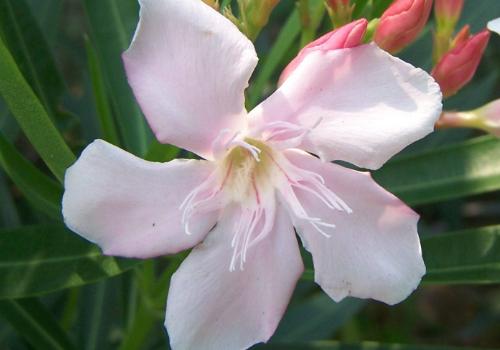
Oleander Planting Methods and Pest and Disease Control Tips
Oleander is a flowering plant that loves fertilizer and water, and prefers neutral or slightly acidic soil. So how do you grow oleander? How do you control oleander pests and diseases? How to grow oleander: Pruning. The upper branches of oleander have a characteristic of splitting from one into three. You can prune and shape it as needed. If you want a three-fork nine-top shape, you can cut off a portion from the top of the three forks.
-
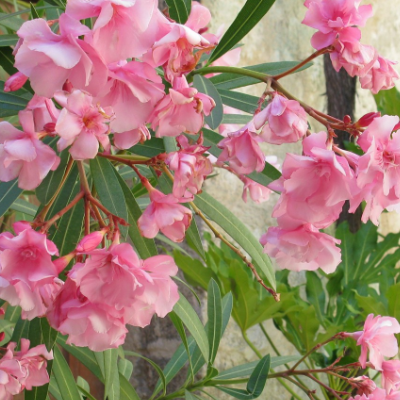
How much oleander is fatal if eaten, and how long after poisoning does it cause death?
Oleander is a plant that is super gorgeous when in bloom, so beautiful you can hardly stand it. How long after oleander poisoning does it cause death? How much oleander is fatal if eaten? How long after oleander poisoning does it cause death: it depends on the specific situation. As the saying goes: talking about toxicity without considering dosage is just playing hooligan.
-
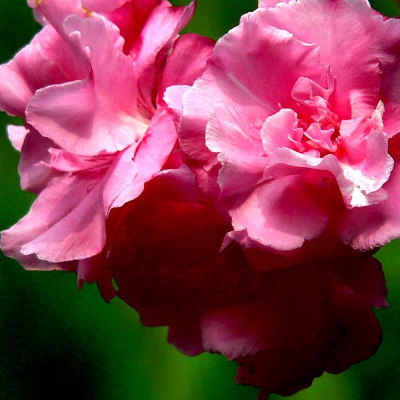
Is the scent of oleander poisonous, and will you die if you drink water soaked with it?
Oleander is something many people absolutely love to grow; it blooms with red flowers that are extremely showy. Is the scent of oleander poisonous? Will you die if you drink water soaked with oleander: Is the scent of oleander poisonous: The scent of oleander does no harm to the human body; oleander's toxin is mainly the oleandrin inside it
条件筛选