-

Vegetable farmers now have a protective umbrella against market risks
Green leafy vegetables are an essential dish on the tables of Shanghai residents. Ensuring a stable and balanced supply of locally grown vegetables, mainly green leafy vegetables, is an important part of the practical work done for the people by relevant government departments and insurance companies. Shanghai began exploring cost-and-price insurance for green leafy vegetables in 2006
-
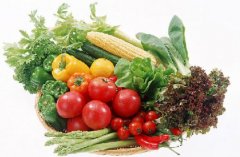
What are the reasons for the excessively high nitrate content in leafy vegetables and root vegetables?
Pesticide residues in vegetables and fruits have always been a concern for everyone, so what are the reasons for pesticide residues in vegetables and fruits? The problem of pesticide residues in vegetables and fruits is generally serious. Chen Shixiong, head of the Department of Agronomy at Chung Hsing University, pointed out that leafy vegetables are the crops most prone to nitrate residue. If you want to eat bok choy
-
What are the control methods for leafy vegetable diseases?
Leafy vegetables are an essential source of vitamins in daily life, and many people grow them, so how are leafy vegetable diseases treated? There are many kinds of leafy vegetable diseases, such as anthracnose, downy mildew, black spot, and so on, and the control methods for different diseases are not exactly the same; targeted
-
Is rapeseed the same as leaf lettuce? A detailed explanation of the differences between the two
There are many green leafy vegetables now. Besides bok choy and napa cabbage, people often can't tell the others apart or name them. So, is rapeseed the same as leaf lettuce? Let's take a look! 1. Is rapeseed the same as leaf lettuce? Rapeseed is leaf lettuce, and it can also be called yamai cai.
-
Are juk-ip choi and water spinach the same vegetable?
Juk-ip choi, also known as Asiatic dayflower or bamboo-node vegetable, grows in shady, damp fields. Its leaves resemble bamboo leaves, and in summer it blooms with moth-shaped flowers. The whole plant is used in medicine and is harvested when in flower. So, is juk-ip choi water spinach? 1. Is juk-ip choi water spinach? Juk-ip choi is water spinach; it originates
-
Are celtuce and leafy lettuce the same vegetable?
Celtuce and leafy lettuce look very similar in appearance and have quite similar tastes, so is celtuce the same as leafy lettuce? Let's take a look below. 1. Is celtuce the same as leafy lettuce? Celtuce is not leafy lettuce. The main edible part of leafy lettuce is the leaves, while celtuce
-
Planting Methods and Technical Points for Leaf-Vegetable Sweet Potato Leaves
Abstract Leaf-vegetable sweet potato leaves can be grown with a trellis; during the growing period, an appropriate amount of organic fertilizer is needed; in summer, water daily and shade with a black shade net; when the tender shoots grow to 5-6 leaves, harvest them promptly for eating; after 2-3 consecutive harvests, apply a top dressing; if
-
When is the most suitable time to plant leaf lettuce?
Every vegetable has its own unique growth pattern. Take Chinese cabbage, for example: most of it is planted in autumn and winter and harvested in winter and spring, while water spinach, amaranth and the like are planted in late spring and harvested in summer and autumn. Leaf lettuce is also a kind of vegetable. So what exactly is its growth pattern? ⟦4 <p>Every vegetable has its own unique growth pattern. Take Chinese cabbage, for example: most of it is planted in autumn and winter and harvested in winter and spring, while water spinach, amaranth and the like are planted in late spring and harvested in summer and autumn. Leaf lettuce is also a kind of vegetable. So what exactly is its growth pattern?</p><p><strong></strong></p><p><strong>Planting time for leaf lettuce</strong></p><p>Leaf lettuce is generally sown in August-September, but with the development of greenhouse technology, it can now be planted all year round.</p><p></p><p><strong>Seedling-raising techniques for leaf lettuce</strong></p><p>1. Seed treatment: To raise leaf lettuce seedlings, the seeds need to be soaked to promote germination. Wrap the seeds in gauze and soak them in cool water for about 1 hour, then take them out and place them at 15-20℃ or in a household refrigerator's cold storage compartment for 2-3 days. Once the seeds show white sprouts, they can be sown.</p><p>2. Seedbed preparation: Choose a seedbed plot where the previous crop was not treated with long-residual herbicides such as imazethapyr or thifensulfuron-methyl, with high, dry terrain and strong water- and fertilizer-retention capacity. Apply plenty of organic fertilizer. For each mu of cultivation field, use 15-20 sq m of seedbed.</p><p>3. Timely sowing: At sowing time, mix an appropriate amount of fine sand with the seeds to separate them, then broadcast them to raise seedlings. Do not sow too densely, to prevent the seedlings from becoming leggy. Cover the seeds with 0.5 cm of medicinal soil mixed with phoxim, and set up a shed for sun protection and rain protection.</p><p>4. Seedling-stage management: When the leaf lettuce seedlings grow two true leaves, divide the seedlings, with a transplanting density of 6×6 cm. The leaf lettuce seedbed should be kept moist, and shade should be provided at noon. At the same time, during the seedling stage, leaf lettuce requires attention to pest and disease control.</p><p><strong></strong></p><p><strong>Field management techniques for leaf lettuce</strong></p><p>Leaf lettuce is generally cultivated in flat beds. Leaf lettuce can be planted out once it has 5-6 true leaves, with a row spacing and plant spacing of about 20 cm. Before planting out, deep-plow and apply sufficient base fertilizer. Generally, apply 3000 kg of decomposed barnyard manure per mu, 80-100 kg of ammonium bicarbonate, with 2 m including the ditch, deep ditches and high beds. Plant out at the 4-5 leaf stage, with strong seedlings, at a row spacing and plant spacing of 10-15 cm, cultivated in flat beds. For spring sowing and open-field transplanting, apply sufficient decomposed barnyard manure, and apply 80 kg of ammonium bicarbonate per mu.</p><p>After planting out, water thoroughly to settle the roots. In case of drought, promote growth with fertilizer and water, and it can be marketed in 25-30 days, with a yield of 1800-2000 kg per mu. Autumn sowing in July-September coincides with the high-temperature and dry season, and there are often rainstorms. After transplanting, water thoroughly to establish the plants, and cover with shade netting for 5-7 days. After the plants are established, if there is cloudy and rainy weather, the shade netting can be removed. Moderate fertilizer and water are conducive to the normal growth of leaf lettuce, and it can be marketed in 20-30 days, with a general yield of 1600-1800 kg per mu. For autumn-winter sowing in October-November, transplant in the open field. If a cold wave hits in December, it needs to be transplanted into a greenhouse, and it can be marketed in 25-30 days, with a yield of about 1500 kg per mu. Before planting out, apply sufficient base fertilizer. For every 667 mz, apply 5000 kg of high-quality barnyard manure, 40 kg of diammonium phosphate, 20 kg of urea, 20 kg of potassium sulfate, or 200—300 kg of plant ash, and make beds 1.5 m including the ditch.</p><p></p><p>When planting out, water well with the planting water. After 1 week, water thoroughly to help the seedlings recover. After recovery, apply a seedling-promoting fertilizer together with watering (15 kg of urea). In the later stage, apply a heavy plant-promoting fertilizer (30 kg of urea). After planting out and recovery, carry out timely intertillage and deep hoeing to help the plants stay compact and promote root development. Throughout the entire growth and development period, keep the field moist and the soil loose. The management method after planting out is basically the same as that for celtuce, and fertilizer and water management must be strengthened. It is necessary both to maintain sufficient moisture and to prevent waterlogging damage caused by excessive moisture, while also doing a good job of pest and disease control.</p><p></p><p><strong>Harvesting and storage of leaf lettuce</strong></p><p>Harvest. After planting out, depending on various conditions, it can be harvested in about 30-50 days, and in winter it takes a little longer. For harvesting, in summer it should be done in the morning, and in winter in a greenhouse it should be done in the evening. A knife can be used to cut the plant close to the ground. Remove yellow leaves and diseased leaves, then tie them into bundles or put them in baskets for sale. If long-distance transport is required, precooling is also necessary, or ice cubes can be placed in the packing boxes (frost damage is likely to occur around the ice cubes).</p><p>Storage The suitable storage temperature for leaf lettuce is 0℃, and the suitable relative humidity is above 95%. For storage or transport, the quality of the leaf lettuce must be high, the leaves should not be too tender, and the moisture content should be low. When harvesting, handle gently, harvest gently and place gently, to avoid mechanical damage.</p><p></p><p>In today's era of highly advanced technology, leaf lettuce can be planted all year round, but like all vegetables, vegetables grown in accordance with the laws of nature always taste better than those grown by breaking the rules. So, if it is for your own consumption, then do the appropriate things in the appropriate season!</p>
-
A Detailed Guide to Year-Round Cultivation and Management Techniques for Leaf Lettuce (Youmai Cai)
In recent years a new face has appeared on the vegetable market - youmai cai (leaf lettuce): it looks similar to celtuce, with slender, flat-spreading leaves and a thin, short stem. Youmai cai belongs to a variety of leaf lettuce - long-leaf lettuce, and is similar to the familiar lettuce (shengcai), so it is also called niuli lettuce. Youmai
-
Key Technical Points for Cultivating Leafy Goji (Vegetable Goji)
Goji (Lycium) is a perennial small shrub of the genus Lycium in the nightshade family (Solanaceae), distributed throughout the country. The plant is light-loving, cold- and heat-tolerant, drought-tolerant and intolerant of wet conditions. Its suitable growing temperature is 15-20°C; growth is slow at 10°C, and poor above 25°C. At present, in northern regions of China such as Ningxia
条件筛选