-

Latest Key Points of High-Quality Apple Cultivation Techniques
1. Improve the variety structure. Introduce varieties such as Yanfu, Royal Gala, and Sasha for promotion, gradually replacing old, mixed, and inferior varieties. Changfu and Qiufu should also be replaced with superior Fuji lines. New apple orchards should all adopt new varieties and new rootstocks. 2. Rational close planting,
-
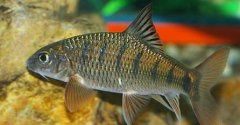
Latest Farming Techniques and Environmental Conditions for Freshwater Grouper
Freshwater grouper is rich in nutritional value and is a very special fish; it is not only economically valuable but also has ornamental value, and its farming scale is growing larger and larger, gradually becoming a new freshwater aquaculture species. Freshwater grouper is a tropical fish, generally growing in freshwater
-
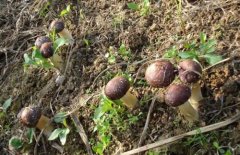
The Latest Cultivation Techniques, Formulas and Planting Times for Wine Cap Stropharia (Stropharia rugosoannulata): A Detailed Guide
Do you know how to grow wine cap stropharia? Would you like to grow it yourself? Below we introduce a simple yet high-yielding cultivation method. Let's take a look. 1. Substrate preparation: rice straw 100%, plus wheat bran or rice bran 10%, cornmeal 5%, gypsum powder 2%,
-
What is the latest price of four-season lemon saplings? A detailed guide to growing techniques
The biggest difference between the four-season lemon and the common lemon is the appearance color: the latter's fruit turns golden yellow when ripe, while the former's remains green, and its price is relatively higher. So what is the price of four-season lemon saplings now? What are its growing techniques? 1. Current four
-
What Is the Latest Price of Wild Rice Stem per Jin? A Full Analysis of Key Planting Techniques
Wild rice stem is also called gourd bamboo shoot or gourd rice, and it is a delicious vegetable with a certain nutritional value. In addition, the whole wild rice stem plant is also a wintering site for fish, an excellent feed, and a plant that consolidates land and builds land. So how much is the price of wild rice stem per jin now? What are the key planting techniques?
-
When Is the Latest Month to Plant Open-Field Melons? Plus Cultivation Techniques
Melons are very common in daily life, and for most people this fruit is not only delicious but also rich in nutrients, suitable for many groups of people to eat. At present, melons sell very well on the market, so many people have set their sights on this business opportunity and even treat it as
-
Detailed Explanation of the Latest Key Points on Plum Cultivation Techniques
Plums taste sweet and sour, and the flavor is quite good, so many people on the market like to eat plums. But if you want to increase plum yields, there are still many things to pay attention to. Let's take a look together with the editor below, and we hope it will be helpful to fruit growers.
-
Detailed Explanation of the Latest Cultivation and Management Techniques for Ostericum sieboldii
I. Open-field Cultivation 1. Land preparation. Choose flat, well-drained sandy loam soil with a deep, moist layer and high organic matter content. Apply 30000-45000 kg of base fertilizer per hectare and 225 kg of NPK compound fertilizer. Plow 20-30 cm deep, harrow level, and make flat beds 10-15 m long and 1 m wide
-
Detailed Explanation of the Latest Key Potato Cultivation Techniques
Soil preparation and pre-sowing: For planting, fertile sandy loam and loam soil should be chosen. After the previous crop is harvested, promptly clear the stubble and plow, with a plowing depth of about 30em, and in combination with land preparation, generally apply about 5000 kg of organic fertilizer per mu, 25--50 kg of phosphate fertilizer or 50 kg of diammonium phosphate. Before sowing,
-
Detailed Explanation of the Latest Scientific Cultivation Techniques for Greenhouse Chili Peppers
1. Seedling raising. 1.1. Seedbed preparation: Seedlings can be raised using sunny beds, greenhouses, small arched tunnels, solar greenhouses, and other methods. The seedbed area should preferably be 25-30 sq m per mu (two beds 12-15 m long and 1.2 m wide). Seedbed preparation and nutrient soil mixing are the opposite of flue-cured tobacco seedling methods; sheep manure, human feces and urine, and undecomposed barnyard manure must not be used for raising seedlings. Block seedling raising is commonly used, and plastic nutrient pots are best. The specification for block seedling raising is 7-8 cm long and wide (160-200 blocks per sq m), with 2 strong seedlings retained per block, and a bed soil thickness of 10 cm. Use 50% carbendazim or 70% thiophanate-methyl 50-75 g diluted in water to irrigate the seedbed for soil disinfection. Use 50% isofenphos-methyl or 90% trichlorfon crystal 100 g diluted in water and sprinkle on the seedbed to prevent underground pest damage. Irrigate each bed with 4-5 gasoline drums of water, in two applications, with the final watering on the day of harvest.</p><p>1.2. Seed treatment: For cultivation by transplanting seedlings, 100-150 g of chili pepper seed is needed per mu. Before sowing, soak the seeds in warm water at 50-54°C (two parts boiling water and one part cold water) for 10-15 minutes, or soak in 1% copper sulfate solution for 5 minutes, then rinse clean with clear water, and place in a 25-30°C environment to germinate for 3-5 days. Sowing can only begin after 40% of the seeds have "sprouted".</p><p>1.3. Sowing: The chili pepper seedling stage generally requires 60-80 days. The best seedling raising period in our city is from the end of February to early March, and no later than March 10. Use block seedling raising with precision sowing, then cover with 1 cm of soil, and promptly cover with film to retain heat. Sown seeds must meet the seed treatment standard; it is absolutely not allowed to sow after soaking only, or after soaking without germination, or with germination below 40%. Sowing seeds is best done at noon on sunny days, avoiding rain and snow.</p><p>1.4. Seedbed management: After emergence, the temperature inside the seedbed should be 23-27°C during the day and 14-15°C at night. For block seedling raising and nutrient pot seedling raising, retain 2 strong seedlings per block (pot). When seedlings have 2-3 true leaves, spray with thiophanate-methyl 1000x solution or iprodione 800-1000x solution, or propamocarb 400-600x solution, to prevent the spread of chili pepper phytophthora blight and other diseases. After seedling recovery, control the daytime temperature at 23-27°C and nighttime temperature at 14-15°C. Reduce temperature appropriately and control water to harden seedlings 15 days before transplanting.</p><p></p><p><strong>2. Transplanting</strong></p><p>2.1. Fertilization and land preparation: For chili pepper land, continuous cropping plots should be avoided as much as possible. Deep plow the land before winter, and harrow and rake in early spring to preserve soil moisture. In combination with spring plowing, apply per mu in holes or furrows 25-50 kg of superphosphate, 5-10 kg of potassium sulfate, or 15-20 kg of diammonium phosphate, and 5000 kg of fully decomposed farmyard manure. Form ridges with a ridge width of 1.1 m, ridge height of 10-15 cm, and ridge surface width of 60 cm.</p><p>2.2. Timely transplanting: For open-field cultivation with plastic film mulching, transplanting should be carried out from late April to early May after the last frost. Transplant in double rows with wide rows 60 cm, narrow rows 50 cm, and hole spacing 30 cm, with 2 plants per hole in a “pin” shape, with about 8000 plants per mu. If drought occurs during transplanting, transplant with water to increase the survival rate. Before transplanting, spray thiophanate-methyl or propamocarb, etc., to prevent disease spread.</p><p><strong>3. Field management</strong></p><p>After transplanting, promptly remove weeds in the field and strengthen fertilizer and water management and pest and disease control. Apply less nitrogen fertilizer at the seedling stage; appropriately increase the amount of fertilizer at the bud stage, but nitrogen fertilizer should not be excessive or too rapid, to prevent lodging, flower drop, and excessive vegetative growth in the early stage; apply a small amount of topdressing during the fruiting stage. Generally, apply topdressing once after each harvest. The specific method is to mix 10 kg of urea and 20 kg of superphosphate extract per mu with 40-50 kg of water, and inject into holes 20 cm from the plants, or use 0.2 kg of potassium dihydrogen phosphate with 20-30 kg of water for foliar spraying, to promote early reflowering, early fruit setting, and early red ripening.</p><p><strong>4. Pest and disease control</strong></p><p>The main diseases of chili pepper are: viral disease, phytophthora blight, anthracnose, damping-off, and luxuriant growth disease. The main pests are: aphids, fruit borers, etc. 1. Aphids: spray with trisodium phosphate plus washing powder 500x solution; or spray with 2.5% kung fu emulsifiable concentrate 2000-4000x solution; 2. Phytophthora blight and anthracnose: spray with 65% zineb wettable powder 500x solution, 70% thiophanate-methyl 1000x solution, or irrigate with 50% carbendazim 800x solution; 3. If focal diseased plants appear in the field, irrigate the roots with 50% metalaxyl wettable powder 250x solution or 0.3% copper sulfate to block and control the disease foci.</p><p><strong>5. Harvesting chili peppers</strong></p><p>Because the ways of eating chili peppers differ, the harvesting standards also differ. Fresh-eating green peppers should be harvested when the fruit is fully expanded and set in shape; red peppers for pickling and drying should be harvested when the fruit is 70% ripe. The methods for drying chili peppers include: natural drying method. That is, bundle them into strings while harvesting, and put them on racks to air-dry naturally.</p><p>Use manual picking. The tools used during harvesting and the containers and packaging materials must be clean and hygienic, and must not cause contamination of organic chili peppers; store separately from other vegetables, and achieve separate harvesting, separate transport, and separate storage to prevent mixing; chili peppers for market must be fresh, clean, and free of insect spots and disease spots.
条件筛选