-

What are the excellent early-, mid-, and late-maturing pear varieties?
Pears are favored by consumers for their crisp and refreshing flesh or their soft, juicy, melt-in-the-mouth texture and enticing aroma. Because pear trees are highly adaptable, drought-tolerant and waterlogging-tolerant, salt-alkali tolerant, early bearing, highly productive, easy to cultivate and manage, and economically rewarding, they are also much loved by growers. Choosing suitable varieties according to local soil, water and climatic conditions is the key to successful cultivation. Based on introduction and observation in recent years, several excellent extremely early-maturing, early-maturing, mid-maturing and late-maturing varieties are introduced below: 1. Extremely early-maturing variety Pearl Pear. This variety
-
Red-leaf winter peach is a rare premium variety among late-maturing peaches.
In the northern Henan region of Henan, red-leaf winter peach shows pink buds on March 25, begins flowering on April 1, with pink flowers, 5 petals, a flower diameter of 3.5-4 cm, and a flowering period of 7-10 days. Flowers and leaves grow simultaneously; the pink peach blossoms and purplish-red peach leaves form the only red scenic line worth viewing in spring. As the seasons and temperatures change, the purplish-red peach leaves gradually turn copper-green from the base upward, but the new shoots and new leaves at the top remain purplish-red, forming on the same branch lower leaves that are copper-green
-
Large-fruited, late-maturing, storage-tolerant peach cultivar Yuxi Hongmi: characteristics and cultivation techniques
Yuxi Hongmi (tentative name) was bred by the College of Forestry, Henan University of Science and Technology in 1996 by crossing Wanhongmi as the female parent with mixed pollen from the local cultivars Bayuexian and Meixian Dongtao as the male parent. The fruit is extremely large, round-spherical, with an average single-fruit weight of 350 g. The sun-exposed side of the fruit is rose-red and attractive; the flesh is fine and firm, sweet, clingstone, and very hard. It has good stress resistance, with no fruit cracking or fruit drop. The fruit ripens in mid-September, coinciding with the Mid-Autumn Festival and National Day, giving it good market prospects. Its cultivar characteristics and cultivation techniques are described below.
-
Wangmu Red Immortal Peach is a new, high-quality, extremely late-maturing peach variety
Wangmu Red Immortal Peach, also known as Golden-Beak Immortal Peach, is an extremely late-maturing, high-quality new peach variety in China. Its main characteristics are: late maturity, large fruit, red color, sweet flavor, good storage tolerance, good shipping tolerance, and relatively high economic value. It is a very promising extremely late-maturing, high-quality variety. I. Botanical characteristics: The tree is vigorous and upright in habit. The trunk and perennial branches are white and smooth. One-year-old branches are reddish brown with short internodes, averaging 1.53 cm. The vigorous growth period of new shoots is from mid-May to mid-June, and the vigorous growth period of secondary shoots is from July to August. Secondary branches grow most strongly and also produce the greatest growth. The leaves are thick and normally green, with yellow-green veins, 15 cm long and 3.2-3.5 cm wide, with acuminate tips and petioles 0.8 cm long. Flower buds are relatively small, flowers are large, anthers are yellow-purple, pollen is abundant, and the flowers are pink at first bloom and gradually become deep red later.
-
Ruipan 21 is a new extremely late-maturing flat peach cultivar
The flat peach is a variant of the peach and a unique resource of our country. The Institute of Forestry and Pomology, Beijing Academy of Agriculture and Forestry Sciences launched a flat peach breeding program in the late 1970s, and several cultivars bred from it have already been widely promoted in production, but extremely late-maturing cultivars with a fruit development period of more than 160 d are still rare. 'Ruipan 21' (see color photo on the inside back cover) is an extremely late-maturing flat peach cultivar obtained from the cross 'Fantasia' x 'Ruipan 4' (1996), and was approved by the Beijing Municipal Crop Variety Approval Committee in 2006.
-
Characteristics of the late-maturing peach variety Chiyulu
Chiyulu: The tree is vigorous with a relatively open growth habit and strong branching ability; flower buds form easily; the flowers are large with abundant pollen and a high fruit-setting rate, giving high and stable yields. The fruit ripens from mid-to-late August to early September, with an average single-fruit weight of 184.1 g and a largest fruit weight of 298 g. The fruit is round or broadly round, with a flat, slightly sunken apex and a prominent suture, and the two halves are fairly symmetrical. The ground color of the skin is creamy yellow, with rose-red blush scattered or clustered over it; the skin is fairly tough and easy to peel. The flesh is creamy white, purplish red near the stone, fine and soft in texture, with few short fibers and abundant juice, and a sweet taste
-
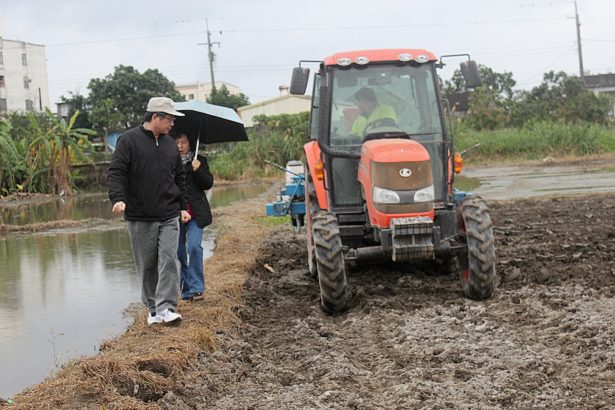
Yilan's old late-maturing soybean varieties pack a rich bean aroma, brewing a truly local soy sauce
One terroir, one bean: Yilan's old late-maturing soybean varieties pack a rich bean aroma, brewing a truly local soy sauce
-
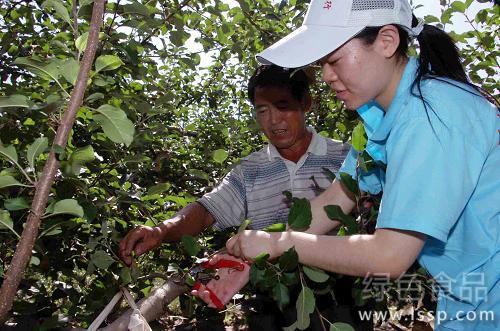
How can late-maturing apples be managed during the August swelling period to increase yield?
Proper management during the August swelling period of late-maturing apples helps increase yield
条件筛选