What kind of disease is root knot disease in roses?
What does root knot disease in roses look like? How to prevent and control it? Need guidance. Rose root knot disease: Symptoms: white tumor-like growths seen on the roots. Young tumors are white and elastic, later becoming hard. The tumor surface is rough. Brown or dark brown, and in severe cases the root knots can grow above the ground. Roses with root knots grow poorly, leaves turn yellow,...
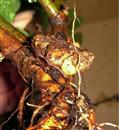
What does root knot disease in roses look like? How to prevent and control it? Need guidance
Rose root knot disease:
Symptoms: white tumor-like growths seen on the roots. Young tumors are white and elastic, later becoming hard. The tumor surface is rough. Brown or dark brown, and in severe cases the root knots can grow above the ground. Roses with root knots grow poorly, leaves turn yellow, the number of roots decreases, and the root knots multiply.
Disease pattern: L nematodes have two infection periods per year, in spring and autumn. They overwinter as males, eggs or second-instar larvae inside the diseased tumors, and can survive in the soil or in the diseased tumors for more than a year. After the nematodes invade the rose roots, they stimulate the proliferation of rose root cortex cells, leading to cancerous tumor lesions.
Control methods: (1) Before planting, soak the plant roots in a 500-1000 times dilution of concentrated streptomycin for 10 minutes. (2) When grafting, disinfect the grafting knife with high temperature or alcohol to prevent nematodes from entering through the wound. (3) Apply a mixture of methanol (2858, -12.00, -0.42%), glacial acetic acid, and iodine tablets (50:25:10) to the affected area; or apply a mixture of sodium dinitro-o-cresol and wood alcohol (20:80) to the affected area, which can make the diseased tumors disappear.
Click to get more rose growing techniques
Click to get more flower growing techniques