-

What kind of growing environment do white-feathered broilers need?
The growing environment for white-feathered broilers
-
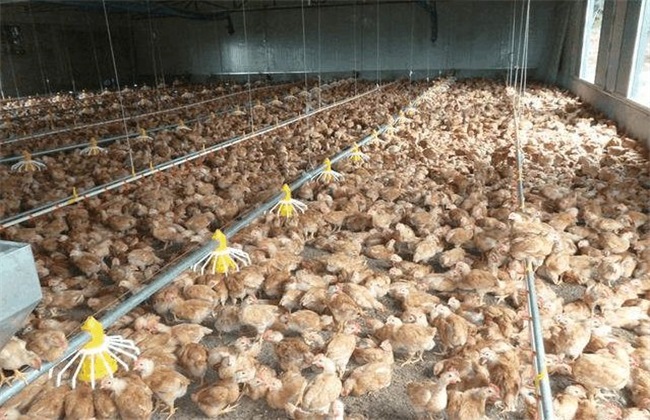
What kind of rearing environment do free-range chicks need
Rearing environment for free-range chicks
-

-
What kind of fish is the red-and-white long-tailed crucian carp? Learn about its breed characteristics in one article
Breed registration number: GS02001-2002 Parent source: red crucian carp, white crucian carp Breeding unit: Tianjin Huanxin Aquatic Improved Variety Farm Brief description of the breed: The red-and-white long-tailed crucian carp was produced by mating 2 female long-tailed crucian carp selected from red crucian carp with 3 male white crucian carp, and then from the resulting offspring population of 9 red-and-white long-tailed crucian carp produced by self-fertilization, strict selection was carried out according to the breeding objectives. After 12 years of breeding to the F5 generation, genetic traits such as body color, body shape and fin shape have been stabilized at more than 90%. The base color of the body surface of the red-and-white long-tailed crucian carp is silvery white
-
What kind of fish is the beautiful-banded loach? Introduction to its species characteristics
Common name: beautiful-banded loach. Origin and season: distributed in the Yuanjiang River system. Introduction: The head is slightly flat and depressed, with the cheek area bulging out. The lip surface is smooth or wrinkled. The tooth-like protrusion on the upper jaw is relatively weak, and the center of the lower jaw has a "V"-shaped notch, but it is sometimes not obvious. Body scales are small and fine, distributed only after the origin of the dorsal fin. The lateral line is complete. In small individuals, the head has spots only on the dorsal surface, while in larger specimens there are also spots or markings on the cheek area. A bottom-dwelling fish, inhabiting river sections with fast-flowing water and gravel substrates. The individuals are relatively large,
-
What kind of fish is the silver crucian carp? A comprehensive introduction to its breed characteristics
The silver crucian carp, also known as the Japanese crucian carp, the Osumi crucian carp, the Kawachi crucian carp, etc. Because the silver crucian carp has advantages such as a wide feeding habit, fast growth, large individual size, a high catch rate, and few diseases, it can grow, develop, mature, and spawn well in all kinds of freshwater bodies in our country, and is generally welcomed by fish farmers. It has already been promoted over large areas in many provinces and cities in our country. 1. Breed origin The silver crucian carp is native to Japan's long-standing Lake Biwa. Around 1897, a fisherman from Kawachi District, Osaka Prefecture, moved it into inland rivers and ponds for rearing. After many years of domestication and careful selection
-
What kind of snake is the tiger keelback? An introduction to its physical features and habits
Tiger keelback (Rhabdophis tigrinus), with a total body length of nearly 1000 mm. The dorsal surface of the body is emerald green or grass green; on both sides of the front part of the body there are thick black and orange-red patches arranged alternately, and on both sides of the nape there is a pair of thick black "eight"-shaped markings. Distribution: widely distributed across the country; found in Tianjin, Hebei, Shanxi, Inner Mongolia, Liaoning, Jilin, Heilongjiang, Jiangsu, Zhejiang, Anhui, Fujian, Taiwan, Jiangxi, Shandong, Henan, Hunan, Hubei, Guangxi, Sichuan, Guizhou, Yunnan, Tibet, Shaanxi, Gansu, Qinghai, Ningxia and other places
-
What kind of turtle is the Golden-headed Box Turtle? Breed characteristics and habits
The Golden-headed Box Turtle (Cuora aurocapitata), also known as the Ten-thousand-gold Turtle, is classified under the family Geoemydidae, genus Cuora, species Golden-headed Box Turtle. In China it is distributed in Anhui; it has not been reported abroad. [Morphological characteristics] The head is relatively long, with the top of the head golden yellow, the eyes relatively large, and the upper jaw slightly hooked. The carapace is dark reddish-brown, scattered with pale yellow spots. The plastron is yellow, with basically symmetrically arranged black markings on the scutes; the carapace and plastron, and the pectoral scutes and abdominal scutes, are connected by ligaments. The dorsal side of the limbs is grayish-brown, the ventral side is golden yellow, and the toes are webbed.
-
What kind of fox is the silver frost fox? Let us introduce you to fox breeds
Breed introduction: Mating a male silver fox with a female blue fox produces offspring that are silver frost foxes; they cannot be kept for breeding. Such fox pelts are valuable and priced slightly higher than locally produced blue fox pelts. The fur is thick and plush, the coat color is grayish-blue and glossy, the guard hairs are even, and the soles of the paws have dense hair, making it suitable for severe cold climate conditions. The lifespan is generally 8-10 years, and the usable period is 4-6 years. Sexual maturity occurs at 9-11 months of age. Estrus occurs from mid-February to early May each year, breeding only once a year, and the gestation period is 52 days. Herd average
-
What kind of fish is the Red Wen Fish? Introduction to the characteristics of the Wen Fish variety
Originally named Wen Yu (patterned fish). As early as the late Ming Dynasty, after goldfish moved from pond culture to basin and vat keeping, their color varieties gradually increased. To distinguish them from the earlier goldfish, people called them "Wen Yu," meaning "fish with patterns." This is recorded in the Ming Dynasty book "Kao Bo Yu Shi." The Wen Fish has a short, broad body shaped like a triangle, with a pointed head like a mouse's head, which is its distinguishing feature; its fins are well developed. It is the earliest variety among the Wen group and evolved directly from the grass goldfish. Japan's Red Ryukin originated from China's Red Wen Fish. Originally only red, through years of breeding, its colors increased,
条件筛选