What kind of growing environment do white-feathered broilers need?
White-feathered broilers are currently the broiler breed with the largest farming area in our country. White-feathered broilers have good meat quality, high yield, and a very good taste, making them popular with many people. However, white-feathered broilers are not as easy to raise as one might imagine, because white-feathered broilers have certain requirements for their growing environment. So what exactly are the requirements? Today, the editor brings you the growing environment for white-feathered broilers. Let's take a look!
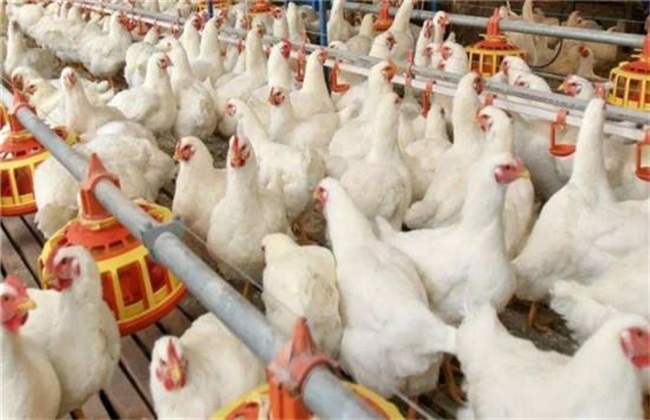
1. Temperature
Temperature is very important for the growth of white-feathered broilers. We should reasonably adjust the temperature according to the growth stage of the white-feathered broilers. Before the chicks enter the chicken house, the temperature should be raised to about 26 degrees for preheating and temperature testing, to avoid too large a temperature difference inside the chicken house. Then, in the early brooding period, the temperature should be around 33 degrees, and then be lowered by about 0.5 degrees each week. Note that when the chicks are one week old, the temperature inside the chicken house should be kept constant, to avoid too rapid temperature changes, which would cause a decline in the chicks' resistance. Finally, during the growing period, the temperature should be controlled at around 25 degrees.
2. Light
Light also has a certain effect on the growth of white-feathered broilers. Therefore, we should also control light well according to the growth stage of the white-feathered broilers. When building the chicken house, it is best to leave more windows and install skylights, to provide sufficient light for the growth of white-feathered broilers. The daily light requirement for white-feathered broilers is generally as long as more than ten hours. Therefore, we also need to install light bulbs. When natural light is insufficient, we need to do a good job of artificial supplemental lighting. Generally, during the brooding period of white-feathered broilers, the light intensity should be relatively high, while during the growing period it can be appropriately reduced.
3. Ventilation
The ventilation of the chicken house for white-feathered broilers must be kept good. If white-feathered broilers live in a closed space for a long time, then it will hinder the fattening work. Because if the chicken house is not ventilated for a long time, then the air quality inside the house will be very poor, and oxygen may also be insufficient as a result, causing white-feathered broilers to suffer from hypoxia. Therefore, when raising white-feathered broilers, we must pay attention to doing a good job of ventilation. We must ensure that there is sufficient oxygen in the chicken house and that there is no peculiar smell. However, note that the ventilation volume should be controlled according to the season. When ventilating in winter, it should be done on the premise of ensuring temperature, and cold wind must not blow directly onto the chickens.
4. Humidity
Then we should also control the humidity inside the house according to the growth stage of the white-feathered broilers. During the brooding period of white-feathered broilers, the humidity should be controlled at around 65%. The best way to increase humidity is to place an appropriate number of water basins inside the chicken house and let the water evaporate. Try not to use the method of sprinkling or spraying water. During the growing period, the humidity should be appropriately lowered to around 45%-55%. The humidity should not be too high or too low. If the humidity is too low, white-feathered broilers are prone to dehydration, which affects feather growth. If it is too high, it will affect the broilers' natural heat dissipation, and in winter they are prone to catching colds and consuming too much feed, increasing farming costs, and so on.
The above is a brief introduction to the growing environment for white-feathered broilers. That is all for today's introduction. This article is for reference only. Friends who want to learn more related information, please continue to follow us!