-
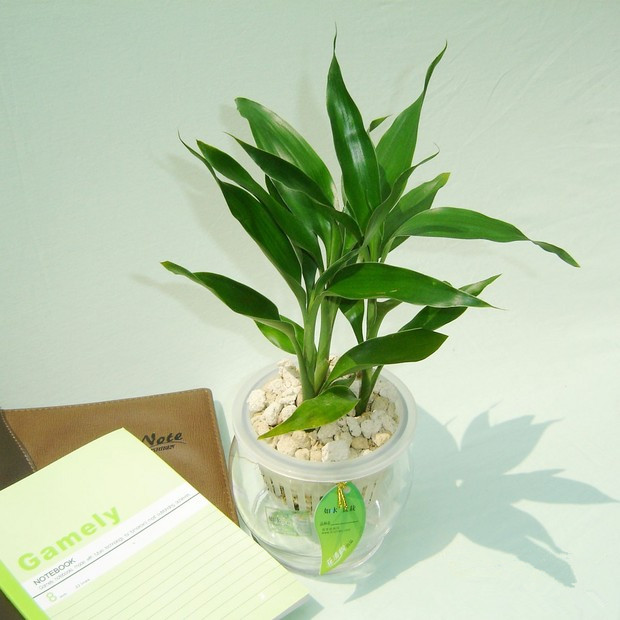
What are the key steps for growing lucky bamboo in water?
If lucky bamboo is not managed well, it is prone to physiological problems such as faded leaves, loss of gloss and root rot. Lucky bamboo likes scattered light and fears direct strong light. If it is placed in the scorching sun during care, the leaves will at best fade, become dull and lack gloss, and at worst be scorched or turn withered and burnt.
-
The four key steps of strawberry cultivation are all indispensable
Old Wang counts as a major grower in their village, and he has grown almost every kind of fruit and vegetable, but he just never made money. Seeing that growing strawberries seemed quite profitable, he planted all his dozens of greenhouses with...
-

Ten key steps for high-yield soybean cultivation
First, the good-seed step. According to local factors such as climate, soil fertility, soil properties, growth period, rainfall, effective accumulated temperature, production level, and cultivation mode, choose high-oil and high-protein improved varieties with strong stress resistance and good yield performance. Second, the land-preparation step. In soil tillage, adhere to a soil tillage system combining subsoiling, plowing, harrowing, and rotary tillage, with subsoiling as the main practice; vigorously promote the subsoiling method, with a subsoiling depth of 40-50 cm. For spring land preparation on corn stubble, ridge up along the thawed soil and press in time to improve land-preparation quality, achieving clean ground with no stubble,
-
Detailed explanation of black tea processing technology, master the key process steps
Black tea is divided into two types: domestic sales and export sales. Before 1966, all export black tea in Zhejiang was processed as Congou black tea. From 1967, it was converted to Yuehong leaf tea, and the second national set of Congou black tea naturally produced broken pieces and dust tea (that is, rolled broken black tea). For domestic black tea, product specification standards have been implemented since 1971. Black tea refining and processing selects Zhejiang rough red as raw material. The refining and processing flow is: raw material blending, grading and issuing for processing, adopting the method of two-stage issuing and single-stage (main grade) recovery, taking material from five routes: itself, long body, round body, light body,
-
A Detailed Explanation of Black Tea Manufacturing: The Complete Process and Key Steps
Chinese black tea includes congou black tea, broken black tea and souchong black tea. Their manufacturing methods are largely similar, all involving the four processes of withering, rolling, fermentation and drying. The quality characteristics of all kinds of black tea are a red liquor and red leaves, and the formation of their colour, aroma and taste involves similar chemical change processes, differing only in the conditions and degree of the changes. The following uses congou black tea as an example to briefly introduce the manufacturing process of black tea. (1) Withering Withering refers to the process in which fresh leaves lose water over a period of time, causing the somewhat hard and brittle stems and leaves to become limp and wilted. It is the first step in the primary processing of black tea.
-

Camellia bonsai: cultivation methods and key steps
Camellia, also called camellia flower, with the ancient name sea pomegranate, is a traditional ornamental flower of China, ranked seventh among the "Ten Famous Flowers," and is also one of the world's precious flowering trees
条件筛选