-
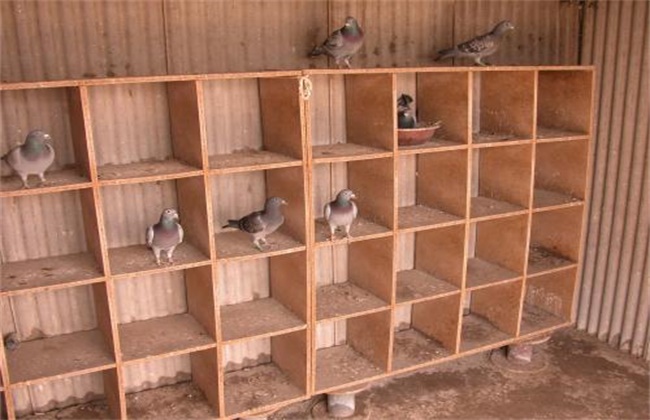
How do beginners start keeping pigeons? Master these entry-level methods
How should beginners get started keeping pigeons
-

How to do artificial swarming in beekeeping? A detailed guide to the methods
Artificial swarming means taking several honey-and-pollen combs, brood combs, and adult-bee combs from a colony to form a new colony. After artificial swarming, by the main honey flow...
-

Common freshwater ornamental fish keeping methods and tips for selecting goldfish
Whether it is sociable: any fish that swims alone away from the group may be sick | no matter how good its color is, it should not be chosen. You can only select from the group | choose those that swim while looking for food and staying close to...
-
How to keep the Snow Cichlid? Common freshwater ornamental fish keeping methods
Origin and distribution of the Snow Cichlid: Lake Tanganyika, Lake Malawi, and Lake Victoria in Africa | artificially improved variety. Morphological characteristics: adult Snow Cichlid body length 12-26 cm...
-
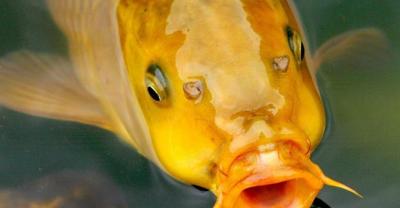
A detailed guide to common freshwater ornamental fish keeping methods
Taisho Sanke: on an overall white base, adorned with red and black markings #A pure Taisho Sanke koi has a pure white base color#It must never contain other mixed colors#Do not...
-

Detailed Explanation of Autumn Rabbit Keeping Epidemic Prevention Methods and Technical Key Points
When domestic rabbits come through the hot summer, their disease resistance declines somewhat. By autumn, they are also in the molting period and the doe kindling period, so epidemic prevention is very important. 1. Vaccine immunization ①Rabbit plague vaccine. The tissue inactivated vaccine currently in use has relatively good effects. Inject 1 ml subcutaneously per rabbit; strong immunity can be produced in 5-7 days, and the immune period reaches 6 months. ②Rabbit plague-Pasteurella bivalent vaccine. Inject 1 ml subcutaneously per rabbit; it can protect against rabbit plague infection for half a year and against Pasteurella infection for 4 months. ③Clostridium welchii type A inactivated bacterial vaccine. Inject subcutaneously per rabbit
-
How to disinfect beekeeping tools? Introduction to disinfection methods for beekeeping tools
Bee pests and diseases cause great harm to beekeeping production. While controlling them, beehives, combs and the beekeeping tools used must be thoroughly disinfected. Commonly used disinfectants include: 1. Formalin: 1 part formalin, add 9 parts water to make a 4% aqueous solution, soak empty combs and small beekeeping tools in it for 24 hours, shake off the liquid, rinse with clean water and dry. . Put the combs into supers, 8 combs per box. Remove the wire mesh from 1 empty hive body with a screen window, stack 5 supers of combs on top, cover with a wooden inner cover, and seal all gaps tightly. Use a carbon or glass container to place
-
Artificial Keeping Methods and Technical Key Points for the Chinese Cobra
The white-banded snake, also known as the many-banded krait or the small-banded krait, has high medicinal and economic value. Its keeping methods are as follows: 1. Build reasonable pools. The snake pool is built of brick and stone, 2 m square and 1.5 m high, and can hold 15-20 snakes; putting in too many snakes makes management difficult. The pool walls are smoothed with cement, and a movable glass cap is added on top of the wall in a T shape to prevent escape. The bottom of the pool is the snakes' activity area, where weeds should be planted, and then snake nests should be built with sand, wooden boards, bricks and tiles, etc. Build a flowing water ditch and a bait basin in the pool, and cover the pool with
-
How to Raise a Chinese Box Turtle? A Detailed Guide to Keeping Methods
For raising Chinese box turtles, it is best to buy turtles between April and August each year. During this period there are more turtles, prices are lower, and they are easier to tame and keep. From January to March, turtles are hibernating or about to hibernate, so it is difficult to observe their activity, feeding, droppings, and other conditions. It is hard to judge the survival rate of the turtles. Adult Chinese box turtles are mainly obtained by purchasing wild-caught turtles. Wild-caught turtles are thin and weak, timid, with many wrinkles on the skin of the limbs, and when handled the turtle feels light. Selecting turtles can begin with two aspects: the turtle's appearance and its droppings. A healthy turtle has bright eyes, with no white spots on the cornea, no blood at the mouth or nose, and no mucus secretion. The skin, carapace, and plastron have no damage or ulceration. When crawling, the limbs can lift the body up. After being startled, it can immediately flee. The droppings of a healthy turtle are lump-shaped and wrapped in a white membrane. Droppings that are pale blue, blood-red, light green, etc. are all abnormal.
-
Harvesting and Fresh-keeping Methods for Fox Tail Asparagus Cut Foliage
[Other Chinese Names] Foxtail Asparagus, Myers Asparagus Fern, Sprenger's Asparagus Fern [Family and Genus] Liliaceae, Asparagus [Place of Origin] South Africa; this species is a horticultural variety. [Plant Characteristics] Fox Tail Asparagus is a perennial herbaceous plant. The plant height is about 60 cm. The rhizome is short, and the stem is erect. The cladodes are fine needle-shaped. [Cut Foliage Harvesting] The harvested part is the cladodes of Fox Tail Asparagus. During cultivation, cladodes that have turned dark green and are well grown can be cut at any time as needed. The operation can be carried out all day long.
条件筛选