-
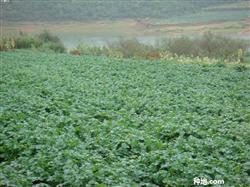
What problems currently exist with radish fertilization?
What problems currently exist with radish fertilization? Please note that current radish fertilization has the following problems: 1. Existing problems and fertilization principles. In response to problems such as emphasizing nitrogen and phosphorus fertilizer while neglecting potassium fertilizer, an imbalanced nitrogen-phosphorus-potassium ratio, unreasonable fertilization timing, obviously insufficient application of organic fertilizer, and insufficient attention to the application of trace element fertilizers...
-
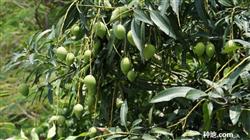
Scientific Fertilization Methods and Technical Key Points for Autumn Mango
How to scientifically fertilize autumn mango? Please advise. Autumn mango is a mango that flowers and fruits in autumn. In various parts of Maoming City, the autumn mango varieties grown include Guixiang Mango, Zihua Mango and Chuan Mango. Among the three varieties, Guixiang Mango has better quality and flavor, Zihua Mango is above average, and Chuan Mango is medium; they are suitable for local cultivation and show stable and high yields. To grow autumn mango well...
-

Fertilization Methods and Techniques for 4 Types of Mushrooms
1. Mushroom root soup. Boil the mushroom stems cut off during harvesting in water for 5 minutes, let it settle, then add 10 times the amount of clear water and spray to promote the growth of young mushrooms. 2. Substrate soak solution. Boil sun-dried fermented substrate in water, filter and take the liquid, add 10 times the amount of clear water and 10% calcium carbonate and spray to extend the fruiting time of the mushroom bed....
-
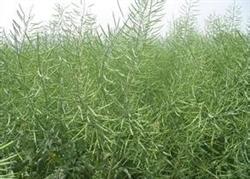
How to Fertilize Rapeseed for High Yield? A Detailed Guide to Practical Fertilization Methods
1. Apply seedling fertilizer early. In late November or early December, mainly use organic fertilizer, applying 1500-2000 kg of organic fertilizer per mu. For some fields with poor growth, an appropriate amount of chemical fertilizer should also be applied. 2. Apply stem-elongation fertilizer at the right time. Stem-elongation fertilizer should preferably be applied when the main stem bolts to 10 cm. For fields with good early seedling vigor, it may be slightly...
-
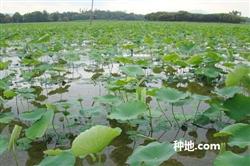
How to fertilize lotus root planting? Detailed explanation of fertilization methods
How can pollution-free lotus root cultivation achieve high yields? How should management be carried out? For pollution-free lotus root cultivation, you can refer to the following techniques: 1. Field selection: Choose low-lying wet fields with convenient irrigation and drainage, with yellow mud or blue mud soil being best. 2. Fine land preparation and sufficient base fertilizer: 1. To build soil fertility, you can use the method of turning under green manure, that is...
-
How to fertilize yam? Detailed explanation of the correct fertilization method
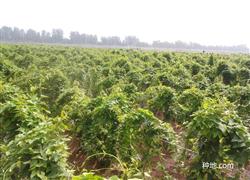
How should Chinese yam be fertilized? Chinese yam is a food and medicinal crop whose product is the underground tuber. Because its tuber is large and in some varieties reaches 1-2 m deep into the soil, deep, well-drained sandy loam soil should be chosen. Chinese yam likes organic fertilizer, which can be spread from sowing until the vines develop. Spread...
-
Detailed Explanation of Key Technical Points for Scientific Fertilization of Sunflowers
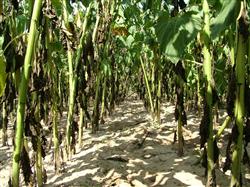
Based on the symptoms, it may be stem rot, a form of sclerotinia disease, which can be controlled with thiophanate-methyl. Or use thiophanate-methyl combined with carbendazim, procymidone, and dimethachlon for control.
-
How to fertilize celery? A detailed explanation of the basis and methods of fertilization
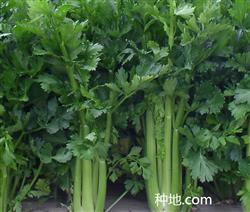
How is celery fertilized? What is fertilization based on? Producing 1000 kg of celery requires 2 kg of pure nitrogen, 1 kg of phosphorus pentoxide, and 4 kg of potassium chloride. Before transplanting, apply 5000 kg of high-quality farmyard manure and 40 kg of phosphate fertilizer per mu. When the celery plants are 10 cm tall, begin the first topdressing, applying 7-10 kg of nitrogen fertilizer and 1...
-
Why Spring Corn Fertilization Should Be Light Early and Heavy Late
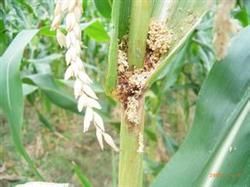
The corn borer, also known as the corn stalk borer. Spring corn is currently at the late whorl stage (funnel stage), and this period is the best time to control the corn borer. At the funnel stage, most newly hatched corn borer larvae crawl into the leaf whorl tube and feed on the mesophyll of the not yet unfolded leaves, and spraying at this stage makes it easy for the spray liquid to enter the leaf whorl tube, improving control effect...
-

A Complete Analysis of the Key Technical Points for Soil Testing and Formula Fertilization in Spring Corn
1. Choose suitable varieties. Select suitable and superior varieties according to local conditions; based on heat resources and actual production conditions, choose medium-to-late maturing varieties with a growth period of 120-130 days. Among spring corn varieties with relatively outstanding comprehensive traits, the main one is Nongda 108, etc. 2. Fine land preparation. Spring corn requires deep plowing, and the earlier the autumn plowing...
条件筛选