-
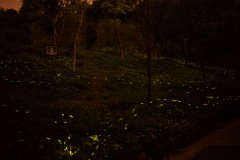
Are fireflies beneficial insects or pests? Where can you see them, and why is the environment causing their numbers to decline?
Fireflies are beneficial insects. Fireflies are environmentally sensitive insects, extremely attuned to changes in the natural environment. Their numbers are now declining more and more, and they can only be seen in environments with mountains and water that are clean and pollution-free. Zhang Mingzhong, deputy director of Dongshi Forest Farm, said that because
-

What pesticide works well for controlling scale insects?
Currently, scale insects occur in all parts of our country, and the degree of damage is becoming increasingly serious. From southern fruit tree crops such as citrus, lychee, and mango, to northern fruit tree crops such as apple, pear, and peach, none are spared. The scope of damage shows a trend of being heavier in the south than in the north, with damage to fruit trees
-
What are the control methods for mango scale insect pests?
This pest is distributed in Guangdong, Hainan and Guangxi, and is a locally sporadic major pest, causing damage only in a few orchards. It can damage the branches, leaves and fruits of parts of the canopy, sucking the sap from their tissues, causing leaf drop and fruit drop, and in severe cases causing premature decline of the tree.
-
Methods and Technical Key Points for Controlling Rice Pests and Diseases in the Mid-to-Late Stage
This year's rice insect pests are mainly migratory and boring pests, with an estimated affected area of 730 million mu-times. With multiple pests and diseases jointly affecting mid-to-late stage rice, experts recommend using a combination of agroecological control techniques and chemical control measures.
-
What Insecticides Work Well for Peach Trees Before Bagging the Fruit
The peach tree is a common fruit tree in our country, grown in many regions, and to achieve high yields from peach trees, besides mastering basic techniques, you also need to do a good job of bagging the fruit. So what insecticides work well for peach trees before bagging the fruit? 1. What insecticides work well for peach trees before bagging the fruit? Before bagging peach trees
-
Which pesticides work well for controlling insect eggs
What farmers hate most is pests, which affect crop growth. To kill pests, you must start by killing the eggs. Different pesticides target the eggs of different pests. Below, let's look at what pesticides to use for insect eggs. Lime sulfur: It is generally believed that lime sulfur has a certain effect on overwintering scale insect nymphs, as well as on mites and mite eggs. Using lime sulfur can reduce the base of orchard pests and diseases. When using lime sulfur, if you then use other pesticides, it is recommended to leave an interval of half a month, so as to avoid pesticide damage.
-
What pesticide works well to control insects on napa cabbage?
Napa cabbage is one of the vegetables we eat often, and its growing method is simple; in rural areas, basically every household likes to grow some. So, what pesticide should be used for insects on napa cabbage? First, what pesticide should be used for insects on napa cabbage? This depends on what kind of insect it is.
-
What are the methods for preventing and controlling insect pests in centipede farming?
1. Ants. Ants are the greatest enemy of centipedes during molting and the egg-laying and hatching periods. Because a centipede that is molting has no ability to resist, and its new skin is tender, it easily attracts large groups of ants that bite it to death. At the same time, during the incubation of eggs, the centipede is in a semi-sleep state and moves slowly, making it easy for
-
When is the best time to spray insecticide on corn
Pests can severely affect the growth of corn, and corn insecticides can efficiently and safely control various pests. So when should you spray insecticide on corn? 1. Sowing period Mainly to control underground pests and seed-borne diseases. 1. Practice crop rotation to avoid
-
How to Plant Jujube Seeds? A Detailed Guide to Jujube Tree Cultivation
Prepare high-quality seeds that are free of insect pests and plump. Soak the seeds in warm water overnight, then remove them and cover them with a damp cloth, rinsing them with warm water four times a day; once most of them have sprouted, they can be sown. The planting site should be plowed, given a base fertilizer, and trenched, with a trench spacing of 65cm and a trench depth of 10cm. Trench
条件筛选