-

How an Individual Can Apply to Set Up a Livestock Farm and Livestock Raising Community
The Ministry of Land and Resources and the Ministry of Agriculture's "Notice on Policies Concerning Land Use for Promoting Large-Scale Livestock and Poultry Breeding" (Guotuzifa [2007] No. 220) stipulates the following: (1) Enterprises or individuals applying for large-scale livestock and poultry breeding, whether rural collective economic organizations, farmers and
-
Key Points and Methods of Belgian Rabbit Breeding Technology Explained
Belgian rabbits have large heads, robust physiques, gain weight quickly, have delicious meat, and fine fur quality. They are currently popular among many breeders in our country. Below is an introduction to Belgian rabbit breeding technology. I. Rabbit house site selection. A location with high, dry terrain should be chosen
-
How Do Sugar Gliders Get Through Winter? Detailed Guide to Warm Keeping and Care
The sugar glider is a very small animal, extremely cute, and can be carried directly in a pocket, so many people like to keep it as a pet. So how do sugar gliders get through winter? 1. How do sugar gliders get through winter? When sugar gliders get through winter, try to keep the indoor temperature
-
How to quickly identify counterfeit and shoddy fertilizers?
In rural areas, a few unscrupulous dealers go from village to village and door to door, using prizes as a cover to deceive farming households with counterfeit and shoddy fertilizers, affecting farmers' harvest for a whole season. In order to protect our own lawful rights and interests, today we will explain how to quickly identify counterfeit and shoddy fertilizers.
-
What are the key tips for raising meat pigeons? These ten points teach you how to raise meat pigeons well
Meat pigeons are relatively small in size and very sensitive to the external environment. If scientific feeding is not paid attention to, they are prone to death, which affects the survival rate. To do a good job in the feeding and management of meat pigeons, the following "ten key points" need to be grasped. 1. Housing, that is, choosing a good pigeon farm and building good pigeon houses. A site should be chosen where there is no ⟦4 <p>Meat pigeons are relatively small in size and very sensitive to the external environment. If scientific feeding is not paid attention to, they are prone to death, which affects the survival rate. To do a good job in the feeding and management of meat pigeons, the following “ten key points” need to be grasped. </p><p></p><p>1. Housing, that is, choosing a good pigeon farm and building good pigeon houses. A site should be chosen where there is no contamination by pathogens and “three wastes,” with higher terrain, good drainage, shelter from the wind and facing the sun, and far from busy urban areas to build the pigeon farm. The pigeon house should use a brick-wood or earth-wood structure, be dry and clean, with fresh air, and good lighting and ventilation. </p><p>2. Control, that is, controlling the environment well. In winter, attention should be paid to keeping warm, but a sealed pigeon house has a very strong ammonia smell, which is not conducive to the healthy growth of pigeons. Besides simmering vinegar on the stove to fumigate and reduce the ammonia smell, windows can also be opened for ventilation; in the rainy season, the hygiene of the pigeon house should be done well to ensure ventilation and dryness, especially the bedding under the nest bowl must not be damp; in hot summer, prevent heatstroke and pay attention to ventilation and air exchange. Commonly used disinfectant should be used to spray and disinfect the pigeon house, and quicklime should be spread on the ground for disinfection.</p><p>3. Feed, that is, ensuring feed quality and achieving scientific feed formulation. More small-particle feed should be given, increasing mung beans and hulled wheat, and reducing hulled grains. All kinds of feed should be soaked and softened, then dried before feeding, feeding less and adding more frequently. The feed formula for young pigeons should increase grains such as corn, wheat, and sorghum, and the feed for laying pigeons should contain sufficient protein. Keepers generally supply feed on the principle that laying pigeons eat their fill and squabs are fed full.</p><p>4. Drinking, that is, supplying sufficient drinking water. The water intake of meat pigeons changes with the environment and temperature. Water intake in summer is greater than in other seasons, and caged meat pigeons drink more water than those raised on the floor. Drinking fountains should be clean and hygienic, and the water supply must be guaranteed to be clean and pollution-free.</p><p>5. Supplement, that is, adding health sand and cod liver oil. To increase the market weight of meat pigeons and benefit their health, meat pigeons aged 7 to 30 days should be fed special health grit 2 times a day, 1 pellet each time; cod liver oil 1 pellet per day. Health sand should be mixed and used immediately. Generally, coarse sand, bone meal, shell powder, etc. are mixed first (mixing the amount for 3 to 4 days at a time), and then the ingredients used in small amounts, prone to oxidation, and prone to deliquescence are mixed with the prepared health sand before feeding. </p><p>6. Light, increasing lighting time. In order for pigeons to eat more, promote their rapid growth, and increase the time for mother pigeons to feed squabs, it is best to turn on several 6 to 10 watt energy-saving lamps in the pigeon house at night. </p><p>7. Bedding, that is, paying attention to increasing or decreasing bedding. The pigeon nest should increase or decrease bedding according to the season and temperature changes to ensure that the belly of the meat pigeon stays warm and does not get cold. </p><p>8. Bathing, that is, giving pigeons regular baths. Regular bathing can not only prevent the invasion of external parasites on pigeons, but also stimulate pigeons to secrete growth hormone and promote growth and development. Young pigeons raised on wire floors are bathed by basin bathing, once every 15 days; laying pigeons in cages are bathed by spraying water with a sprayer, generally once every 20 days. </p><p>9. Adjusting, that is, changing the position of squabs on time. Change the position of squabs once every 2 to 3 days so that the squabs receive balanced care. If 1 squab dies, feed the remaining 1 half a yeast tablet every day to prevent overeating and food accumulation. </p><p>10. Prevention, that is, doing a good job in disease prevention and control. Breeding pigeons introduced from outside must undergo strict quarantine and isolation observation; try to achieve self-breeding and self-raising; pigeon farms should not mix other livestock and poultry; pay attention to good cleaning and hygiene and regular disinfection, and give pigeons disinfected water once every 5 days; keepers should be in good health, without infectious diseases, and can enter the breeding area only after disinfection in the disinfection room. At 12 to 13 days of age, squabs are prone to indigestion, pharyngitis, and crop food accumulation. Prevention can be carried out at 8 days of age, feeding half a yeast tablet every day, and at the same time feeding 1 pellet of health grit each morning and evening. In addition, for squab colds, half a cold tablet and 1/6 tablet of chlortetracycline can be fed, 3 times a day, and it can be cured in 3 days. If eye inflammation occurs, chloramphenicol or chlortetracycline eye drops can be applied 2 to 3 times a day.</p>
-
How to prevent and control wheat sharp eyespot? Early prevention is key
Recently, some individual wheat growers reported that the tips of the wheat turned yellow, small pale yellow spots appeared on the leaf sheaths, and crisscrossing stripe-like yellow markings appeared on the base, commonly known as "flowering stems," with severe cases showing dark brown rot. These are the typical symptoms of wheat sharp eyespot. It is understood
-
500 hectares of aquaculture-fishery solar coexistence proposed in a black-faced spoonbill hotspot, sparking controversy! Environmental groups call for clear rules to be established first before individual cases can be reviewed
500 hectares of aquaculture-fishery solar coexistence proposed in a black-faced spoonbill hotspot, sparking controversy! Environmental groups call for clear rules to be established first before individual cases can be reviewed
-
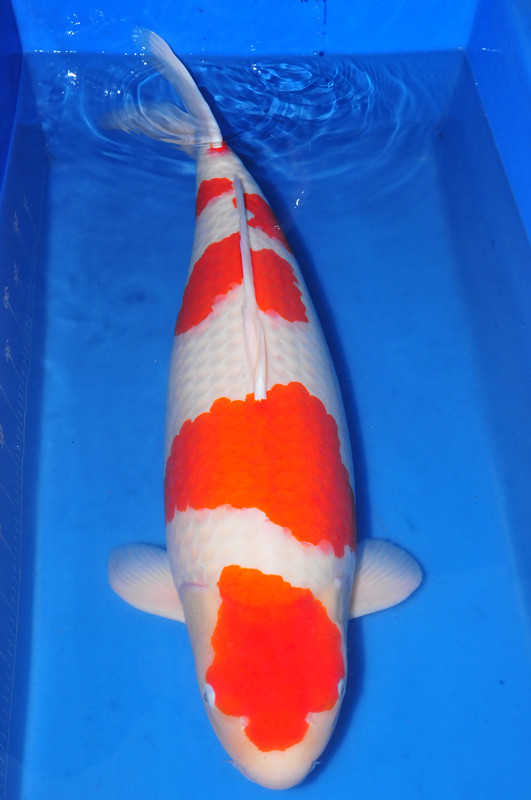
Selected individual photos of Japanese koi disease symptoms, size 59-71 cm
Japanese koi, selected individual photos, size 59-71CM. Size: around 59-71CM Breeds: Goshiki, Kohaku, Taisho Sanke, Showa Sanshoku, etc. Origin: Tamaura, Marudo, Hiroi, Isawa Koi Farm Service hotline: 0769-22983148/23091917 13711918531 QQ: 523980663/348306934 Contact address...
-
Sakura shrimp are individually frozen and coated using high-end automated equipment, with each one whole and flawless.
Sakura shrimp are one of the delicacies on Japanese dinner plates. Individuals with intact legs, antennae, eyes and tails in particular can be sold to high-end restaurants. With funding support from the Council of Agriculture's special research program, seafood processing operators worked with
-
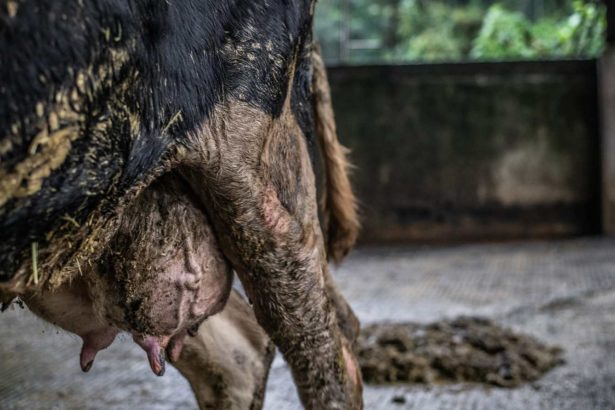
Animal rights group reveals that 50% of dairy cattle farming shows heat stress, mastitis, etc., calls for welfare regulations; Dairy Association: only a minority of individual cases
Animal rights group reveals that 50% of dairy cattle farming shows heat stress, mastitis, etc., calls for welfare regulations; Dairy Association: only a minority of individual cases
条件筛选