Animal rights group reveals that 50% of dairy cattle farming shows heat stress, mastitis, etc., calls for welfare regulations; Dairy Association: only a minority of individual cases
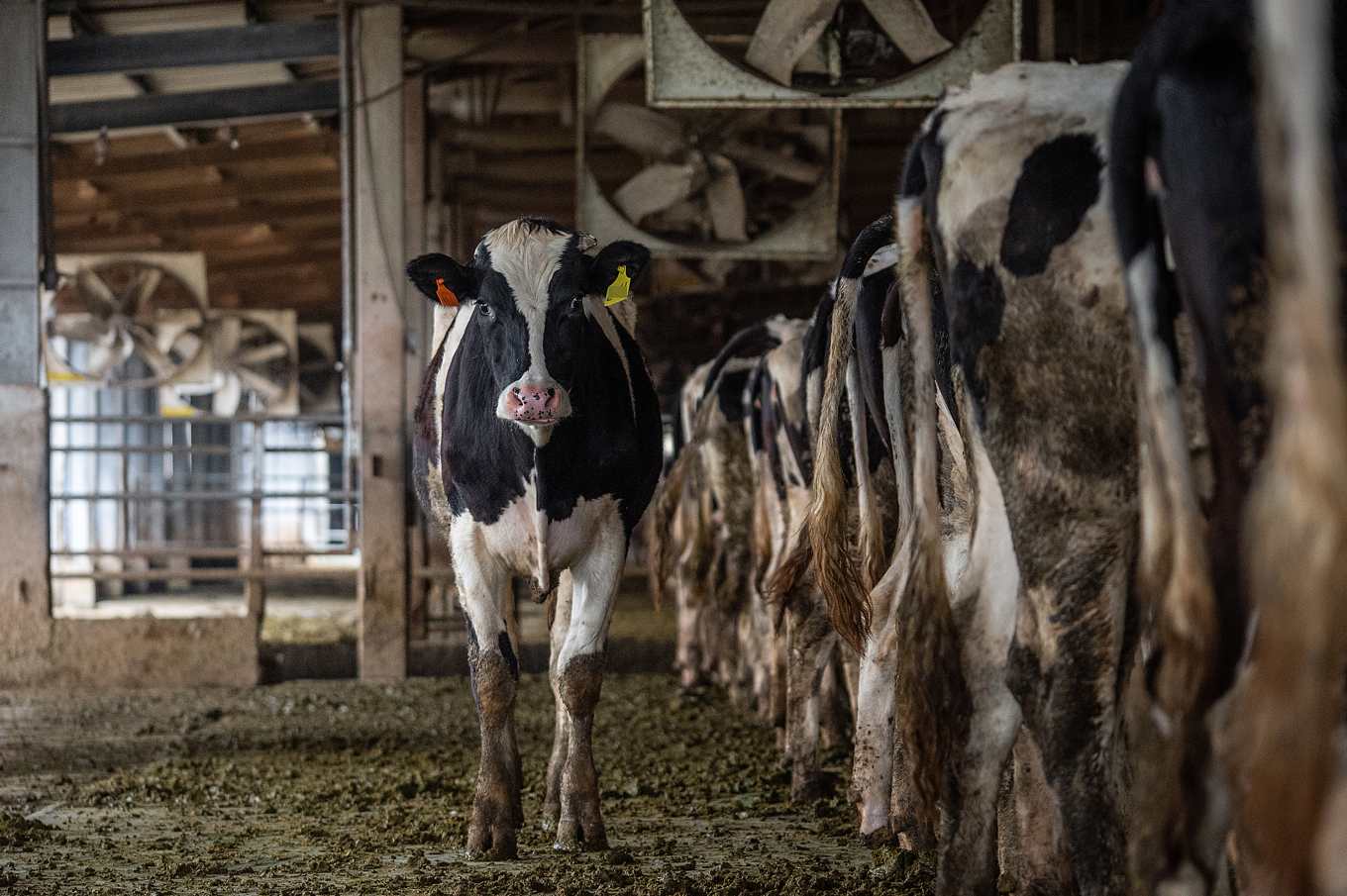
Fresh milk is not just about price and quality; the rearing conditions of dairy cows must not be overlooked either! The Taiwan Animal Society Research Association held a press conference today (the 18th), stating that after nearly a year of visiting 30 dairy farms for inspection, it found that more than 50% of dairy cattle farming in Taiwan has five major problems, including "negative energy balance," "heat stress," "disease infection," "human interference," and "insufficient professional care," which not only affect the physical and mental health of the animals but also further affect milk quality.
The animal rights group put forward three demands, including "formulating animal welfare regulations," "formulating animal welfare policies for milk procurement," and "disclosing dairy product inspection information," calling on the government and industry to upgrade the domestic dairy cattle farming industry. Fang Qingquan, Secretary-General of the Republic of China Dairy Association, responded that the problems raised by the Taiwan Animal Society Research Association are "a minority of individual cases," and that these problems should indeed be solved, but the industry as a whole is already moving in a positive direction, and he looks forward to further dialogue with all parties in the future.
Taiwan raises 60,000 dairy cows, excessive milk extraction is serious, and there are no animal welfare regulations
Chen Yumin stated that according to statistics from the Council of Agriculture, Taiwan has a total of 553 dairy farms, raising 60,523 lactating cows, producing about 386,362 tons of raw milk annually, with an output value of 10.1 billion yuan, yet to date there are still no animal welfare-related regulations. She explained that more than 90% of the dairy cattle breeds raised in Taiwan are "Holstein," which is the breed with the highest milk yield among the six dairy cattle breeds. Generally speaking, the milk yield of one Holstein cow is about 10 kg, but the average daily milk yield of domestic dairy cows is 30 kg, which is 3-4 times the natural state, and the situation of excessive milk extraction is serious.
In addition, when the cow has not yet recovered its strength 60 days after giving birth, it will again receive "artificial insemination" to strive for more milk output, and the situation of being pregnant while producing milk is common; furthermore, during pregnancy the growth of the calf will press inward on the dairy cow's internal organs, causing a double depletion of nutrition and strength. She stated that this kind of "negative energy balance" is the cause of dairy cattle farming problems, further increasing the dairy cows' susceptibility to various diseases.
High-temperature and high-humidity climate causes "heat stress," affecting dairy cows' nutrient intake and health
Holstein cattle are temperate-zone cattle, originally native to temperate regions with temperatures of 5-21°C, while Taiwan's high-temperature and high-humidity climate produces "heat stress" on dairy cows, affecting their nutrient intake. Taiwan has a tropical climate, and Chen stated that for at least eight or nine months each year the monthly average temperature exceeds 21°C, and in addition more than 85% of dairy farms are located in the south, making the "heat stress" on dairy cows even greater.
Chen Yumin explained that internationally, temperature and humidity are used for calculation, and the numerical standard for measuring heat stress is THI. If the value is greater than 72, it indicates a situation of heat stress that must be relieved. Calculated according to Central Weather Bureau figures, the average THI south of Taichung is 74, and for four months of the year it even reaches 79 – 81. Such a hot and humid environment affects both the nutrient intake and health of dairy cows.