-

Pigeon Disease Identification Tips: A Detailed Guide to the Three Observations and Nine Checks Method
To detect sick pigeons early and prevent the spread of disease, keepers must carefully observe the flock 3 times a day: morning, noon and evening. The "three observations and nine checks" method for identifying pigeon diseases described below is simple and easy to apply, and is provided for reference. Three observations: First, observe the mental state: healthy pigeons are lively, excited and alert; sick pigeons are listless, reluctant to move and slow to react. Second, observe eating and drinking: healthy pigeons eat and drink normally; sick pigeons eat less or stop eating altogether, either refuse to drink or drink excessively, and do not feed their squabs. Third, observe the color and shape of droppings: healthy pigeon droppings are gray, yellowish-brown or grayish-black, shaped
-
Symptom Identification and Control Methods for Major Potato Pests and Diseases
The main potato diseases include: potato ring rot, potato wart disease, potato late blight, potato early blight, potato blackleg, potato bacterial wilt, and others. The main insect pests include: potato tuber moth, 28-spotted ladybird beetle, and underground pests (cutworms, white grubs, wireworms, mole crickets, etc.). Among these, three are nationally quarantined pests: potato tuber moth, potato ring rot, and potato wart disease. Main potato diseases. Potato ring rot. Field symptoms generally appear after the flowering stage, with initial symptoms showing
-
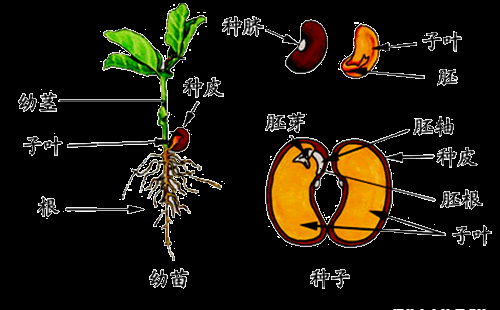
Plant Seed Identification Guide: Teaching You to Recognize Plant Seeds
A mature seed consists of the seed coat, embryo and endosperm. The embryo consists of the radicle, plumule, hypocotyl and cotyledons. Some plant seeds have endosperm, such as corn, wheat and rice. In some plant seeds the endosperm is reduced, and the nutrients in it are transferred to the cotyledons, such as in legumes. Soak soybean or broad bean seeds in water overnight
-
Identification and Control Methods of Diseases in the Seedling Stage of Panax notoginseng
Because Panax notoginseng grows year-round in a shaded and humid environment, diseases such as black spot, round spot, phytophthora blight, rust rot and powdery mildew occur and cause serious damage, with annual losses from various diseases reaching 30%-40%, and in severe cases over 80%. The stage of emergence and leaf growth, when the plant is tender, the root system is underdeveloped and stress resistance is poor, is an important period for initial infection by many pathogens. If spring rain comes early and frequently, the disease spreads rapidly and the damage and losses are severe. Panax notoginseng generally takes 60-75 days from sowing to emergence; strengthening
-
Identification and Control Methods for Common Cherry Blossom Diseases and Pests
There are many types of cherry blossom diseases and pests. The common ones are described below: Perforation-type brown spot disease occurs in May and June. Small purplish-brown spots appear on the leaves, then gradually expand into circles. After the diseased spots dry and shrink, they become small holes. The pathogen mostly overwinters on diseased branches and leaves. The optimum temperature for its development is 25°C to 28°C. It spreads by wind. In rainy seasons, infection and disease development are favored. When the tree is weak, drainage is poor, and ventilation and light penetration are poor, the disease occurs severely. Control methods: (1) Strengthen cultivation management, carry out reasonable pruning, and pay attention to cutting off diseased shoots, timely clearing
-
Identification and Control Methods for the Potato Ladybird Beetle
The potato ladybird beetle (Henosepilachna vigintioctomaculata Motschulsky) belongs to the order Coleoptera, family Coccinellidae. It is widely distributed in northern China. It mainly damages potatoes, eggplants, Chinese cabbage, rapeseed, as well as beans, cucurbits and so on. [Field identification] Both adults and larvae feed on leaves, gnawing the epidermis and mesophyll on one side, creating many net-like pits. The adult is about 8 mm long and hemispherical. The body dorsum and elytra are yellowish-brown; the center of the pronotum
-
Identification and Control Methods for Geranium Alternaria Leaf Spot
Geranium Alternaria leaf spot is a common leaf disease of geranium. The pathogen has a wide host range and can attack many woody and herbaceous ornamental flowers, seriously affecting their ornamental value. Symptoms: In the early stage of the disease, chlorotic spots appear on infected leaves, and the lesions gradually expand to form larger circular spots. The spots are dark brown with concentric rings. In the late stage of the disease, a dark green mold layer appears on the spots, which consists of the conidia of the pathogen. Pathogen: The pathogen is Alternaria tenuis Nees, belonging to
-
Symptoms, Identification, and Control Methods of Black Belly Disease in Scorpions
Also called black rot, it is caused by eating spoiled feed and becoming infected with black mold, or by environmental pollution and unclean drinking water. The disease mostly occurs in summer. Symptoms of affected scorpions are: in the early stage, the scorpion's abdomen turns black, the abdomen swells, activity decreases or stops, and appetite decreases or the scorpion stops eating; in the later stage, black decay appears on the front abdomen, and squeezing it by hand causes black mucus to flow out. This disease has a short onset time and a high mortality rate. Control methods: keep the feed and drinking water fresh and clean, and frequently wash the food dish and water dish; when sick
-
Symptom Identification and Control Methods of Peach Shot Hole Disease
Peach shot hole disease is the most common leaf disease on peach trees. It occurs in peach-producing regions worldwide. It includes three types: bacterial shot hole, mildew spot shot hole, and brown spot shot hole. Among them, bacterial shot hole is the most common and is widely distributed in peach-producing regions across the country. Infection of peach trees by this disease can cause a large number of leaves to develop holes and drop off, branches and shoot tips to die, severely weakening tree vigor, affecting flower bud differentiation, and causing huge losses. In addition to harming peach trees, the three types of shot hole disease also harm stone fruit trees such as plum, apricot, and cherry. [Symptoms] Detailed
-
Symptom Identification and Prevention Methods for Potato Cold Injury
During plant growth or during tuber storage, if the air temperature or soil temperature is too low (above freezing), the plant will suffer cold injury. The degree of cold injury varies with the temperature. 1. Leaf symptoms At the seedling stage, after the plant suffers freezing injury, the leaves quickly wilt and collapse. When the temperature becomes warmer, the affected parts become water-soaked and turn brown after dying. However, if the plant suffers only cold injury, the above symptoms will not appear. Cold injury occurs at the seedling stage in early spring. The symptoms appear at the top of the seedlings, showing light yellow to light brown at the base of the young leaves. When
条件筛选