-
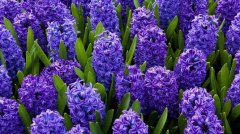
How do you grow hyacinths and what should you do after a hyacinth finishes blooming? Do hyacinths need sun?
Have you ever grown hyacinths? Then what problems did you run into while growing them? For example, how should you handle a hyacinth after it finishes blooming? Below are the common problems encountered when growing hyacinths; take a look and see if the answers you want are here. Q1. This year at i
-

How to Grow Hyacinths in Water? Detailed Guide to Methods and Precautions
Growing hyacinths in water is a very widely used method for planting hyacinths today. Although it cannot provide as many nutrients as soil cultivation, it allows you to fully observe the growth of the entire hyacinth plant. However, since the hydroponic method cannot let the hyacinth
-
How to Grow Hyacinths? Detailed Guide to Cultivation Methods and Precautions
The hyacinth is a flowering plant introduced to China from the Netherlands. Because of its unique fragrant scent and brilliant colors, many flower lovers are very fond of it, and so it is grown in many parts of China. The hyacinth is a very special plant, as it can be
-
How to Propagate Hyacinths? Detailed Guide to Watering Methods and How Often to Water
Hyacinth is a bulbous flower with rich, colorful blooms, large and beautifully shaped flowers, and a very intense floral fragrance. It is one of the most fragrant plants among all flowers and is deeply loved and sought after by everyone. In our daily lives, many people like to grow hyacinths
-
How do you grow hyacinths so they thrive and also extend the flowering period?
Hyacinth is a flower with vivid colors and a rich fragrance, and people often grow it hydroponically in offices or living rooms to decorate the space. So how do you grow hyacinths so they thrive? How do you extend the flowering period? 1. How do you grow hyacinths so they thrive? 1. First we need to prepare the needed materials:
-
How to Grow Hyacinths? Detailed Guide to Cultivation Methods and Precautions
Hyacinth is a perennial herbaceous bulbous plant, originally native to Europe and other regions, and after being introduced to our country it became very popular as an ornamental plant. Hyacinth is also one of the main plants from which aromatic oil is extracted. Below we introduce hyacinth
-
How to grow hyacinths? Methods to extend the flowering period
Hyacinths come in many colors, and the flower colors are very beautiful. Hyacinths like sun and tolerate cold, and prefer to bloom in early spring. The hyacinth is a bulbous flower with a rich, mellow fragrance. It likes a slightly moist environment and tolerates drought, and can be planted either in water or in soil. So how do you
-
A Detailed Guide to Growing Hyacinths in Water and Soil
The hyacinth is a perennial herbaceous bulbous plant. According to research, the hyacinth is the most fragrant of all flowering plants, and it originated along the Mediterranean coast and in the region of Asia Minor. There are roughly more than two thousand horticultural varieties of hyacinth worldwide, and they are cultivated all over the world. China began introducing hyacinths for cultivation in the 1950s, and by the 1980s hyacinths were already fairly widely planted across the country. Today the hyacinth has become a very common ornamental plant, with demand growing ever greater, but China is still unable to produce its own hyacinth seed and must import it from abroad. So <strong>how should we grow hyacinths</strong>?</p> <p style="text-align: center;"></p> <p style="text-indent:2em;"><strong><span style="color:#FF8C00">How to Grow Hyacinths</span></strong></p> <p style="text-indent:2em;"><span style="color:#008080">1. Soil Culture</span></p> <p style="text-indent:2em;">1. Soil culture, as the name suggests, means planting hyacinths in soil just like most plants. In choosing the soil, hyacinths do well in a sandy soil that is not too dry, drains well, and has good crumb structure; the soil should also be fertile and high in organic matter. You can mix leaf mold, garden soil, coarse sand and bone meal in a ratio of 5:3:1.5:0.5 to prepare the soil.</p> <p style="text-indent:2em;">2. Before planting, apply plenty of base fertilizer to ensure the soil is fertile, add a thin layer of sand on top, and after planting the hyacinth, cover it with grass; this is done to keep the soil loose and moist. No other management is needed before flowering, and no fertilizing is needed during the flowering period either. Generally, one top-dressing before flowering and one after flowering are enough to meet the fertilizer needs of hyacinth growth.</p> <p style="text-indent:2em;">3. Planting is generally carried out from October to November. By around seven to eight weeks, once the sprouts have grown to more than ten centimeters, the covering soil can be removed so that they receive better sunlight. Hyacinths like sunlight and are fairly cold-tolerant, and they prefer a moist, cool environment, so they need plenty of watering to promote growth.</p> <p style="text-align: center;"></p> <p style="text-indent:2em;"><span style="color:#008080">2. Water Culture</span></p> <p style="text-indent:2em;"><span style="text-indent:2em">1. Water culture is a unique cultivation method, meaning no soil is needed and the plant is grown in water. Water culture requires a space of one to two centimeters between the hyacinth bulb and the water level; the water must not cover the bulb. The purpose of this is to let the roots breathe, and the water should be changed once a week.</span></p> <p style="text-indent:2em;"><span style="text-indent:2em">2. When changing the water, be careful not to break the hyacinth's roots; its roots are very fragile and easily damaged, and damage will affect the hyacinth's growth. You can use a wide-mouthed glass bottle or plastic bottle, preferably transparent, so that you can check at any time whether the water is clean.</span></p> <p style="text-indent:2em;"><span style="text-indent:2em">3. A water temperature between 15°C and 20°C is most suitable for hyacinth growth; it should not be too high or too low, and room temperature is best kept between 17 and 20°C. If it is too hot, flowering will be delayed. Hyacinths cannot tolerate overly strong light, otherwise it will cause scorching of the leaves and petals or shorten the hyacinth's flowering period.</span></p> <p style="text-align: center;"><span style="text-indent:2em"></span></p> <p style="text-indent:2em;"><span style="text-indent:2em">The above is what the Tuliuwang editor brings you:</span>how to grow hyacinths, and we hope it is helpful to you</p>
-
How to grow hyacinths, and can they be placed in the bedroom?
Hyacinths are a favorite among many people who grow green plants, and they can also be called Dutch hyacinth, five-color hyacinth, etc. The language of hyacinths is very energetic, burning the fire of life to enjoy a rich life, encouraging everyone to be positive and upward, so how do you grow hyacinths? Can they be placed in the bed
-
When Do Hyacinths Bloom? Are They Toxic? How to Grow Them in Water?
Hyacinths originate from the Mediterranean coast, Asia Minor and the Netherlands, and are now widely cultivated around the world. There are very many hyacinth varieties, with more than two thousand recorded, and the two main true varieties are the "Dutch type" and the "Roman type". So when do hyacinths
条件筛选