-

What are the control methods for nutrient deficiency diseases in citrus
Zinc deficiency causes mottled leaf disease. Citrus mottled leaf disease is a common disease, with the typical symptom being mottled small leaves. When new leaves begin to turn green, the main veins and lateral veins appear markedly green, while the remaining tissue is light green to yellowish white and glossy. In severe cases, only the area near the main vein or thick lateral veins is green, and the new leaves are narrow and mottled, mostly upright, with short internodes and clustered branches. Mottled disease is caused by zinc deficiency. Many soils are deficient in zinc, such as soils formed from granite, gneiss, and serpentinite, which contain little zinc; acidic sandy soils lose zinc easily; in alkaline soils zinc readily forms insoluble compounds, thus causing zinc deficiency. In addition, soil that is too dry or too wet, low humus content or excessive application of organic matter, which hinders contact between roots and soil, as well as heavy pruning, all make zinc deficiency likely to occur. Foliar fertilization can achieve fairly good results in controlling zinc deficiency. It is advisable to spray 0.2%-0.3% zinc sulfate solution (with an equal amount of lime) once during the tender shoot stage, and spray 2-3 times for severe zinc deficiency.</p><p></p><p>Copper deficiency or boron deficiency causes dieback disease. In the early stage of copper deficiency in citrus, new shoots are long, soft, and slightly curved, the leaves are large and dark, and fruiting is low, so it is easily mistaken for excessive vigor. In severe cases, the tips of the shoots turn tea-brown and die, short weak clustered branches appear, and they dry out and drop early and gum exudes; when the branches mature, the wounds are reddish brown, and parts of the leaves are reddish brown. Citrus has a very small copper requirement, and ordinary spraying of Bordeaux mixture is already sufficient. However, copper deficiency is likely to occur in peat soil, acidic sandy soil, soil with high organic matter content, as well as on abandoned grazing land and abandoned cemetery land; excessive application of barnyard manure and phosphate fertilizer also causes copper deficiency; newly reclaimed citrus orchards that have not been sprayed with Bordeaux mixture or other copper preparations for several years are prone to copper deficiency. Boron deficiency in citrus: the growing points of buds die continuously, forming clustered buds; leaf veins swell, become corky or split; the fruit is small and deformed, with thick hard peel, and brown resin deposits are present in the fruit center and spongy layer. Boron is easily lost from acidic soil, hence boron deficiency. In soil parent materials such as granite, gneiss, and schist, boron content is extremely low; in alkaline soil its solubility is poor, so boron is also deficient. Excessive application of phosphate fertilizer or lime, or soil drought, all affect the availability of boron and the absorption of boron by roots; sour orange has weak boron uptake, so citrus grafted onto sour orange rootstock is generally deficient in boron. For copper deficiency, Bordeaux mixture or other copper fertilizers can be sprayed. To supplement boron, soil application can be used, or 0.05%-0.1% boron fertilizer solution can be sprayed at the bud stage, flowering stage, and small fruit stage.</p>
-
COVID-19 Impact}"If you can, give; if you can't, take!" Hunger and plague hit the vulnerable, nearly 300 million people worldwide need food assistance
COVID-19 Impact}"If you can, give; if you can't, take!" Hunger and plague hit the vulnerable, nearly 300 million people worldwide need food assistance
-
Academia Sinica's Hsing Yue-ie team conducts transnational research, unveiling the origins of Taiwan oil millet, with hopes that the "Taiwan orphan" will eliminate global hunger
Academia Sinica's Hsing Yue-ie team conducts transnational research, unveiling the origins of Taiwan oil millet, with hopes that the "Taiwan orphan" will eliminate global hunger
-
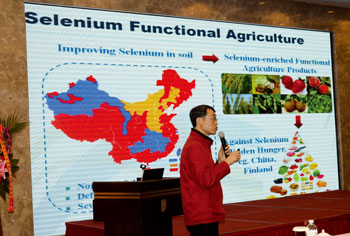
Functional agriculture cracks hidden hunger and drives supply-side reform and innovation
Functional agriculture solves "hunger" and innovates and reforms the supply side
-
How did the household contract responsibility system with remuneration linked to output free hundreds of millions of Chinese from hunger?
The household contract responsibility system with remuneration linked to output freed hundreds of millions of Chinese from hunger
-

The hunger of famine years is something those who never lived through it cannot understand
Summary: If you have never lived through an era of famine, you do not know what true hunger is. Without having lived through that era, without having personally experienced hunger, you cannot understand the poverty and hunger of those times. Even I, born in the 1980s, cannot understand or comprehend it. I can only often listen to Grandpa tell the "story of grain ration coupons" over and over, describing how the older generation survived years of starvation, how they overcame illness and famine again and again. Back then, they ate wild vegetables and wild fruits, and coarse grains and pickles all tasted incredibly delicious.
-
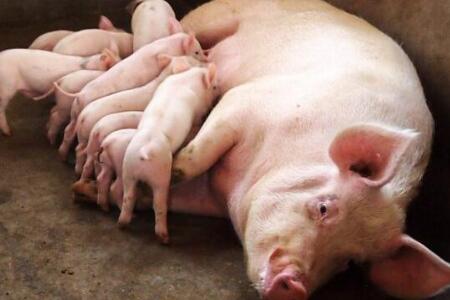
Sow mastitis: the piglets are crying from hunger, what should be done?
Sow mastitis: the piglets are crying from hunger, what should be done?
-

Make an arowana angry and you must apologize to it, or it will go on a hunger strike.
The modern trend of keeping pets first emerged in cities in the UK, the US and Western countries, and then gradually spread to other countries and regions. Hong Kong, China's Ta Kung Pao said that the more people keep pets, the more it shows that a country has developed to a stage of "..."
-

African smallholders squeezed out by the Green Revolution, hunger remains unsolved, transnational alliance pushes for food sovereignty
Green Revolution squeezes out African smallholders, hunger problem unsolved | African transnational alliance pushes "food sovereignty," emphasizing health and human rights
-
FAO calls for continued reduction of global hunger
The Food and Agriculture Organization of the United Nations, the World Food Programme and the International Fund for Agricultural Development recently jointly released a new report, affirming the positive trend of continuously declining global hunger numbers, but at the same time emphasizing that the global hunger population still exceeds 800 million,
条件筛选