Make an arowana angry and you must apologize to it, or it will go on a hunger strike.
The modern trend of keeping pets first emerged in cities in the UK, the US and Western countries, and then gradually spread to other countries and regions. Hong Kong, China's Ta Kung Pao said that the more people keep pets, the more it shows that a country has developed to a new stage of "having ample food and clothing."
In 2016, the consumer research company GFK surveyed 27,000 consumers in 22 countries and found that more than half of them kept pets. Among these pet owners, 33% kept dogs and 23% kept cats. It is reported that the Ashera cat, one of the most expensive cats in the world, can cost as much as 610,000 yuan. In Singapore, however, the wealthy here are more partial to an expensive pet fish: the Asian arowana.
The New York Times reported that it is the most expensive ornamental fish in the world, usually priced from several hundred US dollars to tens of thousands of US dollars. Emily Voigt, author of The Dragon Behind the Glass, wrote in the New York Post in 2016 that this fish was even speculated up to 300,000 US dollars on the market. Voigt said, "Singaporeans are absolutely crazy about fish." It can be said that the phenomenon of Singapore's wealthy "huffing fish" is just as popular as young people in China "huffing cats."
Voigt's article described a scene of plastic surgery for an arowana. Holding a scalpel, the surgeon precisely inserted the scalpel above its eyeball and removed fatty tissue. Yes, this "patient" was an arowana; it was simply knocked out and given eye fat-removal surgery.
When the "patient" suddenly woke up, it began thrashing around on the table. The doctor quickly cradled it in his arms and swiftly placed it into the tank. After the "plastic surgery," this fish's eyes became brighter and it was more energetic.
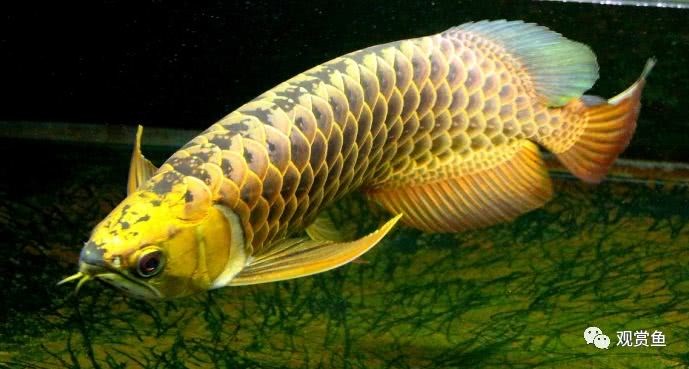
The Asian arowana is not something you can casually buy in a shop. In China and other East Asian countries, the arowana is one of the most auspicious fish, because it looks like the dragon from mythology and is believed to bring good luck and wealth. The arowana's posture and presence are highly ornamental, with an imposing body, glittering scales and an aggressive temperament.
In 1975, the arowana was listed in the Convention on International Trade in Endangered Species of Wild Fauna and Flora's international trade embargo list. Some believe that it was precisely this convention that greatly elevated its status. After that, the arowana set off a wave in Asia's aquarium market, especially in Southeast Asia, Japan and other places.
Reuters reported in 2009 that during the financial crisis, some Asians sought comfort in faith, while others pinned their hopes on pet fish. Kenny Yap, chairman of Singapore's top ornamental fish service, said, "In difficult times, you are more inclined to believe in religion, but at the same time you may also keep some fish."
Singapore arowana enthusiast Kenny Lim told The New York Times that if someone in Singapore can have an arowana, it means he has a certain status. Lim spent nearly 600,000 US dollars over eight years building an ecological aquarium, in which he kept 13 arowanas and 100 stingrays. In Lim's view, the arowana is a symbol of wealth.
As one of the countries with the lowest crime rates in the world, Singapore once suffered four arowana robberies in a single week. In neighboring Malaysia, a shocking violent incident occurred: a 31-year-old aquarium shop owner was stabbed to death and was almost decapitated - and the thief committed the murder only to steal his arowana.
According to Voigt, not only in Asia, but even Americans were once almost pathologically obsessed with this fish. She said that in the 1990s, the US government confiscated an arowana that a Wall Street banker had bought from the black market, and the banker burst into tears on the spot.
Mr. Kenny Yap once told the media that arowanas can be trained like cats and dogs, and when the owner is unhappy, they stay by his side (though with a fish tank in between).
Willie Si, known as the "father of fish plastic surgery," often receives consultation calls from some arowana owners. Someone once asked him why an arowana would not eat, and Si would ask these owners whether they had said anything disrespectful to the fish.
"Don't worry," Si advised. "Tell that fish you made a mistake, and by the next day it should be fine."