-
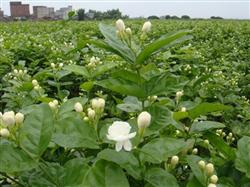
What are the methods for growing high-quality jasmine?
How do you grow high-quality jasmine? Please explain the methods. Jasmine belongs to the Oleaceae family, genus Jasminum, a perennial evergreen small shrub native to tropical and subtropical regions. The jasmine branches are slender, and the twigs are angular, sometimes hairy, and slightly vine-like. The leaves are simple and opposite, glossy, broadly ovate or elliptical, with prominent veins, a slightly wrinkled leaf surface, and leaves...
-

Which Climbing Rose Variety Is Best? Recommended High-Quality Varieties
Which Climbing Rose Variety Is Best?
-

Pollution-free, High-quality and High-efficiency Cultivation Techniques for Chuzhou Chrysanthemum
Chuzhou Chrysanthemum was originally named "Chiju" (pond chrysanthemum), and together with Zhejiang "Hangju" (Hangzhou chrysanthemum), Henan "Huaiju" (Huai chrysanthemum), and Bozhou "Boju" (Bozhou chrysanthemum), it is collectively known as one of China's four famous chrysanthemums. Chuzhou Chrysanthemum is not only enjoyed as an ornamental flower, but is also a precious dual-purpose product for both medicine and tea. During the Guangxu period of the Qing Dynasty, "Chuzhou Chrysanthemum" was once listed as a tribute item, hence it is also called "Gongju" (tribute chrysanthemum) or "Chugongju" (Chuzhou tribute chrysanthemum). It is currently a product under origin protection in China, and the eastern Anhui region is cultivating and developing it on a large scale. 1 Biological Characteristics 1.1 Morphological Characteristics Chuzhou Chrysanthemum belongs to the Asteraceae family and is a perennial root plant, with a plant height of 60-
-
Detailed Explanation of High-Yield and High-Quality Cultivation Techniques for Sorbonne Lilies
The "Sorbonne" lily originates from the Netherlands and belongs to the Oriental hybrid cut flower variety group. The plant height of this variety is 80-120 cm; the stems are hard, the leaves are relatively narrow and long, lanceolate, bright green and glossy; the flowers are pink with narrow white edges, red papillae are distributed on the lower half of the petals, and they are fragrant. The suitable growth temperature for "Sorbonne" lilies is between 18-25°C. Below 5°C and above 28°C, growth is affected to a certain extent. If the temperature exceeds 30°C, "blind flowers" may appear. 1. Select good bulbs according to different disinfection
-
What are the key techniques for cultivating high-quality late rice after lily?
In 2003, Zeng Zhaozhu of Daping Village, Niangxi Town, Xinshao County planted 1.21 mu of lily, harvested 1150 kg of lily in this year's autumn harvest, and sold it for 4630 yuan. After the lily harvest, he planted high-quality late rice as a follow-up crop, and the late rice is expected to yield more than 500 kg per mu. Old Zeng said that in recent years the lily market has been good and high-quality rice is even less of a concern to sell. Adopting the lily - high-quality late rice model not only implements paddy-upland rotation, which benefits both the lily and the high-quality late rice, but also achieves a double harvest of money and grain. After the late rice harvest, plant lily as soon as possible. Choose a field with relatively high terrain, good drainage,
-
Detailed Explanation of High-Quality and High-Yield Cultivation Techniques for Lilies
I. Site Selection and Seed Selection Lilies should not be continuously cropped; paddy fields under rice-dryland rotation need 1 rotation every 2-3 years, while dryland cropping needs 1 rotation every 4-5 years, and the previous crop should not be allium crops. For the soil, choose a sandy loam with higher terrain, deep soil layer, fertile soil, convenient drainage and drought resistance, and loose texture. For the seed bulbs, choose bulbs that are round and upright, with white scales that are tightly closed, and with only one scale bud and no pests or diseases. II. Rational Planting One month before planting, plow and sun the soil; the land should be deeply plowed to achieve level, clean, fine, and crumbly conditions,
-
New Carnation Variety Yun Zhi Die: Disease-Resistant and High Quality
"Yun Zhi Die" is a new carnation variety bred by the Flower Research Institute of the Yunnan Academy of Agricultural Sciences. Trial-planted in 2005 in the main carnation-producing areas of Yunnan, it showed characteristics of wide adaptability, high yield, strong disease resistance, pure flower color, tolerance to transport, long vase life, and ease of cultivation. In 2005 it obtained plant variety registration and protection from the Ministry of Agriculture. I. Botanical characteristics. Single-flower type. The stem's cross-section is angular, without cavities. Leaves are blue-green, long sword-shaped, 15.99 cm long and 0.92 cm wide, with a rich waxy layer on the surface and no hairs on the leaf margins.
条件筛选