-
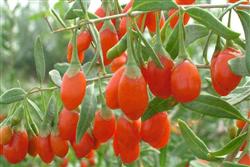
Key Technical Points for High-Yield and High-Quality Cultivation of Goji Berry
Goji berry is a perennial deciduous shrub of the genus Lycium in the Solanaceae family. Its leaves, fruit, roots and bark all have extensive medicinal value. It has strong stress resistance and tolerates fertilizer and water well; it is suitable for planting in arid, sandy wasteland and saline-alkali land, and is also an excellent tree species for courtyard economies. Its fruiting period is long; planted in the same year, it can bear fruit for up to 50 years, and enters full fruiting at 3-4 years. A...
-

How to achieve high yield, high quality and high efficiency in Pinellia ternata cultivation? A detailed explanation of cultivation techniques
Pinellia ternata is a commonly used precious traditional Chinese medicine, and for a long time its commercial supply has mainly relied on collecting wild resources. In recent years, changes in the environment, climate and resources have led to the gradual depletion of wild resources, while artificial cultivation has developed slowly, the market has long been in short supply, and prices have continued to rise. In the winter of 2005 the medicinal herb market price was 55 to 65 yuan per kg, while in the same period of 2004 the price was 45 yuan per kg. With traditional methods, Pinellia ternata cultivation generally yields 500 to 750 kg of fresh tubers per mu, with a drying ratio of 25% to 30%, and a yield of 125 kg per mu
-
Detailed Explanation of High-Quality and High-Yield Cultivation Techniques for Pinellia ternata
Pinellia ternata is a commonly used precious traditional Chinese medicine, and its commercial supply mainly relies on harvesting wild resources. In recent years, due to changes in the environment, climate, and resources, the contradiction between supply and demand has become increasingly tense. Because cultivation development has been slow, the market has long been in short supply, and prices have remained stable and continued to rise. In many places, Typhonium flagelliforme (water pinellia) is used as a substitute. In southern provinces such as Jiangxi and Guangxi, cultivation of Typhonium flagelliforme has appeared. The state has repeatedly ordered that Typhonium flagelliforme be listed as a counterfeit, prohibiting pharmaceutical factories from using the counterfeit Typhonium flagelliforme to replace Pinellia ternata as a raw material. For various reasons, its wild resources are being dug up less and less, resulting in shortage. Artificial cultivation, due to problems such as low reproductive capacity and variety degeneration, has limited the improvement of yield and quality and cannot timely supply the strong market demand. The amount available on the market decreases year by year, while domestic medicinal demand and export volume increase significantly year by year. Its selling price keeps rising. In the winter of 2005, the medicinal market offered 55-65 yuan/kg, up 33.3% from the same-period price of 45 yuan. Both export and domestic sales are in tight demand, and there are still not many goods available, making it a hot variety in medicinal market transactions, with good market and cultivation prospects. Traditional methods of cultivating Pinellia ternata generally yield 500-750 kg of fresh tubers per mu, with a drying ratio of 25%-30%, and an annual yield of 125-200 kg. However, according to high-yield practical experience in producing areas, high-yield fields have an average tuber yield of 850-1500 kg fresh weight, an increase of 50%-100%, a significant yield increase, with an output value of more than 10000 yuan per mu and considerable benefits. Therefore, for medicinal farmers to obtain higher yields and high benefits from cultivating Pinellia ternata, in addition to good routine field management, they must also grasp the following key links:
-
Key Techniques for High-Quality and High-Yield Cultivation of Pinellia ternata
1. Site selection and land preparation Creating a good growing and cultivation environment is the basic condition for high yield of Pinellia ternata. Under long-term wild ecological conditions, Pinellia ternata has developed characteristics of preferring a mild and humid climate and shaded environment, fearing high temperatures, drought and intense sunlight, and being able to tolerate cold. Therefore, the planting site for Pinellia ternata should be selected in sandy loam soil on sunny-facing terraces, terraced fields or gentle slopes close to a water source. The soil is required to be loose, fertile and well-drained. The previous crop is best as corn or rapeseed. After selecting the site, in combination with autumn plowing and land preparation, apply per mu decomposed chicken manure
-
Key Techniques for High-Quality and High-Yield Cultivation and Management of Pinellia ternata
I. Site Selection and Preparation. Pinellia ternata prefers a warm and humid environment. The planting site should be chosen as a small flat area on gentle mountain slopes at high altitude, with loose, fertile, moist soil and not strong sunlight. The land should be plowed and broken up several times. Apply 3000-4000 kg of farmyard manure per mu as base fertilizer. Make raised beds 20 cm high and 100-120 cm wide. Since Pinellia ternata is a shade-tolerant plant, it can be intercropped under orchards and tall crops. II. Propagation Methods. (1) Corm propagation. In November-December, select disease-free,
-
Codonopsis stems and leaves are a high-quality feed with high nutritional value.
Codonopsis is a valuable traditional Chinese medicinal herb, with its dried roots used as medicine; it has the effects of tonifying qi and nourishing blood, harmonizing the spleen and stomach, promoting fluid production, and clearing the lungs. Its stems and leaves were often discarded in the past. However, in recent years, research has found that Codonopsis stems and leaves contain volatile oils, various amino acids, macro- and trace elements, alkaloids, starch, and more. Farmers at the Sifangpa medicinal herb farm in our county dry and crush the stems and leaves, then add them to feed at a ratio of 20-30% to feed pigs, producing a clear weight-gain effect. When used to feed poultry, not only are the egg-laying rate, egg production, and average egg weight increased, but tests also show that the cholesterol content is somewhat reduced.
-
How can goji berries be cultivated to achieve both high yield and premium quality?
Goji berry (Lycium barbarum) is a perennial deciduous shrub of the genus Lycium in the nightshade family Solanaceae. Its leaves, fruit, roots and bark all have extensive medicinal value. It has strong stress resistance and tolerance to fertilizer and water, and is suitable not only for planting in arid, sandy wasteland and saline-alkali land, but is also an excellent tree species for courtyard economies; its fruiting period is long, and plants set out in the current year can still bear fruit up to 50 years later, reaching full fruiting stage in 3 to 4 years, generally producing more than 3000 kg of dried fruit per hectare; its fruit contains a variety of organic compounds and nutrients and has effects such as tonifying the kidney, nourishing the liver, brightening the eyes, invigorating blood circulation and fighting cancer. 1. Select good varieties. There are many goji varieties; in ** alone there are nearly 1
-
Clever Cultivation of Goji Shoots for Easy, High-Quality, High-Yield Harvests
Goji shoots (gouqi tou) refers to the tender shoot tips of the goji berry (Lycium barbarum), a woody sprout vegetable. Goji tender shoots are not only rich in nutrients but also have the effect of tonifying the kidneys and nourishing the liver, making them a valuable medicinal vegetable that is well received by consumers. The production and cultivation techniques are as follows: 1. Varieties of culinary goji. There are two types of goji used as a leafy vegetable, namely fine-leaf goji and large-leaf goji. Neither of these two types flowers or fruits, so they can only be propagated from cuttings each year. 2. Raising seedlings. Select robustly growing fine-leaf or large-leaf culinary goji plants (also called mother plants), take their thick stout branches, and cut them into 15
-
Detailed Explanation of High-Quality and High-Yield Cultivation Techniques for Log-Grown Lingzhi (Ganoderma)
Lingzhi (Ganoderma) is a precious medicinal fungus. Modern medical research has demonstrated that lingzhi possesses multiple functions such as cancer prevention, anti-cancer and anti-aging properties, and the development and application of lingzhi has attracted widespread attention. Longquan City is a key production area for lingzhi; in the early 1990s, trials of short-log sterilized-substrate cultivation techniques for lingzhi were already underway, and these techniques have been continuously refined through production extension and application. By 2002, the city's log-grown lingzhi cultivation volume reached 3000 cubic meters, with a total output of 120 tons, accounting for about 1/4 of the national total output, and achieving an output value of 700
-
Key Technical Points for Large-Scale Cultivation of Licorice with High Quality and High Yield
Field Management 1. Intertillage and weeding: After the seedlings emerge completely, intertillage and weeding should be carried out promptly so that there are no weeds in the field. For ridge planting, three hoeings and three ridgings can be done; for bed planting, weeds on the bed surface should be pulled out. This is the key to high quality and high yield. Where conditions permit, closed weeding can be carried out after sowing and before seedling emergence, using Douhuanglong (20% chlorimuron-ethyl) wettable powder 2 bags/mu mixed with acetochlor 2-4 bottles/mu and sprayed over the field. After seedling emergence, herbicides killing monocotyledonous plants can be sprayed to eliminate weeds.
条件筛选