-

Why have corn prices fallen, and how big is the impact on farmers?
After a heavy snowfall, a grain broker came to the home of corn grower Zhao Jincheng to inspect the grain. "Now it has to be graded as third-class; it doesn't make second-class." "If it's third-class, after deducting freight and delivering it to the destination, it can only sell for 0.71 yuan." The corn price fell from 0.90 yuan per jin in 2014 to 0.71 yuan per jin this year. Neighbors and relatives all stored their corn, waiting to see how the price would move. But Zhao Jincheng urgently needed money, so he had to sell even at a low price, because he still had a loan to repay as soon as possible.
-
Food additives with safety risks will be subject to mandatory recall
Tiny additives, a complex big world. How are they used? How are they managed? When consumers choose food, additives have often already moved in. How does production supervision and management strictly guard the entry gate? On June 1, the General Administration of Quality Supervision, Inspection and Quarantine issued the Provisions on the Supervision and Administration of Food Additive Production
-
Industry expects corn prices may still have room to fall around National Day
Since the announcement of the new temporary corn reserve policy, corn prices in the North China and Northeast production areas have all declined, with prices in North China falling particularly sharply, and new and old corn prices are basically the same. At the same time, the pressure from the new corn coming onto the market is gradually emerging, and the corn market at northern and southern ports remains weak.
-
Why international grain prices have fallen back to levels last seen 6 years ago
Without notice, international grain prices have returned to the low point seen during the 2008 financial crisis. The prices of wheat, corn, rice and soybeans have all fallen by more than 50% from the highs they rebounded to after the crisis. Although the drop in rice prices was less than 50%, because the rebound high during the crisis was not high enough, the current absolute price level is in fact substantially lower than the lowest level during the crisis.
-
Have the poor fallen into a structural poverty trap?
In a broad sense, poverty alleviation mainly refers to two aspects: the reduction of absolute poverty and the narrowing of inequality. Over the past 30-plus years, China's alleviation of absolute poverty has been very obvious. Nowadays in many places, whether a household in a poor village owns a bicycle, motorcycle, TV set, etc. can no longer serve as a standard for judging whether it is poor.
-
Potato steamed buns have arrived - is there really not enough food to eat?
As a vegetable with broad popular appeal, the potato has upgraded itself with a new way to be eaten. Recently, potato steamed buns have invaded major supermarkets in Beijing, and the potato's future path of advancement also includes bread, flower rolls, cakes and bean buns. At the beginning of this year, the Ministry of Agriculture proposed the
-
Corn prices in the Hebei-Shandong-Henan region have fallen noticeably
Downstream industries are shrinking, and demand for feed corn shows no sign of recovery. Compared with the usual pattern in previous years, when market prices rose steadily in small increments after entering June, this year's corn market price trend in Henan, Hebei and Shandong has been somewhat abnormal: instead of rising, it has shown a clear downward trend.
-
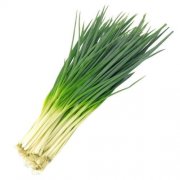
What nutritional value does scallion have? The difference between scallion and Welsh onion, and their nutritional components
Many people think scallion is Welsh onion, but actually it is not; there is a difference between the two. Do you know what nutritional value scallion has? Let's take a look together. Scallion contains nutrients such as calcium, vitamin C, carotene, and dietary fiber. 100 grams of scallion
-
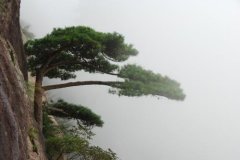
The characteristics of the Huangshan pine are endlessly varied in form; compared with the Japanese black pine, which is better?
The Huangshan pine mainly grows on Mount Huangshan, so it is called the Huangshan pine. What characteristics does the Huangshan pine have? Its most distinctive characteristic is where it grows, generally on mountain tops and beside steep cliffs. The giant pines reach several zhang in height, while the small pines are less than a chi, breaking through rock to grow, with a beauty of form that
-
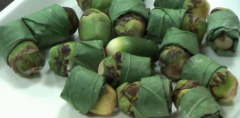
Taiwan betel nut prices have fallen; what are the current prices and how large is the growing area?
Taiwan's betel nut orchard abandonment and crop conversion policy restarts this year, but the deadline is only until December 31; eligible betel nut farmers can apply at the township office where the land is located. The abandonment subsidy is 150,000 yuan per hectare, while for conversion, seedling costs of 5 to 10 thousand yuan are given depending on whether the land is flat or mountainous.
条件筛选