-
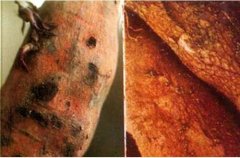
Which pesticides work well for controlling underground pests in sweet potatoes
When sweet potatoes are damaged by underground pests, the consequences can be very serious. In production, we must promptly adopt the following methods for toxic control, as this can increase yield and quality and reduce the damage suffered by sweet potatoes. The first is drenching with tea seed cake liquid. Tea seed cake liquid
-

How to plant tulips in the ground? A detailed guide to the planting method
To make ground-planted tulips sturdy, with vivid flower colors, a moderate flower stalk length, and large blooms, the following must be noted in cultivation: (1) Selection and preparation of the planting site. The planting site should be chosen in a wind-sheltered, sunny spot, with the groundwater level at 50-70 cm. The soil should be loose and fertile, so the ground must be deeply dug; if the soil quality is poor, replace the original soil in the planting layer with potting soil, and apply a base fertilizer made by mixing well-rotted organic fertilizer with a little superphosphate. (2) Selection and treatment of the bulbs. The new bulbs to be planted must be selected for vigorous growth
-
Detailed Explanation of Harvesting and Processing Methods for Ground Beetles
In zoological terms, ground beetles belong to the class Insecta, subclass Pterygota, order Blattaria. There are many species of ground beetles; according to documented records, these include the Chinese ground beetle, the Ji ground beetle, the Tibetan ground beetle, the Yunnan ground beetle, and the golden-edged ground beetle. Currently, the main species bred artificially are the Chinese ground beetle and the Ji ground beetle. The ground beetle is a traditional Chinese medicinal material. It was first recorded in the Shennong Bencao Jing: "It governs cold and heat in the heart, blood accumulation and abdominal masses, breaks hardness, and removes blood blockage." The Bencao Gangmu records: "It moves postpartum blood accumulation, treats traumatic blood stasis, treats heavy tongue, mouth sores, and children's abdominal pain and night crying." The Fenlei Caoyaoxing
-
Technical method for raising ground beetles (Eupolyphaga sinensis) with cottonseed hulls
If there is no place for bee keeping, ground beetles can be raised according to the principle that cottonseed hulls ferment and generate heat. The method is simple, and is briefly introduced as follows. In a jar 30 cm in diameter, put prepared cottonseed hulls, press them tight, and place inside a small basin 20 cm in diameter; in the small basin put a layer of loose soil with moisture suitable for the growth of small ground beetles, then put the small ground beetles into the basin, and on top put some feed for the small ground beetles to eat; then cover the mouth of the jar tightly with old cotton wadding. Preparation method of the cottonseed hulls: generally, according to the temperature needed, add
-
Control Methods for Major Underground Pests of Potatoes
I. Major Pests 1. Mole cricket, also called lala cricket or earth dog. Both the adults (with fully developed wings) and nymphs (with incompletely developed wings) of the mole cricket cause damage to potatoes. It uses its mouthparts and large front claws (forelegs) to tear the underground stems or roots of potatoes into a tangled mass, causing the above-ground parts to wilt or die. It sometimes also bites the seed pieces, preventing the buds from growing and causing gaps in the stand. It tunnels through the soil, separating young roots from the soil and exposing them to air, causing water loss that affects seedling growth and can even kill the plants. In autumn, it bites the tubers, creating holes in them or making them
-
What are the control methods for underground pests of licorice?
The main underground pests at the seedling emergence stage of licorice are mole crickets and the Oriental beetle (He's Oriental chelifer), while at the mature plant stage the main ones are click beetles, scarab beetles, cutworms and darkling beetles, which cause serious damage. After wild licorice is damaged by underground pests, because the wild root head is deep below the soil surface, it is mainly the underground stem that is eaten and damaged, and after damage the adventitious buds can grow rapidly and regenerate, so the whole plant does not die. In contrast, what is mainly eaten and damaged in cultivated licorice is the root, and the plants are young and small with weak recovery ability; accompanied by rot infection, this often leads to the whole plant rotting and dying. In
-
Dianthus acicularis is an excellent drought-tolerant, water-saving groundcover plant
Most parts of northern China are resource-based severely water-scarce regions, with per capita water resources of less than 300 cubic meters, only 1/8 of the national average, and far below the international water-scarcity threshold of 1,000 cubic meters per capita. With the vigorous development of landscaping, water consumption for greening is growing ever larger, and this contradiction with the scarce water resources of northern China is becoming increasingly prominent. Dianthus acicularis has good drought tolerance and is an excellent water-saving plant material in landscaping. According to calculations, Dianthus acicularis consumes only 0.
-
Construction Method for a Multi-Layer Three-Dimensional Underground Snake House
The multi-layer three-dimensional underground snake house can be used year-round. Ordinarily it serves as a habitat for snakes, and in winter it can also become an ideal hibernation site for snakes. When this snake house is used in the provinces (regions) south of the Yangtze River, its underground coolness is especially evident in the hotter summer weather. It can also be built in a semi-underground, semi-above-ground mode according to the depth of the water table in different regions, to solve the problem in the south, where water resources are abundant and the water table is shallow, that deep digging easily reaches water. In the north, where winter is especially cold, in this season it is only necessary to increase the thickness of the soil layer on top of the snake house to ensure it is below the local frost
-
Characteristics of the groundcover-type Dianthus variety and its planting and care methods
Groundcover Dianthus is a perennial herbaceous plant in the genus Dianthus of the family Caryophyllaceae, native to the United States and Japan. It was introduced to China in the early 1990s, and after more than ten years of cultivation, more dwarfed superior varieties have been bred. This variety blooms around May Day, with a flowering period of more than 50 days, and is both a flowering plant and a replacement variety for lawns. Groundcover Dianthus is a cold-hardy variety; in cultivation trials in Shandong, Shanxi, Hebei and other places, it can endure short-term low temperatures of minus 25°C to 30°C in the depths of winter. Under heavy snow cover, the leaves show no signs of freeze damage. Groundcover Dianthus is suit
-
Control methods for the Ningxia ground pearl (Porphyrophora ningxiana) pest on licorice
It is distributed in all licorice-producing areas nationwide, generally causing damage from the seedling stage to the mature plant stage. The Ningxia ground pearl has 8 host plant species, all of which are perennial leguminous herbaceous perennials, with licorice suffering the most severe damage, while other hosts are only slightly affected. (1) Damage period and damage symptoms: Overwintering nymphs can move intermittently when the surface soil temperature reaches 6°C, and become frequently active when the daily average temperature exceeds 12°C, in order to search for hosts. Early March is the initial activity stage, mid-to-late April is the peak period for searching hosts, and by mid-May they have basically all settled. From late May to late July
条件筛选