-

Why do empty grains occur in soybean cultivation
Why do soybeans produce empty grains? How to prevent soybean empty grains? Please give an introduction. Soybean empty grains are mainly caused by: the decline of leaf function, resulting in insufficient photosynthetic products; or lack of water, which hinders the transport of nutrients. In the late growth stage of soybeans, the decline of various physiological functions is inevitable, but if nutrients and water...
-
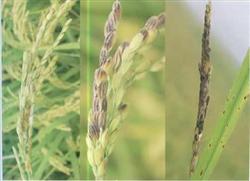
Why does rice produce empty and blighted grains, and how should it be prevented and controlled?
Why does rice produce empty and blighted grains, and how should it be prevented and controlled? Please give a detailed introduction. Under normal conditions, the rate of empty and blighted rice grains is generally 10%-20%, and in severe cases can reach 40%, which greatly affects rice yield. 1. Causes of formation. The rate of empty and blighted rice grains is mainly affected by 3 factors. 1. Climatic...
-

How are the market conditions for the four major staple grains in 2019
How are the market conditions for the four major staple grains in 2019
-

How to prevent empty and blighted rice grains? Master these technical measures
Empty and blighted rice grains refer to unfertilized empty grains and half-empty grains that fail to develop after fertilization, and this has a great impact on rice yield. Therefore, in rice production, in addition to striving for more panicles and larger panicles, it is also necessary to reduce empty and blighted grains, improve the seed-setting rate, and increase the 1000-grain weight in order to obtain high yields. At present, rice is in the grain-filling and ripening stage. To prevent the occurrence of empty and blighted rice grains and achieve the goal of high yield, comprehensive preventive measures must be taken. The specific measures are as follows: 1. Select varieties with good seed setting. Rice varieties differ in physiological morphology, and the seed-setting rate varies greatly.
-
条件筛选