-

Detailed Explanation of Key Techniques for Macadamia Nut Propagation
Macadamia nuts are propagated by grafting and cuttings. (1) Grafting propagation 1. Seed selection The seeds used to grow rootstock seedlings should be taken from robustly growing, consistently high-yielding plants, preferably disease-free with good nut quality. Both smooth-shell and rough-shell types can be used; because rough-shell seeds germinate and grow quickly, are relatively disease-resistant and have softer wood, they are easier to graft, so some regions prefer to use them.
-
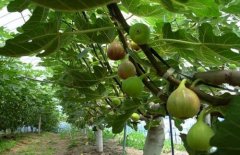
Fig Propagation Methods: Characteristics of Grafting, Cuttings, and Air Layering
There are three main methods for propagating fig trees: grafting, cuttings, and air layering. So how do you grow them using these three methods? Let's take a look at these three propagation methods together! Fig Grafting Method 1. Make a diagonal cut on the branch to be grafted (the smoother the better)
-
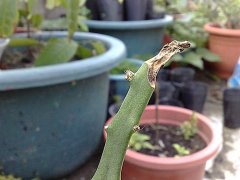
Where is the yellow dragon fruit native to? Suitable rootstocks for grafting and cultivation methods
Yellow dragon fruit, also known as yellow pitaya (Pitahaya Amarilla), is distributed in regions such as Colombia, Ecuador, Peru and Bolivia. Because the fruit is refined, sweet and juicy, it can be called the finest in the dragon fruit world. However, its ripening period is two to three times longer than that of ordinary dragon fruit.
-
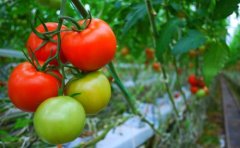
Introduction to Tomato Tube Grafting Technology and the Difference Between Manual and Mechanical Grafting
Tomato is a vegetable we all love to eat. In terms of tomato cultivation techniques, we also have many methods. Do you know about tomato grafting technology? Would you like to learn about it? Tube grafting technology. The common grafting method for tomatoes is the slant-cut graft, which requires external objects to
-
Ancient rose blooms in a mountain crevice after a thousand years! Where is it located? Can it be grafted? Grafting methods included
As a common cut flower and edible flower, roses are cultivated in many parts of our country. Recently, the news that ancient roses in a deep mountain rock crevice have bloomed has attracted everyone's attention! So where is this thousand-year rose located? Has it really grown for a thousand years? Can it be grafted
-
What Trees Can Persimmon Rootstock Be Grafted Onto? A Full Guide to Grafting Time and Methods
Persimmon rootstock generally refers to Diospyros lotus, also called black date, soft date, milk date, wild persimmon, etc. It is a fruit tree used both as medicine and food, and can be propagated by sowing or grafting. So what trees can persimmon rootstock be grafted onto? When to graft? How to graft? 1. What trees can persimmon rootstock be
-
A Detailed Guide to Grape Seedling Grafting Methods and the Number of Years Until Fruiting
Summary First cut the scion, keeping 1-2 buds on the scion, then below the lower bud of the scion, at a distance of 0.5-0.8cm from the bud, cut a 3cm-long slanted surface on both sides, the slanted surface should be smooth, forming a wedge-shaped cut surface, one side of the scion slightly thinner, the other side slightly thicker, then cut off the upper part of the bud 2-2.5cm,
-
Key Technical Points and Operation Methods of Vegetable Grafting Explained
Abstract Top-insertion grafting method: Pull the bamboo skewer inserted in the rootstock out, then insert the trimmed scion into the hole, with the scion cotyledons and rootstock cotyledons forming a "cross" shape. Approach grafting method: Insert the scion cut into the rootstock stem cut, the two cuts need to fit tightly together, then use a grafting clip ⟦4 <p class="cintro"><span>Abstract</span>Top-insertion grafting method: Pull the bamboo skewer inserted in the rootstock out, then insert the trimmed scion into the hole, with the scion cotyledons and rootstock cotyledons forming a "cross" shape. Approach grafting method: Insert the scion cut into the rootstock stem cut, the two cuts need to fit tightly together, then use a grafting clip to secure the joint. Cleft grafting method: Insert the trimmed scion into the cleft, keeping the rootstock and scion surfaces level, then use a grafting clip for securing.</p> <p></p> <p><strong>I. Vegetable Grafting Techniques</strong></p><p>1. Top-insertion grafting method</p><p>(1) Removing the rootstock growing point: A blade or bamboo skewer can be used to cut off the true leaves and growing point of the rootstock.</p><p>(2) Cutting the rootstock: A bamboo skewer with the same thickness as the scion hypocotyl and a wedge-shaped tip can be used, then insert it at a downward slant from the main vein of one cotyledon of the rootstock toward the other cotyledon to a depth of 1cm; generally, it is best if the outer epidermis is not pierced and the bamboo skewer is faintly visible.</p><p>(3) Cutting the scion: At 1-1.5cm below the cotyledon node, use a blade to cut it into a wedge-shaped face with a bevel length of 1cm.</p><p>(4) Grafting: Pull the bamboo skewer inserted in the rootstock out, then insert the trimmed scion into the hole, with the scion cotyledons and rootstock cotyledons forming a “cross” shape.</p><p></p><p>2. Approach grafting method</p><p>(1) Removing the rootstock growing point: A blade or bamboo skewer can be used to cut off the true leaves and growing point of the rootstock.</p><p>(2) Cutting the rootstock: At 0.5-1cm below the cotyledons, use a blade to make a downward slanting cut, with the depth needing to reach 1/2 of the stem thickness.</p><p>(3) Cutting the scion: Make an upward slanting cut at the corresponding part of the scion, generally with the depth reaching 1/2 of the stem thickness, and the cut length the same as the rootstock cut.</p><p>(4) Grafting: Insert the scion cut into the rootstock stem cut, the two cuts need to fit tightly together, then use a grafting clip to secure the joint.</p><p>(5) Root cutting: After grafting, plant the rootstock and scion together into a nutrient pot, about 1cm apart, with the joint about 3cm from the soil surface; wait 7 days for the joint to heal, then cut off the scion root; generally after 10-15 days, the grafting clip can be removed.</p><p></p><p>3. Cleft grafting method</p><p>(1) Removing the rootstock growing point: A blade or bamboo skewer can be used to cut off the true leaves and growing point of the rootstock.</p><p>(2) Cutting the rootstock: From between the 2 cotyledons, split the young stem downward, with a length of 1-1.5cm.</p><p>(3) Cutting the scion: Cut the scion young stem into a wedge shape, with a cut surface length of 1-1.5cm.</p><p>(4) Grafting: Insert the trimmed scion into the cleft, keeping the rootstock and scion surfaces level, then use a grafting clip for securing.</p><p></p><p><strong>II. Suitable Grafting Time for Vegetables</strong></p><p>1. Cucurbits: When the cotyledons are fully expanded and when the true leaves appear, this is the suitable grafting period.</p><p>2. Eggplant: When the rootstock has grown 3-4 true leaves and the scion has grown 2-3 true leaves, grafting requires retaining 1 true leaf.</p><p>3. Tomato: When the rootstock has grown 4-5 true leaves and the scion has grown 2-3 true leaves, grafting requires retaining 1 true leaf.</p>
-
Persimmon Tree Grafting Time and Methods, with Common Care Tips
Abstract: In summer, cut a square bud piece 1.8-2.5 cm long and 1-1.2 cm wide on the scion of the persimmon tree, cut the rootstock bark horizontally according to the length of the grafted bud, make 1 vertical cut on the right side to lift the bark, remove the grafted bud from the scion and insert it, aligning the right-side cuts with each other; then
-
How to plant redleaf plum? Detailed planting methods and techniques
Abstract Grafting method: carried out before spring bud break, rootstock can use wild peach, plum, plum, peach, apricot, etc. Layering method: select healthy branches, peel off a ring of bark 15-30cm below the top, cut a suitably sized piece of plastic film, place moist garden soil on it,
条件筛选