-

How are grafted Schisandra chinensis seedlings cultivated? A detailed explanation of the key technical points
Schisandra chinensis is a wild fruit tree distributed in Northeast China. Its fruit can be used both as medicine and for brewing wine and making juice to produce beverages. It is a multifunctional, multi-purpose wild economic plant with high development and utilization value and very broad application prospects. Since the 1990s, in response to the continuous decline of wild Schisandra chinensis resources and growing market demand, our institute has carried out research on domesticated high-yield techniques and new variety selection and breeding, summarized a complete set of domesticated high-yield cultivation techniques mainly including artificial orchard establishment, shaping and pruning, soil management, and pest and disease control, and bred a new
-
Performance of Top-Grafted Hongnanguo Pear Introduction and Key Cultivation Techniques
Hongnanguo pear is a bud sport of Nanguo pear identified in 1996 at Shenyang Agricultural University. In 2003, Luan County introduced 5000 scions from the Fushun Special Products Research Institute for top-grafting trial planting. It performed well in Luan County. In the second year after top-grafting, the yield was 300 kg per 667 sq m with an income of 4200 yuan; in 2005, the yield was 800 kg per 667 sq m with an income of 8000 yuan; in 2006, it reached 1500 kg with an income of 12000 yuan, showing significant economic benefits. 1 Basic Information of the Top-Grafting Trial Orchard The introduction site was set up in
-
Grafting Propagation Technique for Pinus sylvestris var. mongolica Grafted with Korean Pine (Pinus koraiensis)
Pinus sylvestris var. mongolica has strong adaptability, is cold-resistant, drought-tolerant, and tolerant of poor soil. Using Pinus sylvestris var. mongolica as rootstock to graft Korean pine (Pinus koraiensis) brings earlier flowering and fruiting, rapid orchard establishment, and good results. 1 Preparation of scions 1.1 Selection of mother trees Select superior mother trees as scion sources. Within the chosen area, measure the tree height, diameter at breast height, crown width, fruiting layer thickness, number of young cones, number of cones, and male and female flower quantities of each clone individual. At the same time, conduct individual tree seed collection, and test cone number, cone weight, seed yield, seed extraction rate, kernel rate, empty shell rate, pest damage rate, 1000-seed weight, as well as cone length and width.
-

Which fruit trees can peach trees be grafted with? A detailed explanation of grafting methods
Summary: Which fruit trees can peach trees be grafted with, and how is grafting done? The peach tree is a plant in the genus Prunus of the Rosaceae family. The most commonly used propagation methods include four types: seed propagation, grafting, cuttings, and layering, with grafting being the most commonly used...
-

Are grafted rose plants better than cuttings? A comparative analysis of their advantages
Are grafted rose plants better than cuttings? This question troubles many flower lovers. Today, the editor will tell you about the differences between grafted rose plants and cutting-grown rose plants, as well as what to pay attention to when buying grafted plants
-
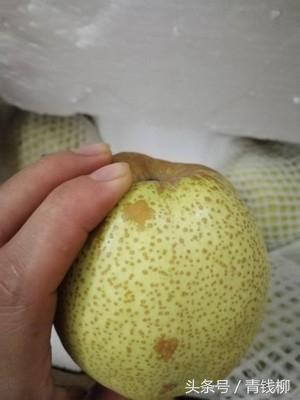
Performance of Cuilü Pear Top-Grafted onto Dangshan Suli Pear and Its High-Yield Cultivation Techniques
Performance of Cuilü Pear Top-Grafted onto Dangshan Suli Pear and Its High-Yield Cultivation Techniques. The Yellow River Old Course Horticultural Farm in Xiao County, Anhui Province, is located at the border between northern Anhui and Xuzhou, Jiangsu. The main pear cultivars grown are mid-to-late ripening varieties such as Dangshan Suli, Fengshui and Huangjin. The Yellow River Old Course...
-
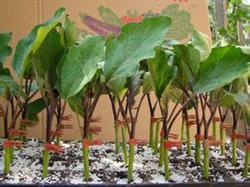
Detailed Explanation of the Key Techniques for Year-Round Cultivation of Grafted Eggplant
With the expansion of eggplant cultivation area and continuous year-after-year planting, various soil-borne diseases have become quite common, and the degree of damage is also increasing, such as eggplant Verticillium wilt, Fusarium wilt, and bacterial wilt. In old eggplant-growing areas, soil-borne diseases have become a stubborn problem limiting eggplant production, and conventional pesticide control is not effective. Grafting has become...
-
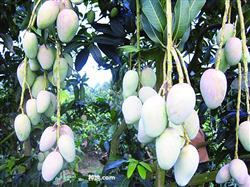
What are the methods for cultivating mango grafted rootstock seedlings?
How should large mango trees be fertilized scientifically? Please advise on fertilizing bearing mango trees. The principle should be to reasonably adjust the contradiction between vegetative growth and reproductive growth. It is necessary both to promote flowering and fruiting in the current year and control excessive summer shoot growth, and to promote the flushing and robust growth of autumn shoots, laying a good foundation for continued high yields the following year. Fertilization...
-
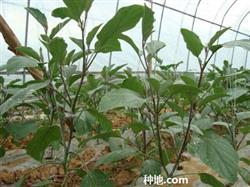
Detailed Explanation of Grafted Eggplant Cultivation Methods and Technical Points
How should grafted eggplant be planted? Please introduce the technique of eggplant grafting, which uses wild eggplant species plants as rootstock for grafting eggplant seedlings onto the rootstock. After grafting, eggplants can grow to 1.5-2m, with a harvest period of more than 200 d. In the cold northern regions, people can eat locally produced...
-
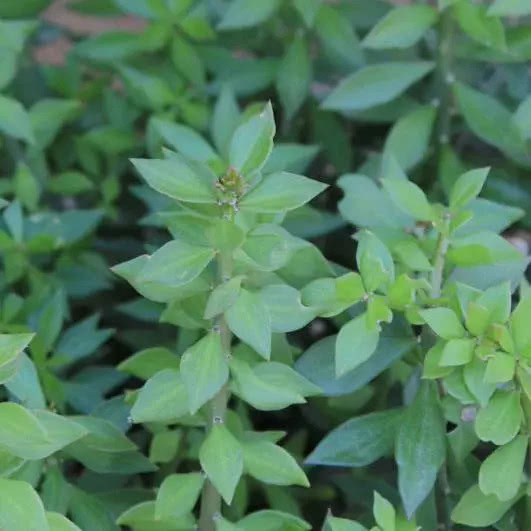
Christmas cactus grows like crazy and blooms profusely, and can be grafted onto a rare new material
Today I want to tell you about this new thing used for grafting, and this is Pereskiopsis. That is, Pereskiopsis spathulata. Pereskiopsis is divided into large-leaf Pereskiopsis, hairy Pereskiopsis, and small-leaf Pereskiopsis. Hairy Pereskiopsis has a layer of white hairs between the leaf axils. Small-leaf Pereskiopsis...
条件筛选