Performance of Cuilü Pear Top-Grafted onto Dangshan Suli Pear and Its High-Yield Cultivation Techniques
Performance of Cuilü Pear Top-Grafted onto Dangshan Suli Pear and Its High-Yield Cultivation Techniques
The Yellow River Old Course Horticultural Farm in Xiao County, Anhui Province, is located at the border between northern Anhui and Xuzhou, Jiangsu. The main pear cultivars grown are mid-to-late ripening varieties such as Dangshan Suli, Fengshui and Huangjin. The soil of the pear orchard of Team 3 of the Yellow River Old Course Horticultural Farm has medium fertility and is a fluvo-aquic clayey sandy soil of the Yellow River old course, with a pH value of 7.4. The local area has a temperate monsoon climate, with an average annual temperature of 14.6 °C, precipitation of about 850 mm, and a frost-free period of 230 d. The orchard is planted with ten-year-old Dangshan Suli pears, with a plant spacing of 4 m×6 m, a tree structure of small canopy delayed-open central leader form, and a relatively high level of management. In order to optimize the pear variety structure, one-year-old branches of Cuilü pear were introduced from the Horticulture Institute of the Zhejiang Academy of Agricultural Sciences in early 2010, and top-grafting was carried out in March on ten-year-old Dangshan Suli pears of Team 3 of the farm, achieving good results. Through observation, this variety shows strong adaptability, high and stable yield, early fruiting, early maturity, smooth fruit surface and superior quality, and has good prospects for development. The performance and key cultivation and management techniques of Cuilü pear are introduced as follows.
1 Top-Grafting Method and Performance
1.1 Top-Grafting Method
In early February, vigorous, pest-free vegetative branches with plump buds from the outer canopy of Cuilü pear trees were selected as scions; their tips and shrunken buds at the base were cut off, and they were tied into bundles, placed in a cool place and covered with moist sand for later use. Before top-grafting, the central leader of the Dangshan Suli pear trees was sawn off to change the trees to an open-center form, making full use of the original framework of the first tier of the tree as far as possible; 3~5 main branches were selected, and 1~2 lateral branches were selected on each main branch; main branches were cut back leaving 2/3, lateral branches leaving 3/4, and all other large branches and upward-growing branches were removed, retaining small branches on both sides. During top-grafting, the apical ends of the rootstocks of main and lateral branches were grafted by cleft grafting or cut grafting, and at the middle and lower parts, cleft grafting was carried out every 10~20 cm (20~40 cm apart on the same side) on the retained small branches. For positions without small branches, side-veneer grafting was used. Each scion had 1~2 plump buds, with a sharp knife and smooth cut, and the cambium layers aligned. After grafting, the grafted parts and scions were tightly bound and wrapped with plastic film. New shoots sprouting from latent buds after top-grafting were all removed except those retained for grafting; when new shoots grew to about 30 cm, they were tied in time to prevent wind breakage. The plastic film at the graft interface was loosened in time in late July to avoid girdling.
1.2 Performance
1.2.1 Botanical characteristics. The Cuilü pear tree is vigorous, with an upright tree posture, strong branching ability, and flower buds that form easily. The leaves are dark green, flat and ovate, with an acute leaf tip and a rounded leaf base. Young branches are green, turning grayish brown when mature, and the surface of young branches has no pubescence. Each inflorescence has 5~8 flowers, with overlapping petals, pure white; the self-pollination fruit-setting rate is low.
1.2.2 Phenological period. Bud break occurs in mid-March, first flowering in late March, full bloom in early April, and petal fall in mid-April, with a flowering period of about 15 d. The harvestable maturity period is early July, and the fully mature period is mid-to-late July, with a fruit development period of about 100 d. Leaf fall begins in early November and the trees enter the dormant period.
1.2.3 Growth and fruiting habits. This variety has relatively strong tree vigor and an upright tree posture. Long fruiting branches have good fruiting performance, and flower buds form very easily; with artificial supplementary pollination, the fruit-setting rate is high. Current-year branches bent in summer form axillary flower buds and begin to bear fruit in the second year, showing strong early fruiting and high-yield potential.
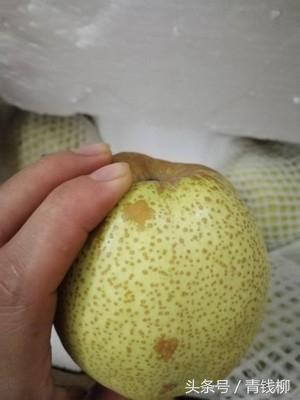
1.2.4 Economic traits. The fruit of Cuilü pear is nearly round, with an average single fruit mass of 320 g and a maximum single fruit mass of 650 g. The fruit skin is light green, the fruit surface is smooth, basically free of rust spots, the fruit dots are small and sparse, and the fruit calyx falls off. The flesh is white, tender and fine in texture, the core is small, the edible rate is 96%, there are few stone cells, and the soluble solids content is 12%~14%. This variety has strong adaptability, high and stable yield; under well-managed conditions, the biennial bearing phenomenon is not obvious.
2 High-Yield Cultivation and Management Techniques
2.1 Flower and Fruit Management
Cuilü pear forms flower buds very easily and has a high fruit-setting rate, with no obvious physiological fruit drop or pre-harvest fruit drop, so load should be reasonably regulated, and flower and fruit thinning is particularly important. Flower thinning is carried out from inflorescence separation to full bloom, retaining 1 inflorescence every 20 cm. The central flower and flowers near the center of each inflorescence are removed, retaining the vigorous flowers in the second and third positions of each inflorescence. Fewer flowers are retained on weak branches and more on strong branches. Artificial supplementary pollination is carried out at full bloom. Fruit thinning is done 7~10 d after petal fall, generally retaining 1 fruit every 25 cm, removing overly dense fruits, upward-facing fruits, diseased and insect-damaged fruits, deformed fruits and terminal-tip fruits. After fruit set is finalized, one application of insecticide and fungicide is sprayed, and bagging begins, to be completed within 3~5 d. After bagging, 0.3% calcium nitrate and 0.3% borax are added along with pesticide spraying to prevent calcium deficiency in the fruit.
2.2 Soil, Fertilizer and Water Management
After fruit harvest, nitrogen fertilizer is applied as a top dressing to supplement nutrients, so as to quickly restore tree vigor and prepare for overwintering. In autumn, organic fertilizer is increased, applying 40 kg of organic fertilizer per tree and 2 kg of potassium sulfate compound fertilizer per tree, by trench application or broadcast application. Top dressing is applied at least 2 times each year: before flowering, nitrogen fertilizer is mainly applied, with 2 kg of urea per tree (if tree vigor is weak, 1.5 kg of nitrogen-phosphorus-potassium compound fertilizer per tree is applied after flowering); during the fruit expansion period, 3 kg of nitrogen-phosphorus-potassium compound fertilizer per tree + 1 kg of urea per tree is applied. During the growing season, a mixture of 0.3% urea and 0.3% monopotassium phosphate is sprayed along with pesticide spraying. If drought occurs before bud break, after petal fall and before wheat harvest, water in time to keep the soil moist and promote fruit growth. Timely intertillage and weeding, soil moisture conservation, fertilizer conservation and water conservation ensure vigorous tree growth.
2.3 Pest and Disease Control
The main pests and diseases in the top-grafted Cuilü pear orchard include pear scab, ring rot, pear psylla, pear yellow aphid, aphids, and oriental fruit moth. In combination with winter pruning, diseased and insect-damaged branches are cut off and burned in a centralized manner or buried deeply. Old cracked bark on the trunk is scraped off, and the trunk is whitewashed. Orchard sanitation is done well, clearing dead branches, fallen leaves, diseased and mummified fruits, etc., eradicating overwintering sources of pests and diseases, and reducing the overwintering pest population density. When pear buds swell, control pear psylla, aphids, oriental fruit moth, etc.; before pear buds swell, spray 3~5 °Bé lime sulfur mixture, taking care to spray thoroughly over the trunk and branches without leaving any spots untouched. For pest and disease control, 10% imidacloprid 2 000-fold solution and 5% beta-cypermethrin 1 000-fold solution can also be sprayed. After flowering, spray 10% imidacloprid 2 000-fold solution; after fruit thinning, spray 80% Daconil M-45 800-fold solution, 70% thiophanate-methyl 800-fold solution + 5% beta-cypermethrin 1 000-fold solution, 2.5% Kung Fu emulsifiable concentrate 1 500-fold solution, 20% diflubenzuron No. 3 1 500-fold solution, Yibao 100-fold solution, etc., once every 10~15 d, with various insecticides and fungicides used alternately.
2.4 Training and Pruning
The Cuilü pear tree grows vigorously, has a relatively spreading tree posture, forms flowers easily, fruits mainly on medium and short fruiting branches, and tree vigor tends to weaken easily. After planting, young trees are preferably trained to a single-trunk modified open-center form; the trunk is headed at a height of 60~80 cm after planting, a central leader is retained in years 2~5, 3~5 main branches are trained in the first tier and 2~3 main branches in the second tier, with a tier spacing of 1.0~1.2 m, and tree height is controlled at about 2 m. The opening angle of main and lateral branches is 45~50°, with light pruning and long shoot leaving as the main approach. After the sixth year, as main and lateral branches thicken and branches increase, the second-tier main and lateral branches are gradually retracted and pruned until removed, changing the tree form to a single-tier open-center form, improving ventilation and light penetration within the canopy, and improving fruit quality. In the early stage of winter pruning of top-grafted Cuilü pear trees, the main focus is canopy expansion; except for appropriate heading back of the extension shoots of framework branches, all other branches are left unpruned. Vigorous branches with available space may be heavily cut back to latent buds to promote moderate branches, and overly dense branches are appropriately removed later. Fruiting branch groups tend to weaken after bearing fruit continuously, and inner-canopy branches easily die, forming bare areas, so they should be retracted and renewed in time to restore vigor. Fine pruning is carried out on the long, medium and short fruiting branches and short fruiting branch groups of fruiting branch groups to prevent the fruiting zone from moving outward. Appropriate heading back for renewal of branch groups is conducive to the formation of medium and short fruiting branches and the training of fruiting branch groups, maintaining high and stable yield.