-

How to increase the survival rate when propagating geraniums
Geraniums are mainly propagated by cuttings. To increase the survival rate, you must master the following points: (1) Selection of cuttings. Choose branches that are solid inside and have a small cut surface as cuttings. The specific method is to pinch off the growing tip of the mother plant in advance, and after new side branches emerge, cut the branch from the base of the new side branch, close to the mother branch. (2) Cutting time. Cuttings are generally taken in mid-September. If the cuttings are not newly grown side branches, the cut cuttings must be left to dry for at least a whole day.
-
How to prevent and control bacterial leaf spot in geraniums?
Geranium, also known as zonal geranium, fish geranium and horseshoe geranium. Native to South Africa. It prefers cool conditions, fears high temperatures, and is not cold-tolerant either. It requires ample sunlight. It is not tolerant of waterlogging but is slightly tolerant of drought, and prefers well-drained, fertile loam. In spring and autumn, when the weather is cool, conditions are most suitable for the growth of geraniums. In winter, indoors at around 15°C during the day and no lower than 5°C at night, with sufficient light maintained, they can bloom continuously. In hot summers, the plants enter a dormant or semi-dormant state, so they should be placed in partial shade and watering should be carefully controlled. It is resistant to chlorine. Plants of the genus Pelargonium are important potted flowers. Cultivation is extremely
-
How to grow geraniums? Learn cultivation techniques with me (Part 1)
Geranium is a perennial herbaceous plant, subshrub-like, fond of cool climates, with a suitable growth temperature of 5°C-25°C; seeds germinate better at 21°C-20°C. It is not heat-tolerant, and the plant enters a semi-dormant state during the high-temperature period in summer. It likes to grow in an environment with sufficient light, is tolerant of dryness, and dislikes waterlogging; the growing medium is required to be loose and well-drained, rich in organic matter. I. Sowing and seedling raising 1. Sowing time in southern regions: open-field sowing period February-March, September-October, open-field flowering period February-June, October-December; greenhouse sowing period January-March, September
-
How to plant geraniums? Learn to grow them with me (Part 2)
Water. Geraniums are not tolerant of waterlogged conditions and require a growing medium with good aeration, otherwise the root-to-shoot ratio easily becomes imbalanced; too much water makes them prone to root rot caused by the fungus (Pythium) and gray mold (Botrytis); but the growing medium should not be too dry either. Because this causes salts to accumulate around the root zone and leads to burning, and when the medium is too dry, the lower leaves of the plant often turn reddish to yellow. Geranium stems and leaves are covered with fine hairs, so when fertilizing and watering, avoid getting fertilizer solution on the leaves,
-
Geraniums bloom in clusters, as beautiful as a painting
Geranium, also known as pelargonium and zonal geranium, is a perennial evergreen herbaceous or subshrub-like flower of the Geraniaceae family. Because of its beautiful flowers, rich colors, and ease of growing and care, it is deeply loved by the general public. (1) Common varieties are divided into single-petaled and double-petaled types. 1. Horseshoe geranium (Pelargonium zonale): the leaf edges have horseshoe-shaped light brown halos, and it can be used for foliage viewing. The flowers also come in single-petaled and double-petaled types, and the flowers are also very beautiful. Other characteristics are the same as single-petaled geraniums. 2. Ivy geranium (Pelargonium peltatum): also called trailing geranium, with trailing stems and shield-shaped leaves, almost
-
What are the propagation methods for home-grown geraniums?
For home flower growing, in-pot cuttings are generally the most practical propagation method. The best time for cuttings is April-May or August-September, and the specific cutting time should be determined according to the local growing season with suitable temperatures (18-20°C); the growing medium should be loose, airy and well-draining, preferably a mix of one part each of sand, perlite and leaf mold, or medium-coarse river sand, matured soil or expanded perlite, all of which must be disinfected by methods such as exposure to strong sunlight before use. Cuttings can be taken in conjunction with spring and autumn pruning, selecting healthy one-year-old young shoots free of pests and diseases as cuttings, about 8 cm long, at the
-
What are the care methods for keeping geraniums safe through the summer?
Gardeners often ask what measures should be taken to protect geraniums through the summer safely? In fact, this is a headache for many gardeners. But quite a few gardeners have their own solutions to this problem, and I hope everyone can share their own experiences.
-
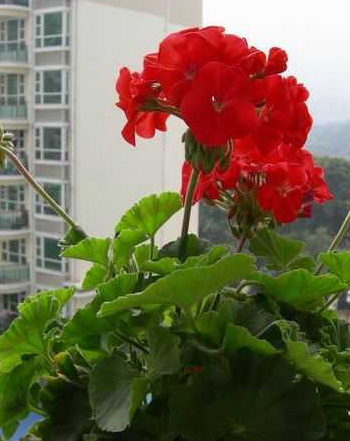
How to care for potted geraniums? Detailed care methods and tips
Lately quite a few friends have asked me how to care for potted geraniums, so below I will share a few points from my own experience caring for potted geraniums: 1. Potting soil. Potted geraniums can use a growing mix made from leaf mold and peat moss plus 1/5 river sand and a small amount of cake fertilizer powder as a base fertilizer.
-
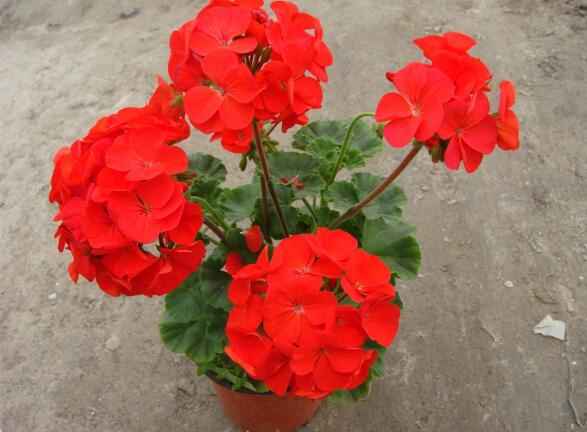
How to grow geraniums? Cultivation methods and precautions, with plenty of light
Geranium is a very common plant all over the world, and a fairly common ornamental flower. How to grow geraniums is closely related to sunlight, watering, environment and other aspects, so what exactly are the cultivation methods and precautions for geraniums? Below, the editor will walk you through them.
-
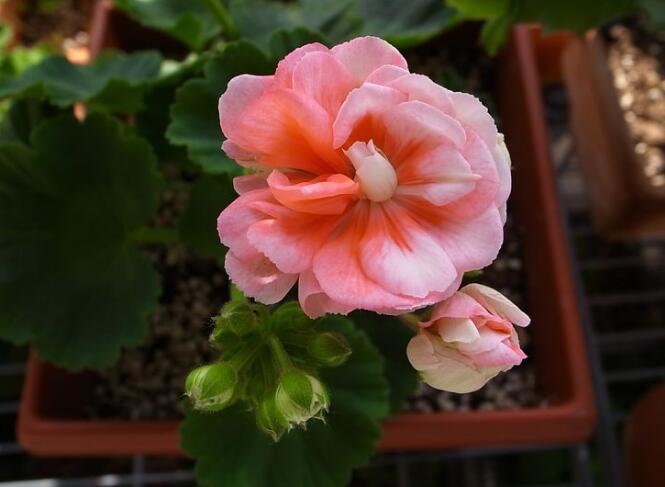
What to Do When Geraniums Get Bugs? 2 Pests and 4 Diseases: Prevention and Treatment Methods
Geraniums are a fairly common plant in people's daily lives, with extremely high ornamental value. However, no matter how beautiful the flowers are, if pests and diseases appear, they will gradually wither. So what should you do when geraniums get bugs? The method is actually very simple; as long as you identify the cause and treat it accordingly, it will be fine.
条件筛选