What to Do When Geraniums Get Bugs? 2 Pests and 4 Diseases: Prevention and Treatment Methods
Geraniums are a fairly common plant in people's daily lives, with extremely high ornamental value. However, no matter how beautiful the flowers are, if pests and diseases appear, they will gradually wither. So what should you do when geraniums get bugs? The method is actually very simple; as long as you identify the cause and treat it accordingly, it will be fine. As for how to prevent and treat geranium pests and diseases, let the editor take everyone through it below.
I. What to Do When Geraniums Get Bugs / 2 Pests
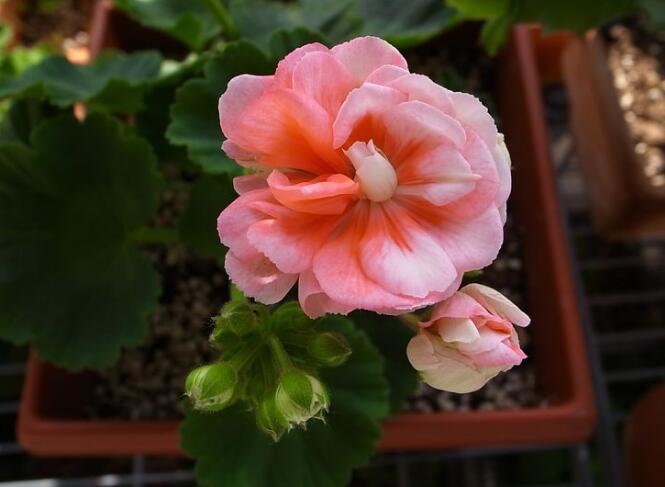
Among geranium pests, the two most common are nematode pests and whitefly pests. These two pests are extremely harmful to geraniums. As for how to treat geraniums when they get bugs, detailed targeted measures are provided below, so let's keep reading.
II. Prevention and Treatment of Geranium Pests and Diseases
1. Nematode pests
Nematodes are a relatively common one in the prevention and treatment of geranium pests and diseases. This pest mainly appears when soil moisture is too high. It dwells in the soil and slowly damages the plant's roots, causing the plant to grow slowly, and over time it will cause the roots and stems to rot and die.
Prevention and treatment method: When this pest is found, promptly cover the soil surface with a layer of pesticide fine sand. This prevents the nematodes in the soil from absorbing air and makes them emerge, and then you can directly remove the pests together with the sand.
2. Whitefly pests
Whiteflies mainly harm the leaf area of geraniums. They suck the leaf sap, causing the leaves to turn yellow, and in the end they will gradually wither and die, so when encountering this pest, it must be dealt with promptly.
Prevention and treatment method: The most effective way when this pest appears is to directly use medication for treatment in the early stage. An insect chitinase inhibitor can be selected for spraying and killing. Generally, spray once every 5-7 days, and after 2-3 consecutive times, this pest can be completely eliminated.
3. Leaf spot disease
As the name suggests, this disease mainly harms the leaves of geraniums. When it occurs, a large number of water-soaked small spots appear on the plant's leaves. As time goes on, these diseased spots gradually connect together, eventually causing the plant to die.
Prevention and treatment method: When this disease appears, it must be dealt with as early as possible. Generally, in the early stage when symptoms are mild, Bordeaux mixture can be chosen for spraying control. If it has reached the later stage, the only option is to pull out the diseased roots and replant.
4. Gray mold disease
This disease mainly threatens the flowers of geraniums. It generally occurs when the weather is humid. In the early stage, a gray mold layer appears on the flowers, causing them to gradually rot and then fall off. It is an extremely harmful disease.
Prevention and treatment method: The most direct way when this disease appears is to use a 50% procymidone wettable powder 2000-fold solution to spray and treat the diseased plants, spraying once every 5-6 days, and 3-4 consecutive times is basically enough. After prevention and treatment are completed, be sure to disinfect and remove the diseased plants; everyone must remember this point.
5. Rust disease
As the name suggests, when geraniums are infected with this disease, spots like black rust appear on the leaves. As time goes on, the spots increase, and in the end they even cause the leaves to fall off.
Prevention and treatment method: When treating this disease, the first step is to promptly remove the diseased leaves, then use a 15% triadimefon wettable powder 1000-fold solution on the diseased plants for control. Generally, after spraying several times, they can basically recover.
6. Crown gall disease
Crown gall disease mainly harms the root and stem area of geraniums. At first, small tumor-like substances appear on the root and stem area. As time goes on, they slowly enlarge and harden, causing the plant to dry up and the leaves to fall. In the end, it causes the entire plant to die.
Common Questions and Answers About Growing Geraniums
Geranium is a plant that can be grown at home. Its shape is spherical, and its colors are also very rich. Today, the editor will tell everyone about some of the troubles in cultivation that we encounter in daily life. If you also have some confusion about growing geraniums, let's learn about it together.
Common questions about growing geraniums:
Question 1: I really like geraniums, but I don't know whether I can grow them well, and whether they suit the climate environment where I am?
Answer: Geraniums are very easy to start with. Compared with delicate flowering plants such as Phalaenopsis and cyclamen, they require less investment and more extensive management, yet you can see the same or even better flowering results, making them suitable for beginners. Everything starts from the beginning. No one can guarantee that the first planting will definitely succeed. Even veterans who have grown them for many years are constantly summarizing and improving. Believing in yourself is most important. Without practice, how would you know whether it works? Geraniums suit the climate of most regions, because they are flowers grown semi-indoors on balconies, windowsills, and the like, so their climate requirements are no longer strict. They can be cultivated anywhere with temperatures of 0-35°C and 4 hours or more of sunlight.
Question 2: What kind of flowerpot should I use, what kind of soil should I use to grow geraniums, and do I need to add any fertilizer?
Answer: For geraniums, it is better to choose a smaller pot; just enough is fine, and repot frequently. Generally speaking, depending on the variety series, growth speed and plant shape differ. For example, the Angel series has a compact, small plant shape and is suitable for growing in pots with a 9-12cm diameter. After more than half a year of cultivation, when it has grown larger, repotting into a pot with a 15cm diameter is suitable. Of course, for hobbyists cultivating competition-type plants (mentioned below), even a pot with a 30cm diameter is not too large, but that is not a common cultivation mode.
For growing geraniums, the cultivation medium should preferably be neutral in PH, or slightly acidic. Generally, PH6-7 is the most ideal, with good air permeability and water filtration and a rich base fertilizer. Mixed cultivation media or geranium-specific cultivation media are generally recommended. Garden soil or leaf mold is not recommended for home pot cultivation because it contains a large amount of bacteria, has poor air permeability and drainage performance, or has unpredictable acidity and alkalinity. Decide whether to add base fertilizer according to the instructions of the purchased cultivation soil. Usually, slow-release fertilizers rich in trace elements such as calcium, magnesium, iron, and zinc, such as Osmocote 501, 315, and 318, have better effects.
Question 3: After planting them well, do I need to water and fertilize every day? Where is a better place to put them?
Answer: Geraniums are relatively drought-tolerant and rather afraid of waterlogging, so they do not need daily watering. It is hard to generalize about how often to water. The general way to judge is: the flowerpot clearly becomes light in weight, and the cultivation soil color becomes lighter. When you insert a finger, if it feels dry, granular, and not sticky, it means the potting soil is relatively dry and you can appropriately replenish water. If not, there is no need to water. Water-soluble fertilizer should be applied when spring and autumn temperatures are cool and pleasant, generally 1-2 times a week, and the usage depends on the instructions of the water-soluble fertilizer used. When the temperature is 5-30°C, try to place the geraniums in a place with sufficient light. Geraniums are accumulators of light. Under such temperatures, the more light, the better the growth. Under climate conditions below 0°C or above 35°C, artificial protection measures must be taken. Specifically: below 0°C, place them in a warm place indoors, stop watering, and try to let them receive light indoors through glass. Get through the cold winter. Above 35°C, geraniums can no longer carry out normal photosynthesis to produce nutrients, and even their own synthesis of chlorophyll will be hindered. You may notice yellowing and withering leaves, and new leaves appearing whitish. These are all signs of excessively high temperature. At this time, move the geranium seedlings to a cool, ventilated place indoors, reduce watering as much as possible, and if conditions permit, place them on a windowsill in an air-conditioned room so they can safely pass the summer.
Question 4: Will geraniums get sick and grow bugs? How should I prevent and treat this?
Answer: No plant grows bugs and diseases by itself. These are all caused by external invasion, just like us humans getting sick and catching colds due to environmental influences. Geraniums have a relatively special odor that bugs dislike, so pest problems are not common. Because they are afraid of waterlogging, in an overly humid and stuffy environment, under conditions of poor ventilation and high air humidity, bacterial and fungal diseases are likely to occur, mainly gray mold, mold spot disease, blackleg disease, soft rot, and so on. Pay attention to the cleanliness of the cultivation environment, disinfect regularly, and keep it dry and ventilated. This can very effectively stop diseases from occurring. For cultivation soil of unknown origin, be sure to expose it to the sun for more than one day and fully disinfect it with a disinfectant before use. For plants that have already become diseased, try to remove the diseased leaves and stems, and use bacterial and fungal disinfectants for spraying, root drenching, and other treatments, which have better effects.
Question 5: When do geraniums bloom? Why do mine bloom so little and not as much as in the pictures?
Answer: Unlike most plants, geranium flowering is not limited by age. That is to say, even a small seedling only a finger long may be capable of blooming, and most geraniums bloom continuously, one flush after another. As long as the environment allows, you can see flowers all year round. So what conditions are needed for geraniums to bloom? Light: direct sunlight reaching more than 4 hours. Temperature: air temperature between 10-30°C. Nutrients: blooming is very hard work. If nutrients are insufficient, the geranium may also go on strike and stop!
Although geraniums can bloom when very small, for such small seedlings, the flower buds should usually be removed, and the terminal buds should be pinched and pruned. This can stimulate more side buds and make the plant shape more robust and full. Although after 2-3 times of removing terminal buds and flower buds the flowering period will be delayed, when it blooms again, the whole pot will be magnificent. Such labor and waiting are very worthwhile. In addition, when the flowers begin to wither, be sure to clean them up promptly to avoid wasting nutrients and delaying the development of new flower buds.
Growing Geraniums: Hobbyists Answer Common Questions
Previously we summarized what geraniums like and dislike. These are some of the key elements and fundamentals for keeping seedlings alive. Of course, to grow them well, more detailed care and techniques are still needed. Below we summarize some techniques in a question-and-answer format.
Question 1: I really like geraniums, but I don't know whether I can grow them well, and whether they suit the climate environment where I am?
Answer: Geraniums are very easy to start with. Compared with delicate flowering plants such as Phalaenopsis and cyclamen, they require less investment and more extensive management, yet you can see the same or even better flowering results, making them suitable for beginners. Everything starts from the beginning. No one can guarantee that the first planting will definitely succeed. Even veterans who have grown them for many years are constantly summarizing and improving. Believing in yourself is most important. Without practice, how would you know whether it works? Geraniums suit the climate of most regions, because they are flowers grown semi-indoors on balconies, windowsills, and the like, so their climate requirements are no longer strict. They can be cultivated anywhere with temperatures of 0-35°C and 4 hours or more of sunlight.
Question 2: What kind of flowerpot should I use, what kind of soil should I use to grow geraniums, and do I need to add any fertilizer?
Answer: For geraniums, it is better to choose a smaller pot; just enough is fine, and repot frequently. Generally speaking, depending on the variety series, growth speed and plant shape differ. For example, the Angel series has a compact, small plant shape and is suitable for growing in pots with a 9-12cm diameter. After more than half a year of cultivation, when it has grown larger, repotting into a pot with a 15cm diameter is suitable. Of course, for hobbyists cultivating competition-type plants (mentioned below), even a pot with a 30cm diameter is not too large, but that is not a common cultivation mode.
For growing geraniums, the cultivation medium should preferably be neutral in PH, or slightly acidic. Generally, PH6-7 is the most ideal, with good air permeability and water filtration and a rich base fertilizer. Mixed cultivation media or geranium-specific cultivation media are generally recommended. Garden soil or leaf mold is not recommended for home pot cultivation because it contains a large amount of bacteria, has poor air permeability and drainage performance, or has unpredictable acidity and alkalinity. Decide whether to add base fertilizer according to the instructions of the purchased cultivation soil. Usually, slow-release fertilizers rich in trace elements such as calcium, magnesium, iron, and zinc, such as Osmocote 501, 315, and 318, have better effects.
Question 3: After planting them well, do I need to water and fertilize every day? Where is a better place to put them?
Answer: Geraniums are relatively drought-tolerant and rather afraid of waterlogging, so they do not need daily watering. It is hard to generalize about how often to water. The general way to judge is: the flowerpot clearly becomes light in weight, and the cultivation soil color becomes lighter. When you insert a finger, if it feels dry, granular, and not sticky, it means the potting soil is relatively dry and you can appropriately replenish water. If not, there is no need to water. Water-soluble fertilizer should be applied when spring and autumn temperatures are cool and pleasant, generally 1-2 times a week, and the usage depends on the instructions of the water-soluble fertilizer used. When the temperature is 5-30°C, try to place the geraniums in a place with sufficient light. Geraniums are accumulators of light. Under such temperatures, the more light, the better the growth. Under climate conditions below 0°C or above 35°C, artificial protection measures must be taken. Specifically: below 0°C, place them in a warm place indoors, stop watering, and try to let them receive light indoors through glass. Get through the cold winter. Above 35°C, geraniums can no longer carry out normal photosynthesis to produce nutrients, and even their own synthesis of chlorophyll will be hindered. You may notice yellowing and withering leaves, and new leaves appearing whitish. These are all signs of excessively high temperature. At this time, move the geranium seedlings to a cool, ventilated place indoors, reduce watering as much as possible, and if conditions permit, place them on a windowsill in an air-conditioned room so they can safely pass the summer.
Question 4: Will geraniums get sick and grow bugs? How should I prevent and treat this?
Answer: No plant grows bugs and diseases by itself. These are all caused by external invasion, just like us humans getting sick and catching colds due to environmental influences. Geraniums have a relatively special odor that bugs dislike, so pest problems are not common. Because they are afraid of waterlogging, in an overly humid and stuffy environment, under conditions of poor ventilation and high air humidity, bacterial and fungal diseases are likely to occur, mainly gray mold, mold spot disease, blackleg disease, soft rot, and so on. Pay attention to the cleanliness of the cultivation environment, disinfect regularly, and keep it dry and ventilated. This can very effectively stop diseases from occurring. For cultivation soil of unknown origin, be sure to expose it to the sun for more than one day and fully disinfect it with a disinfectant before use. For plants that have already become diseased, try to remove the diseased leaves and stems, and use bacterial and fungal disinfectants for spraying, root drenching, and other treatments, which have better effects.
Question 5: When do geraniums bloom? Why do mine bloom so little and not as much as in the pictures?
Answer: Unlike most plants, geranium flowering is not limited by age. That is to say, even a small seedling only a finger long may be capable of blooming, and most geraniums bloom continuously, one flush after another. As long as the environment allows, you can see flowers all year round. So what conditions are needed for geraniums to bloom? Light: direct sunlight reaching more than 4 hours. Temperature: air temperature between 10-30°C. Nutrients: blooming is very hard work. If nutrients are insufficient, the geranium may also go on strike and stop!
Although geraniums can bloom when very small, for such small seedlings, the flower buds should usually be removed, and the terminal buds should be pinched and pruned. This can stimulate more side buds and make the plant shape more robust and full. Although after 2-3 times of removing terminal buds and flower buds the flowering period will be delayed, when it blooms again, the whole pot will be magnificent. Such labor and waiting are very worthwhile. In addition, when the flowers begin to wither, be sure to clean them up promptly to avoid wasting nutrients and delaying the development of new flower buds.