-
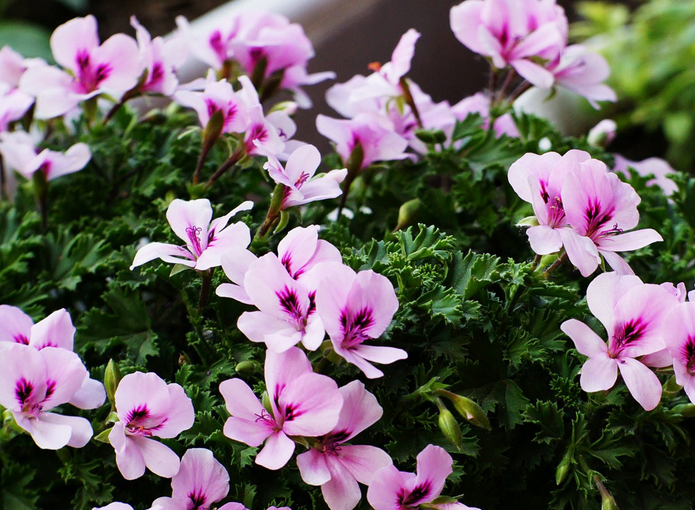
Three common ways geraniums die: suffocation, sunscald, and thirst
Many people love growing geraniums. The flowers are incredibly vibrant, and just one look lifts your mood. Yet geraniums are very prone to dying in summer. Let's look at the ways geraniums die in summer. The geranium is absolutely a charming beauty.
-
How to grow geraniums so they don't die easily? Meaning, essential oil benefits and uses
Many people love growing geraniums. The flowers are incredibly vibrant, and just one look lifts your mood. Yet geraniums die very easily in summer. Let's take a look at the ways geraniums die in summer. The geranium is absolutely a charming beauty.
-
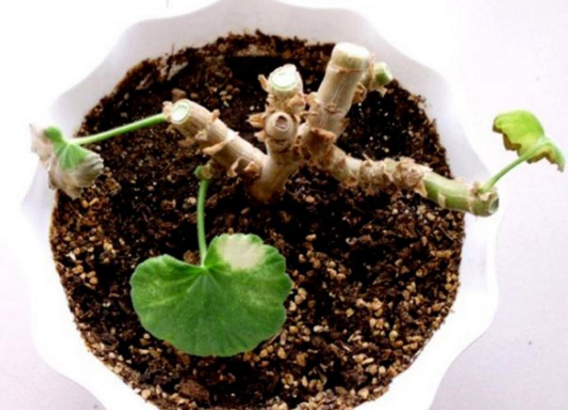
How to correctly prune and care for geraniums in summer
Geraniums grow quickly and send out shoots rapidly; if you are not careful, stray branches grow everywhere, so they basically need pruning every year. Master the correct pruning method to keep your geranium's shape beautiful! How to prune and shape geraniums. Geranium pruning tools: if you want a beautiful plant shape and many flowers, you have to be ruthless. Scissors, saws, knives, daggers
-
Can Geraniums Repel Mosquitoes? A Detailed Guide to Cutting Propagation Timing
Geranium is a plant with a certain ornamental value. Can geraniums repel mosquitoes? When should they be propagated by cuttings? Can geraniums repel mosquitoes: Geraniums can repel mosquitoes. The geranium that repels mosquitoes is the scented geranium (rose-scented geranium), which, as the name suggests, is a plant that gives off fragrance, just like night-blooming jasmine, jasmine, and rosemary.
-
When should geraniums be sown, and how do you plant them?
Geraniums are loved by many people, and quite a few buy them and grow them at home. When should geraniums be sown? And how do you plant them? When to sow geraniums: geraniums can be sown in either spring or autumn, and indoor pot sowing in spring is best. The ideal germination temperature is 20-25°C. The seeds are not large, so do not cover them with too deep a layer of soil after sowing.
-
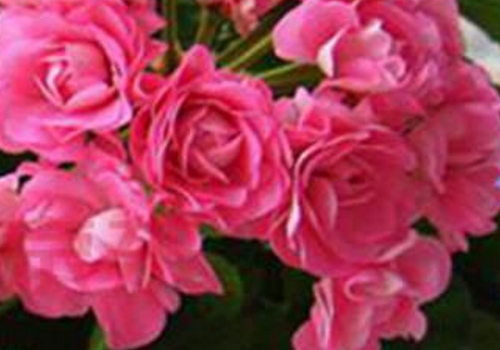
Can potted geraniums be grown indoors? A detailed guide to their care
Geraniums are very popular and have considerable ornamental value. How do you grow potted geraniums? Can they be grown indoors? How to grow potted geraniums: 1. Soil: Geraniums are highly adaptable and can grow in all kinds of soil, but they grow best in sandy loam rich in humus. 2. Watering: Geraniums like dry conditions and dislike dampness
-

What are the propagation methods for geraniums?
For home gardening, in-pot cuttings are generally the most practical method of propagation. The best time for cuttings is April to May or August to September, and the specific cutting time should be determined according to the local growing season with suitable temperatures (18-20°C); the growing medium should be loose, well-aerated and well-draining, ideally a mix of one part sand, one part perlite and one part leaf mold, or medium-coarse river sand, matured soil or expanded perlite, all of which must be sterilized by methods such as exposure to strong sunlight before use. Cuttings can be taken in conjunction with spring or autumn pruning, selecting healthy one-year-old soft shoots free of pests and diseases as cuttings, about 8 cm long,
-
How should geraniums be cared for to make them bloom more?
1. Overwatering or being exposed to rain, with long-term water accumulation in the pot, causes root rot, yellowing leaves, or leggy growth of the plant, all of which affect blooming. 2. Overfertilizing, especially applying too much nitrogen fertilizer, easily causes leggy stems and leaves, no blooming or sparse blooming, and poor flower quality. However, insufficient fertilization or no fertilization will also affect the plant's normal growth and blooming. Therefore, in early spring or early autumn, appropriately apply more phosphorus and potassium fertilizer. 3. Temperature too high or too low. If the indoor temperature in winter is above 20 C, combined with poor ventilation, the stems and leaves tend to grow leggy, affecting blooming the following year.
-
What are the control methods for leaf spot disease in geraniums?
Control of leaf spot disease in geraniums: 1. For small-scale plantings, remove diseased leaves by hand and burn them in a centralized manner. 2. Improve the growing environment. In areas with severe outbreaks, practice crop rotation, avoid planting too densely so as to allow good ventilation and light penetration, and drain standing water promptly. 3. During the disease period, spray with 100 to 150 times diluted Bordeaux mixture or 80% Captan wettable powder at 500 times dilution; you can also spray a mixture of 50% Thiophanate-methyl at 1000 times dilution and 80% Captan at 500 times dilution, or spray a 45% Chlorothalonil and carbendazim mixed suspension concentrate at 1000 times dilution, which gives better results than a single fungicide.
-
Symptoms and Control Methods of Common Leaf Spot Diseases in Geraniums
Geranium leaf spot disease is a common disease in spring and summer. It is most likely to occur in hot and rainy seasons, often causing most of the infected leaves to die and drop off. When the stem is infected, it turns black, wilts and rots; cutting open the base reveals brown or black vascular bundles. Affected cuttings fail to root, with rot starting from the stem and developing upward, causing leaves to wilt and die. Symptoms: Geranium leaf spot disease includes two types: black spot disease and brown spot disease. Black spot disease: initial water-soaked spots appear on leaves, semicircular to irregular in shape, later becoming circular, 2 to 3 mm in diameter,
条件筛选