How to grow geraniums? Cultivation methods and precautions, with plenty of light
Geranium is a very common plant all over the world, and a fairly common ornamental flower. How to grow geraniums is closely related to sunlight, watering, environment and other aspects, so what exactly are the cultivation methods and precautions for geraniums? Below, the editor will walk you through them.
I. How to grow geraniums / the methods matter a lot
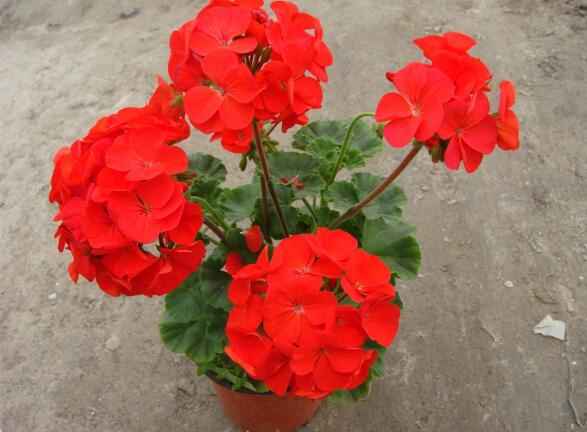
In the process of growing geraniums, there are many aspects that need attention, such as weather, temperature, soil and so on. However, how to grow geraniums is actually not too complicated; as long as you pay attention to a few details, they survive quite easily.
II. Cultivation methods and precautions for geraniums
1. Choosing soil
Among the cultivation methods and precautions for geraniums, choosing soil is the first step and the one that lays the foundation, so it is especially important. If growing them at home, it is recommended to use a soil mix of leaf mold, garden soil and river sand, which keeps the soil loose and allows the geranium to absorb nutrients better.
2. Fertilizer management
During the growth of geraniums, there is a certain demand for fertilizer. During the growing period, fertilizer can generally be applied once every 10-15 days; in spring and autumn, the two peak growing seasons, the frequency should be increased slightly, generally once every 7-10 days.
3. Watering control
Watering is also one of the points that require more attention when growing geraniums. You must control the watering schedule well, and it is best to keep it at once every 3 days. This is because watering too frequently may cause root rot in geraniums, while watering too little may lead to insufficient nutrients, so you must get the balance right.
4. Light requirements
Geranium is a plant that fairly likes sunlight, and sufficient sunshine helps it bloom. However, it should not be left out in the sun for long periods, especially in summer when the sunlight is too intense; it should be moved indoors to a semi-shaded spot for growing. In spring and autumn, let it bask in the sun more.
5. Environmental influence
On windy or rainy days, remember to move the geranium indoors in time, because geranium is a fairly fragile plant. If the wind is too strong, it may snap the plant, and too much rain may also cause root rot, so this point still needs attention.
How to grow geraniums? Home cultivation methods and precautions for geraniums
Geranium is the national flower of Hungary. It has a long flowering period and strong environmental adaptability, making it very suitable for home pot cultivation. So, how should geraniums be grown? Next, we will introduce the home cultivation methods and precautions for geraniums.
Image: Geranium
I. Home cultivation methods for geraniums
1. Soil
For geranium soil, you can choose a mixed growing medium of 4 parts leaf mold, 3 parts garden soil (or peat soil), 2 parts river sand (or perlite) and 1 part organic fertilizer. You can also use a mix of fine sandy soil, leaf mold, perlite and organic fertilizer. Geraniums require relatively loose, breathable soil. You can repot them every autumn, or loosen the soil in time.
2. Fertilization method
During the growing period, apply liquid fertilizer once every 10-15 days to geraniums, and in the vigorous spring and autumn seasons, apply liquid fertilizer once every 7-10 days; before budding, mainly use nitrogen fertilizer, and after budding, mainly use phosphorus and potassium fertilizer, with a concentration of 0.1%-0.2%. In winter, when kept indoors, the temperature is relatively high and growth basically does not stop, so fertilizer can be applied appropriately. In summer, with high temperatures, the plant is in a semi-dormant state, so fertilization should be stopped. It is best to fertilize in the evening and water the next morning.
3. Watering method
Geraniums should be watered appropriately, preferring dry over wet. In the vigorous growing seasons of spring and autumn, sufficient water should be provided to keep the pot soil constantly moist, but not waterlogged; on cloudy or rainy days, generally do not water or fertilize. The plant can be allowed to receive some rainwater appropriately, but avoid excessive rainwater irrigation. Otherwise, it easily causes root rot.
In winter, depending on the indoor temperature, try to water with water at a suitable temperature, so as not to cause the stems and leaves to turn yellow due to water that is too cold. (For detailed watering techniques, see How to Water Geraniums.)
4. Temperature
Geraniums like warmth, dislike high temperatures and fear cold. The suitable growing temperature for geraniums is 15-25°C. In winter, the indoor temperature should be kept at 10°C. Below 3°C they are prone to cold damage, but some varieties can tolerate a low temperature of 0°C. In summer, when the temperature exceeds 35°C, they enter a semi-dormant state. Try to keep ventilation good and avoid a stuffy environment, which is not conducive to dormancy.
Image: Geranium
5. Light
Geraniums are not afraid of strong light, but they need shade at midday in summer. Under sunlight, geraniums grow robustly, with dark green leaves, short internodes and a beautiful plant shape. For home cultivation, in autumn, winter and spring they should all be placed in a spot with direct sunlight. When in bloom, they can be moved indoors for appreciation and care, receiving appropriate light, but strong direct light should be avoided to prevent the petals from scorching.
II. Precautions for home cultivation of geraniums
1. Geraniums have different varieties, and plant heights also differ. For home planting, small plants should be chosen. In addition, growth regulators are also needed for adjustment. After the plant grows to 12 cm or 15 cm, spray chlormequat, once a week for 2 consecutive times. Ensure 14-18 hours of light per day, which can effectively control the height of geraniums and provide high-quality potted flowers.
2. Watering geraniums requires extra care; too much water can cause the plant to die, and high temperature and high humidity can easily rot the roots. Of course, the flowering time can also be controlled. The full bloom period is generally from April to June, but if the temperature is appropriately raised in winter, they can bloom continuously from September in autumn to June of the following year.
The above is an introduction to the cultivation methods and precautions for geraniums. We hope it can be helpful to everyone!
Cultivation methods and precautions for geraniums, geranium pictures
Cultivation methods and precautions for geraniums
Geranium genus, also known as shilazhong, rulazhong, rilanzhong, yangkui, belongs to the Geraniaceae family. It is a genus of flowering plants including about 230 species of perennial succulent, subshrub or shrub plants. Geraniums are native to southern Africa and are widely cultivated around the world.
Geranium belongs to the Geraniaceae family and the genus Geranium. It is a perennial evergreen herbaceous or subshrub flowering plant. Native to southern Africa, it is widely cultivated around the world. Geraniums have a long flowering period and strong adaptability to the environment. Their plant size is suitable for home pot cultivation, and they are easy to propagate, so they are very popular. They are one of the common potted flowers in homes and also commonly used flowers in flower beds in warm winter regions. Geranium flowers are clustered in small flowers, and the large inflorescence resembles a hydrangea, with vivid colors. They can be used for indoor decoration and can also be arranged in spring flower beds and venues. Below is a detailed introduction to how to grow geraniums:
1. Soil selection for geranium cultivation
For potted geranium growing medium, you can mix 4 parts leaf mold, 3 parts garden soil (or peat soil), 2 parts river sand (or perlite) and 1 part organic fertilizer. You can also use a mix of fine sandy soil, leaf mold, perlite and organic fertilizer. For potted geraniums, repotting is needed in autumn.
2. Fertilization method for geranium cultivation
During the growing period, apply liquid fertilizer once every 10-15 days, and in the vigorous spring and autumn seasons, apply liquid fertilizer once every 7-10 days; before budding, mainly use nitrogen fertilizer, and after budding, mainly use phosphorus and potassium fertilizer, with a concentration of 0.1%-0.2%. If the winter room temperature is relatively high and growth has not stopped, fertilizer should also be applied. In summer, during high temperatures, the plant is in a semi-dormant state, so fertilization should be stopped. Because its stems and leaves have fine hairs, rinse immediately with clean water after fertilizing.
3. Watering method for geranium cultivation
Water appropriately, preferring dry over wet. In the vigorous growing seasons of spring and autumn, provide sufficient water to keep the pot soil constantly moist, but not waterlogged; on cold cloudy days, generally do not water or fertilize; in summer, water less. In the north, the high-temperature season coincides with the rainy season. During this period, the plant's root system is relatively weak, so avoid excessive rainwater irrigation; consecutive rainy days will cause root rot, so place it in a shaded, cool, dry and ventilated spot. In winter, water according to the indoor temperature; when the room temperature is low, water less, and when the room temperature is high, water more. Geraniums have a fairly strong drought tolerance and will not die if not watered for several days, but old leaves will turn yellow and fall off.
Water according to the principle of watering when dry and stopping when wet. Pot soil that is too wet easily causes root rot, while pot soil that is too dry easily causes leaves to turn yellow. From June to July they are in a semi-dormant state, so watering should be strictly controlled. In summer, spray water frequently to cool them down, keep the pot soil moist, and also pay attention to ventilation and light transmission. In winter, restrict watering.
4. Temperature requirements for geranium cultivation
Geraniums like warmth, dislike high temperatures and fear cold. The suitable growing temperature for geraniums is 15-25°C. In winter, the indoor temperature should be kept at 10°C. Below 3°C they are prone to cold damage, but some varieties can tolerate a low temperature of 0°C. In summer, when the temperature exceeds 35°C, they enter a semi-dormant state.
5. Light requirements for geranium cultivation
Under direct sunlight they grow robustly, with dark green leaves, short internodes and a beautiful plant shape. But when the summer light is too strong, 30%-50% shading is needed. For home cultivation, in autumn, winter and spring they should all be placed in a spot with direct sunlight. When in bloom, they can be moved indoors for appreciation, but after flowering they should still be placed in a spot with light. They like sufficient sunlight; when light is insufficient, they do not bloom. During the flowering period, avoid direct strong light, otherwise the petals will scorch and easily fall.
Rotate the pot once a week so the leaf surface receives even light. Keep the plant shape symmetrical. In summer, place it in a cool spot and avoid exposure to the scorching sun. In winter, the room temperature should not be lower than 5°C, and give it sufficient light.
6. Pest and disease control for geranium cultivation
The main diseases of geraniums include mosaic disease, crinkle disease, chlorosis, gray mold, root rot and bacterial wilt, etc. The main pests include white mosquitoes, caterpillars, small plume moths, etc. For controlling mosaic disease, eliminating aphids is of great significance, and other nearby parasitic plants should also be cleared away. To control small plume moths, spray with 90% trichlorfon 1000-times solution.
7. Precautions for geranium cultivation
(1) In order to control plant height and achieve the goal of large, brightly colored flowers, in addition to choosing dwarf geranium varieties, the application of growth regulators is very important. Two weeks after geraniums are planted in 12 cm or 15 cm pots, spray the leaf surface with 0.15% chlormequat or daminozide, once a week for 2 consecutive times, with 14-18 hours of light per day. This can effectively control the height of geraniums and provide high-quality commercial potted flowers.
(2) They are fairly tolerant of dryness and afraid of waterlogging. Too much water easily causes plant death, and high temperature and high humidity easily rot the roots. They require well-drained, loose soil rich in organic matter. The flowering period is long, with full bloom from April to June. If a relatively high temperature is provided in winter and management is proper, they can bloom continuously from September in autumn to June of the following year.
8. Propagation methods for geranium cultivation
Geraniums are commonly propagated by seed sowing and cuttings, and can also be propagated by tissue culture.
(1) Seed propagation: Single-petaled geranium varieties easily set seed, and they can be sown immediately after harvest. If you want to wait until the weather is cool to sow, first dry the seeds and store them in a paper bag. At a temperature of 20°C, they germinate in about 7-10 days. After pricking out and transplanting, when the seedlings grow to 5-7 cm, plant them in 10 cm flower pots, and they can bloom the following spring.
Because seedlings grown from seed have relatively poor plant traits and flowering quality, seed propagation is usually not used.
(2) Cutting propagation: Cuttings can be taken except from June to August when the plant is in a semi-dormant state. Spring and autumn are best. It is best to take cuttings from mother plants that bloom uniformly, bloom frequently, are pure in variety and free of pests and diseases. Both the tender shoot tips and the tender stems below can be used as cuttings, but the tips are best, as they grow vigorously and root quickly. After cutting the cuttings, soak them in 100 mg/kg indolebutyric acid for 5-10 seconds, then let them dry for half a day. After they wilt, insert them into a sand bed or a substrate mixed with perlite and peat at 1:1. After watering thoroughly, cover with a small arch shed, and shade when the sunlight is strong. Keep the temperature at 15-20°C. They root 2-3 weeks after insertion. Transplant when the roots are 3-4 cm long.
(3) Tissue culture propagation: Use MS medium, add 10 mg/kg indolebutyric acid and kinetin to promote the explant to produce callus and adventitious buds, and use 100 mg/kg indolebutyric acid or indoleacetic acid to promote rooting. Tissue culture propagation is mainly used for breeding superior varieties and selecting new varieties.
When is the best time to repot geraniums
Geraniums are easy to cultivate and have a long flowering period. The flowers are divided into single and double types, and the flower colors include red, white, pink, purple, etc. The leaf shape is attractive, and the large inflorescence resembles a hydrangea, with vivid colors, making it a great variety for balcony flower growing.
Because they grow fast and bloom abundantly, they need to be repotted once a year. Early spring is the flowering season, and after blooming in June, they enter an unsuitable hot and humid season and are in a semi-dormant state. The best time to repot is from late August to early September. Before repotting, prune to remove overly dense branches, slender branches, diseased and pest-infested branches and leggy branches. Keep 3-5 evenly distributed main branches, then shorten the main branches and side branches again, leaving only 3 side buds on each side branch, so that the branches of the whole plant are evenly distributed and compact, and the plant shape is full and sturdy.
Use bone meal etc. as base fertilizer, and water 2 days after planting. In November, move them indoors to a sunny spot, and at the end of April move them to the balcony, avoiding exposure to the scorching sun. During growth and flowering, apply diluted liquid fertilizer once a week. In July-August, stop fertilizing and water less. Usually, watering should also be controlled, and water only when the pot soil turns white.
How to prevent geranium root rot
Geranium is also known as shilazhong, renlazhong, hydrangea and foreign hydrangea. It is a subshrub or perennial herbaceous plant of the Geraniaceae family and the genus Geranium. The whole plant is covered with fine soft hairs and has a special odor.
Native to southern Africa, it is now widely cultivated around the world. It likes a cool climate, with a suitable temperature of 10-25°C, can tolerate a low temperature of 0°C, and enters a semi-dormant state during high summer temperatures; it likes sufficient light, and when light is insufficient, it does not bloom. During the flowering period, avoid direct strong light, otherwise the petals will scorch and easily fall; it is tolerant of dryness and averse to waterlogging, and too much water risks death; it likes well-drained, loose soil. The full bloom period is from April to June, and the flowering period is long. If a relatively high temperature is provided in winter and management is proper, it can bloom continuously from October in autumn to June of the following year.
Spring and autumn are the vigorous growing periods for geraniums, so water a little more appropriately. In summer when the temperature is high, geraniums enter a semi-dormant state, so watering must be strictly controlled. Just make sure the pot soil is not too dry, and it is best to water in the morning and evening. Never water at noon when the soil temperature is high, otherwise it very easily causes root rot. Avoid rain on rainy days, and during the "plum rain" season, never let the pot soil stay too wet for long.
To prevent geranium root rot, in addition to paying attention to watering, you should also choose sandy loam rich in humus and with good drainage and aeration. Clay-heavy soil has poor structure and poor drainage and aeration, so it cannot be used to plant geraniums.
When transplanting geraniums, the shovel should not be too close to the roots, so as not to damage the root hairs. Keep the root hairs as intact as possible. If the root hairs are damaged, they most easily become moldy and rot after watering.
If you want geraniums not to suffer root rot, you also need to carry out timely pest and disease control. Nematodes are a common pest of geraniums. When the temperature is 25-30°C and the humidity is around 40%, it is the most suitable period for nematodes to invade geranium roots. When the damage is severe, the root system falls off segment by segment, or even all rots.
How to cultivate large-flowered geraniums?
Large-flowered geraniums like warmth, humidity and sufficient sunlight. They are afraid of waterlogging and frost, tolerate a certain degree of drought, and also have a certain ability to resist waterlogging. They are not choosy about soil, but grow well in slightly acidic fertile soil. If the temperature is kept at 18-25°C and sufficient light is given, large-flowered geraniums can bloom all year round. If light or fertilizer is insufficient, the branches will become leggy, with few or even no flowers. In home cultivation, from June to August in summer they enter a semi-dormant state due to high temperatures. In northern home cultivation, in winter they should be placed on a sunny indoor balcony, keeping 15-20°C, and moved outside after the weather stabilizes in April. During the growing period, continuously spray water on the leaves.
In daily management, you should create a suitable growing environment according to the habits of large-flowered geraniums. Although they are highly adaptable, to keep them blooming and leafy all year round still requires careful management, especially ensuring that daily light is no less than 4 hours. First, always pay attention to ventilation, ensure humidity, and do a good job of cold protection in winter. Second, large-flowered geraniums grow very fast, and the branches have a very strong phototropism. Every 3-5 days, turn the flower pot to prevent uneven crown growth, and at the same time pay attention to supplementing compound fertilizer.
Third, the flower stems of large-flowered geraniums emerge from the growth point at the top of the stem, so only with more pruning can the plant shape be full and symmetrical, with abundant flowers, and leggy growth prevented. It should be noted that they must be prevented from dying of soft rot under conditions of continuous high temperature, high humidity and poor ventilation, and from frost damage when the temperature is below 2-3°C. The leaves of large-flowered geraniums can secrete antibiotics and have extremely strong resistance to pests and diseases.
How can geraniums be grown well in summer and winter?
Geraniums have beautiful flowers and leaves. In particular, their leaves closely resemble a shield, which makes people feel curious, but some people find the smell of their leaves unpleasant. The characteristics of geraniums are many flowers and a long flowering period.
There are two fairly prominent problems with geraniums. One is that flowers or leaves easily fall off in summer. This is because when they encounter heat, they enter a semi-dormant state, so at this time watering should be controlled, and fertilization should certainly not be carried out. Move them to a cool place, spray water around them to create a cool environment, and drain promptly after heavy rain to prevent waterlogging from causing root rot, which makes their leaves fall and turn yellow.
The other point is that for overwintering, the temperature should be controlled at around 12°C, and they should be placed in a sunny spot for the winter. When the plant grows to 15 cm, pinch off the growing tips to make it produce more side branches, bloom more, and have a beautiful plant shape.
Control methods for geranium leaf spot disease
[Symptoms] In the early stage of the disease, chlorotic spots appear on infected leaves, and afterward the spots gradually expand to form relatively large round lesions. The lesions are dark brown and have concentric rings. In the late stage of the disease, a dark green mold layer appears on the lesions, which is the conidia of the pathogen.
[Occurrence pattern] The pathogen overwinters as mycelium in diseased residues or diseased tissues. When environmental conditions are suitable, it produces conidia. The conidia spread through wind and rain to infect and cause damage. During the growing season, conidia can repeatedly infect plants. The pathogen can directly invade through stomata, lenticels or the epidermis, forming a primary infection. After 2-3 days of incubation, lesions appear, and after 3-4 days conidia are produced, and multiple repeated infections occur through air currents and rainwater.
When geraniums enter the vigorous growth and flowering stage, the basal leaves begin to age, and the pathogen accumulates on the plant. At this time, when there is continuous rainy weather with relative humidity greater than 70%, the disease begins to occur and spread. Therefore, how early the rainy season arrives, how many rainy days there are, and the amount and distribution of rainfall all affect the outbreak and spread of the disease.
[Control methods] ① Reduce sources of infection. Remove diseased leaves promptly when found, and destroy them together with the diseased leaves; ② Chemical control. In the early stage of the disease, spray 1:1:200 Bordeaux mixture, or 50% thiram wettable powder, or 65% zineb wettable powder 600-800 times solution, once every 10-15 days, spraying 2-3 times.
Key points for propagating geraniums by cuttings
Geraniums are mainly propagated by cuttings. Cuttings taken from April to May can bloom in autumn; cuttings taken from September to October bloom in winter and spring. The stems are fresh, tender and juicy and hollow in the middle, and rot very easily after cutting. The thicker the stem, the higher the rot rate. Therefore, the following issues should be noted when propagating by cuttings:
(1) Cutting time.
Geranium cutting propagation is usually best in spring from April to May or in autumn from mid-to-late September, when the temperature is suitable. In summer, the temperature is high and the humidity is high, so the cuttings easily rot; in winter, the temperature is low, so rooting is slower.
(2) Cutting selection and treatment.
When selecting cuttings, cut vigorous tender shoot tips and the tender stems below from mother plants that bloom uniformly, bloom frequently, are pure in variety and free of pests and diseases, with a length of 7-10 cm. After cutting the cuttings, do not insert them immediately. They should be dried for at least one day and night, and inserted only after the cut surface is dry. You can also first pinch off the growing tips on the mother plant from which cuttings will be taken, and after new side branches grow, cut from the base of the new side branches close to the mother plant. Such cuttings have a small cut surface, are solid inside rather than hollow, easily form callus, root quickly, rarely rot, and have a high survival rate.
(3) Cutting and post-cutting management.
For the cutting substrate, clean river sand, vermiculite, perlite, etc. can be chosen. The insertion depth is about 1/3 of the cutting length, and the large leaves on the cutting should be cut off, leaving only 1/2 of a small leaf, to reduce water evaporation. After inserting, water thoroughly, first place in a cool spot, avoid direct sunlight, and keep the substrate temperature at 15°C. They root in about 1 month. After rooting, plant them in pots promptly.
Propagation methods for geraniums
(1) Seed propagation can be carried out in spring and autumn, with indoor pot sowing in spring being preferable. The suitable germination temperature is 20-25°C. Geranium seeds are not large, so after sowing, the covering soil should not be deep, and they germinate in about 14-21 days. If sown in autumn, they can bloom in the summer of the following year. From seedlings grown by seed propagation, excellent intermediate-type varieties can be selected and bred.
(2) Cutting propagation can be carried out except from June to July when the plant is in a semi-dormant state. Spring and autumn are better. In summer, with high temperatures, cuttings easily turn black and rot. The cuttings are 10 cm long, and the tips are best, as they grow vigorously and root quickly. After cutting the cuttings, let the cut surface dry for several days to form a film before inserting them into a sand bed or a mixed substrate of expanded perlite and peat. Be careful not to damage the stem skin of the cuttings, otherwise the wounds easily rot. After cutting, place in a semi-shaded spot and keep the room temperature at 13-18°C. They root 14-21 days after cutting, and can be potted when the roots are 3-4 cm long. During the cutting process, soaking the base of the cuttings in 0.01% indolebutyric acid solution for 2 seconds can improve the cutting survival rate and rooting rate. Generally, cutting seedlings bloom after 6 months of cultivation, that is, cuttings taken in January bloom in June; cuttings taken in October bloom in February-March of the following year.
(3) Tissue culture propagation Geraniums can also be propagated by tissue culture. Use MS medium as the basic medium, add 0.001% indoleacetic acid and kinetin to promote the explant to produce callus and adventitious buds, and use 0.01% indoleacetic acid to promote rooting.