When should geraniums be sown, and how do you plant them?
Geraniums are loved by many people, and quite a few buy them and grow them at home. When should geraniums be sown? And how do you plant them?
When to sow geraniums:
Geraniums can be sown in either spring or autumn, and indoor pot sowing in spring is best. The ideal germination temperature is 20-25°C. The seeds are not large, so do not cover them with too deep a layer of soil after sowing; they germinate in about 14-21 days. Sown in autumn, they can bloom the following summer. Seedlings grown from seed can be selected to produce excellent intermediate-type varieties.
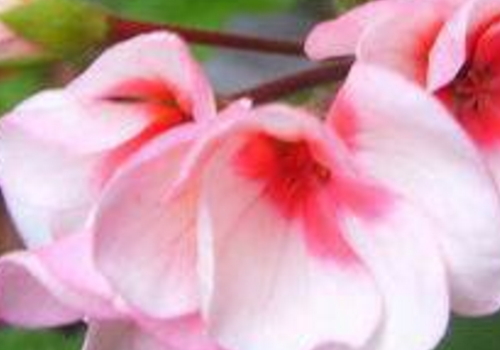
How to plant geraniums:
For the sowing and propagation medium for geraniums, use a mix of peat soil, vermiculite and perlite in an 8:1:1 ratio. Before sowing, water the medium thoroughly, then sow the seeds evenly into a seedling tray and cover with vermiculite to a depth of about 3 times the diameter of the seeds. Disinfect the sowing box with chlorothalonil, build a low arch, and cover with plastic film. A temperature of 20°C to 23°C is ideal, and humidity should be kept above 95%. After about a week, when the sprouts appear evenly, uncover the plastic film. Because the seedling medium contains few nutrients, spray a foliar fertilizer once every 10 days; a compound fertilizer with relatively high phosphorus and potassium content can be used.
Geranium seedling-stage management:
1. Temperature: the most suitable temperature for geraniums is 10-20°C, which means spring and autumn are the most suitable seasons; winter is too cold and summer is too hot. So in summer you must prevent exposure to blazing sun and put them in a shady place. In winter, the indoor temperature should not drop below 0°C, otherwise they will suffer frost damage. If there is no heating equipment, running a 200° large light bulb in a small room also has a certain anti-freeze effect.
2. Water: geraniums should never be overwatered. If you find the roots of a geranium rotting, it may be because of overwatering combined with rather muggy weather. Keep the watering frequency to once every two or three days, and each time water heavily enough to ensure thorough soaking.
3. Soil: geraniums are suited to growing in sandy soil. Mixing some sandy soil into the soil bought at the flower market is more beneficial to the growth of geraniums.
4. Weather: strong winds will snap geraniums, and heavy rain will cause their root system to be soaked by rainwater, resulting in a lack of oxygen for root respiration and thus rot.
6. Fertilizing: applying too much fertilizer at once will cause dehydration in geraniums. If too much fertilizer is applied, for example too much nitrogen fertilizer, the plant will grow excessively and not bloom. After overfertilizing, watering frequently can relieve the symptoms.
7. Light: ample sunlight helps geraniums bloom, but when the temperature is too high they should not be exposed to direct sun. In spring and autumn, give them plenty of sun; in summer, pay attention to the temperature, and when it is too high avoid exposing geraniums to light.
Well, that is all for the introduction to sowing geraniums. I trust all you friends understand now.
How to sow geraniums? Geranium sowing methods, geranium sowing photo-and-text record
More and more flower lovers are growing geraniums. For beginners who have just come into contact with growing geraniums, they may just buy geranium seedlings online, but because seedlings are very expensive, most flower lovers still think of sowing geraniums themselves. Today I will share a flower lover's geranium sowing record, as a reference for flower lovers who want to sow geraniums.
Geraniums are one of the most expensive seeds I have bought, 15 yuan for 10 seeds. But all that money swiftly turned into beautiful leaves and flowers, so it was really worth it! Sown on March 25, and by today, 4 months later, the conclusion is: geraniums are absolutely an excellent choice for beginners to practice on! They germinate quickly, grow quickly, tolerate shade and drought, and are super robust, practically like weeds.
March 25, a day of brilliant sunshine, good weather for spring sowing. I sowed 25 seeds of 5 varieties: deep salmon red, salmon red, apple blossom, white, and mixed-color trailing geraniums. Geranium seeds are very large (of course not as big as nasturtium, but compared with other herbaceous flowers, they really are big fellows), golden yellow like wheat, extremely beautiful~
March 29. Four days after the seeds went into the soil, cotyledons grew. Two plump little leaves like bean sprouts, looking extremely strong~
April 20. The geraniums have been sown for a month, and the golden yellow seeds have turned into vivid green little leaves. Geraniums really are a very beautiful plant; even without looking at the flowers, just looking at the leaves, their shape and color are already very charming.
Round, with wavy edges, a very rich emerald green. An exquisite look~
May 26. The seedlings have basically all produced 4 or 5 true leaves. The quality of this batch of seeds was especially good, with a germination rate of almost 100%, neat sprouting, and basically consistent growth speed.
I repotted the two big ones into black soft pots
Perhaps like me, many people use transparent disposable plastic cups when sowing, and then wait until the seedlings grow 6 or 7 true leaves before planting them out. -- This is not so good! Why? Because as the seedlings grow, the root system grows faster and faster, and you can see the roots through the transparent cup wall. Likewise, light will also shine through the cup wall onto the plant's roots, which hinders root development. This is called "light pruning". Therefore, once the seedlings can be transplanted, everyone should move them into dark-colored pots as soon as possible. Or, lazy people can wrap the transparent cups with black tape~~~
Of course, you can also sow directly in seedling cells from the start, but each cell is very small, so you have to be very careful. For a rough-and-ready type like me, I used them once and never again.
June 28. From the end of May until now, the growth speed of the seedlings has begun to slow down. Before, they looked different every day, but this month they have not grown many new leaves. I estimate it is due to ventilation and light -- at the beginning I said geraniums tolerate shade and drought, which means they survive extremely easily. But this is not conducive to healthy growth.
Reference materials all say that geraniums do not need much water and should be watered when dry and let dry between waterings. So on the balcony, I watered them only once a week. (But after I put them outdoors, it poured almost every two days, and they were still very healthy!) The materials also say that geraniums can live in a semi-shaded environment, but without sufficient sunlight they will not bloom.
Poor my balcony, although it faces south, in summer it gets almost no direct sunlight. Time to move them~~~ I bought a bunch of small red plastic pots, 2 yuan each, ridiculously cheap. They fit perfectly in the wooden trough outside the window~
Summary: the above is the record of the geranium sowing process. I hope everyone will exchange more geranium growing experience.
How to sow geraniums? A photo-and-text introduction to the geranium sowing process
[Common question] How do you sow geraniums?
[Expert answer]
Sowing and propagation of geraniums can be done in either spring or autumn, and indoor pot sowing in spring is best. The ideal germination temperature is 20-25°C. Geranium seeds are not large, so do not cover them with too deep a layer of soil after sowing; they germinate in about 2-5 days. Sown in autumn, they can bloom the following summer. Seedlings grown from seed can be selected to produce excellent intermediate-type varieties. Below, with photos and text, I will introduce the sowing of geraniums.
Geranium sowing
1. Sowing time: a day of brilliant spring sunshine, good weather for spring sowing. Sow the geranium seeds. Geranium seeds are very large (of course not as big as nasturtium, but compared with other herbaceous flowers, they really are big fellows).
Geranium sowing
2. Four days after the seeds went into the soil, cotyledons grew. Two plump little leaves like bean sprouts.
Geranium germination
3. After sowing for a month, the golden yellow seeds have turned into vivid green little leaves. Geraniums really are a very beautiful plant; even without looking at the flowers, just looking at the leaves, their shape and color are already very charming. Round, with wavy edges, a very rich emerald green.
Geranium seedlings
4. The seedlings have basically all produced 4 or 5 true leaves. The quality of this batch of seeds was especially good, with a germination rate of almost 100%, neat sprouting, and basically consistent growth speed.
Geranium
5. I repotted the two big ones into black soft pots
Perhaps like the author, many people use transparent disposable plastic cups when sowing, and then wait until the seedlings grow 6 or 7 true leaves before planting them out. ——This is not so good! Why? Because as the seedlings grow, the root system grows faster and faster, and you can see the roots through the transparent cup wall. Likewise, light will also shine through the cup wall onto the plant's roots, which hinders root development. This is called “light pruning”. Therefore, once the seedlings can be transplanted, everyone should move them into dark-colored pots as soon as possible. Or, lazy people can wrap the transparent cups with black tape. Of course, you can also sow directly in seedling cells from the start, but each cell is very small, so you have to be very careful. For a rough-and-ready type like the author, I used them once and never again.
[Editor's comments] Geraniums have many varieties and are usually cultivated as annual or biennial flowers. So, do you know how to sow geraniums and how to transplant the seedlings? The editor of First Agricultural Economics above introduced the sowing methods for geraniums. The specific steps and process have been introduced for you in detail, and there are also pictures for everyone's reference. I hope this article is helpful to you.