-

How to propagate double-flowered petunias, and what to do when buds form but do not open
Double-flowered petunia: this flower has many layers of petals and comes in many colors, and it is super beautiful. Let's see how to propagate double-flowered petunias. What to do when double-flowered petunias grow flower buds but do not bloom: Double-flowered petunia propagation methods: There are two propagation methods for double-flowered petunias, seed sowing and cuttings.
-

The leaves of pothos grow smaller and smaller and turn yellow - is it because of formaldehyde?
Pothos, almost everyone has one at home, it is super easy to keep alive. What should you do if the leaves of your pothos grow smaller and smaller? Do pothos leaves turn yellow because of formaldehyde? What to do if pothos leaves grow smaller and smaller: overwatering. The root system of pothos is fleshy, and a small shortage of water over a short period generally will not cause adverse symptoms.
-

What causes deformed oyster mushrooms? With control methods
Causes of deformed oyster mushrooms and control methods
-
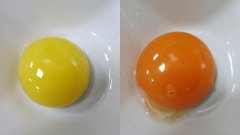
Taichung Sen 17 Transformed into Feed Rice, Livestock Research Institute Raises Delicious Rice-Fed Chickens
In order to expand domestic rice consumption in Taiwan, the Livestock Research Institute (hereinafter referred to as the Livestock Research Institute) specifically used Taichung Sen 17 as feed rice to replace corn, and found that free-range chickens fed feed rice showed significant improvements in both meat quality and flavor, making it suitable for the livestock industry
-

How to feed silkworms well in summer and autumn? All the nutritional formulas are here
The main feed for silkworms is mulberry leaves. Because the quality of mulberry leaves varies greatly from season to season, it has a considerable impact on cocoon yield and quality. If nutritional supplements are fed to summer and autumn silkworms, the yield can be increased by 10%-20%. The formula techniques are introduced as follows: 1. Additive formulas and feeding methods. (1) Glucose solution additive. During the silkworm rearing period, if there is continuous rainy weather, the mulberry leaves are tender in texture due to insufficient sunlight, high in moisture content, and low in carbohydrates. At this time, a 5% glucose solution can be sprayed on the harvested mulberry leaves, and after they are air-dried, they can be fed to the silkworms, which can
-
Feed Formulation and Processing Techniques for Medicinal Silkworm Larvae Infected with Beauveria bassiana
Currently, medicinal silkworm larvae infected with Beauveria bassiana are in strong demand on the Chinese medicinal herb market, and raising and processing them is profitable. The methods for raising and processing them are: 1. Rearing the mature silkworms. Raising and processing medicinal silkworm larvae infected with Beauveria bassiana should be carried out as a specialized operation in non-cocoon-producing areas, so as to avoid a devastating impact on cocoon silkworms. The raising and processing can be carried out throughout the year. As for the feed, besides a small amount of mulberry leaves, more evening primrose, Jiancan grass, white clover, cup plant (Silphium perfoliatum) and the like can be added to replace mulberry leaves, so as to supplement the shortage of mulberry leaves and reduce feeding costs. For
-
How does the new peach variety Shoulin Taowang perform?
Shoulin Taowang is an extra-large, early-maturing, high-quality new honey peach variety selected by Li Wenlin, a senior agronomist at the Fruit Tree Research Institute of Shou County, Anhui Province, from the "Annong Shuimi" peach. The fruit of Shoulin Taowang is nearly round, with an average single fruit weight of 280 grams. The flesh is milky white or slightly milky red, juicy and rich in flavor, sweet and delicious. It contains 11.8-13.9% soluble solids, 11.5-13.8% total sugar, and 5.9 mg/100 g vitamin C. It is nutrient-rich, the fruit is semi-clingstone, and the skin is relatively thick, which is favorable for long-distance transport. This variety is suitable for
-
How to formulate lactating sow feed scientifically
Sows bear very heavy responsibilities. Lactating sows in particular must not only supply the nutrients they need themselves, but also supply the breast milk on which newborn piglets depend for survival, growth and development. Moreover, lactating sows in the high-temperature season face an even more unfavorable living and production environment, and heat stress is a severe challenge for farrowing sows. Therefore, how to scientifically formulate the summer diet of lactating sows and strengthen feeding management should be a problem that pig producers must actively consider and focus on solving. Optimizing the formulation and raising the energy level should
-
Detailed Explanation of Fox Feed Formulation Methods and Raw Material Ratios
The fox's digestive tract is shorter than that of the raccoon dog, its dental chewing surface is less developed than that of the raccoon dog, and the fox's large colon and cecum are also less developed than those of the raccoon dog. The time food takes to pass through the digestive tract is only 25-30 hours for the fox, while the raccoon dog needs about 40-50 hours. Therefore, the fox's ability to digest and absorb nutrients from feed is weaker than that of the raccoon dog. The fox has higher requirements for animal-based feed and vitamins than the raccoon dog. The fox's demand for feed is greatest in summer and weakens in winter. Nutritional needs differ across different biological periods; generally, they are higher during the breeding season than during the non-breeding season, and the diet should be based mainly on animal-based feed, mixed with some plant-based feed.
-
Key Technical Points of Soil Testing and Formula Fertilization for Rice
Based on the technical principles of soil testing and formula fertilization, and combined with the actual work of soil testing and formula fertilization in Pulandian City, 10 technical steps in the experimental process of soil testing and formula fertilization for rice were summarized. 1. Site selection: Select locally representative plots, and arrange experimental plots according to the areas of high-, medium-, and low-fertility farmland. The fertility status of the experimental site should be uniform and consistent, and the fertilization status of the previous crop should be as similar as possible. 2. Soil sampling and testing: Collect soil samples before plowing, using a "plum blossom shape" or "snake shape" to take 15-20 points, with a vertical depth of
条件筛选