The leaves of pothos grow smaller and smaller and turn yellow - is it because of formaldehyde?
Pothos, almost everyone has one at home, it is super easy to keep alive. What should you do if the leaves of your pothos grow smaller and smaller? Do pothos leaves turn yellow because of formaldehyde?
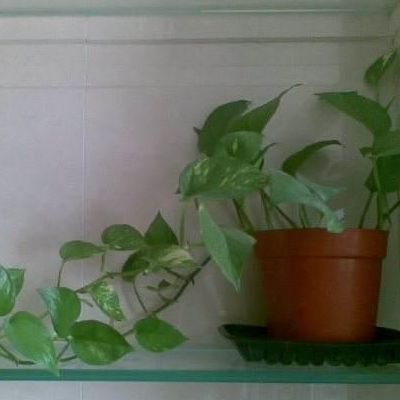
What to do if pothos leaves grow smaller and smaller:
1. Overwatering
The root system of pothos is fleshy, and a small shortage of water over a short period generally will not cause adverse symptoms, but if you water too much, waterlogging in the pot can easily lead to root rot. Since the root system has problems, the leaves will naturally follow, such as yellowing leaves, leaf drop, and leaves growing smaller and smaller.
Solution:
1. If the potted pothos is kept on a balcony, you can water it once every 1-2 days; in other seasons, wait until the potting soil dries before watering. When the temperature rises, you can often spray water on the leaves.
2. If it is kept indoors, watering should only be done after the potting soil has completely dried out, and after keeping it for a period of time it also needs to be moved outdoors for one thorough watering, then moved back indoors after a few days.
2. Lack of nutrients
Pothos rather likes fertilizer. If it lacks nutrients for a long time, it will grow slowly, because the nutrients the plant needs cannot be replenished in time, and the leaves will grow smaller and smaller.
Solution:
1. To promote the growth of pothos, mainly supplement nitrogen fertilizer, with potassium fertilizer as a supplement. In the peak growing season, spray foliar fertilizer about once every 10 days; a diluted urea solution is recommended.
2. Since the growth rate of pothos slows down after entering autumn and winter, topdressing during this period should mainly be decomposed organic fertilizer solution, applied about once every half a month. After winter ends, foliar fertilizer spraying should be the main method.
3. The flower pot is too small
A flower pot that is too small is also one of the reasons the leaves grow smaller and smaller, but few people pay attention to it. Because the pot is too small, the well-developed root system of pothos becomes tangled and coiled at the bottom of the pot, intertwining with each other, resulting in insufficient supply of nutrients and water, seriously slowing the plant's growth rate, and the leaves will naturally grow smaller and smaller.
Solution: Take the plant out of the original pot, then plant it into a larger flower pot to ensure the root system will not become tangled and compete with each other due to too little space in the pot.
Do pothos leaves turn yellow because of formaldehyde?
No, it is not because there is formaldehyde at home; pothos itself has an air-purifying effect.
That is all for the reasons why pothos leaves grow smaller and smaller. Yellowing leaves are not caused by formaldehyde.
What to do if pothos leaves turn yellow - reasons why pothos leaves turn yellow
Pothos is a green foliage plant that people most like to grow at home. Its leaves are evergreen all year round. It can absorb carbon dioxide, methanol and formaldehyde from the air, purify the air, and beautify the environment. But many people find during cultivation that the leaves of pothos turn from green to yellow, clearly reducing its ornamental value. How should this be handled? And what causes pothos leaves to turn yellow?
1. Improper watering
Usually when many people grow pothos, they are afraid that it will not get enough water, so they water it every day, but too much watering not only fails to promote the growth of pothos, but also makes its leaves turn yellow, lose their luster, and stop growing. The best way to handle this is to put the pothos tray in a ventilated and cool place, and after its soil has completely dried, repot it into a flower pot, and then its yellowing leaves will change noticeably.
2. Lighting problems
Lighting problems are also a main reason pothos leaves turn yellow. Pothos is a shade-loving plant, and normally it should not be placed in strong sunlight, otherwise its leaves will be scorched, turn yellow and fall off. But when growing pothos, you also cannot keep it all the time in a cold, shady environment with no sunlight, otherwise its leaves will turn yellow due to lack of chlorophyll. If the yellowing of pothos leaves is caused by too much light, then it needs to be moved to a cool environment and watered appropriately. If the yellowing is caused by lack of light, then it should be moved to an environment with sufficient light.
3. Fertilizing problems
Too much or too little fertilizing is also a main reason pothos leaves turn yellow. If you applied concentrated fertilizer to pothos and its leaves turned yellow, stop fertilizing immediately. If the situation is serious, also promptly flush out part of the fertilizer with clean water or directly replace the potting soil. If the yellowing of pothos leaves is caused by too little fertilizing, then topdressing is needed in time, but when the potting soil has become compacted, topdressing is not needed and the potting soil should be directly replaced with new soil.
What to do if pothos only grows vines and not leaves - conditions for pothos to grow vines and leaves (spraying water on the leaves)
If you want to grow green plants but are a beginner and do not dare to, then pothos is absolutely your first choice. Earlier we talked about the effects and functions of pothos flowers, the cultivation methods and precautions for pothos, and what to do if pothos leaves turn yellow. Now let's talk about what to do if pothos only grows vines and not leaves. I believe many beginners have encountered this problem.
1. What to do if pothos only grows vines and not leaves
Pothos is one of the easiest plants to grow. It can absorb indoor formaldehyde and benzene, making it the best choice for a home plant. Although pothos is easy to grow, various reasons can cause it to only grow vines and not leaves. At this time the owner will surely think pothos lacks fertilizer, but that is actually not the case. What to do if pothos only grows vines and not leaves? The editor analyzed the following reasons:
1. Spray water on the leaves appropriately
A vine plant like pothos needs a fairly large amount of water daily. Therefore we can spray some necessary water on the leaves of pothos, not too much, once a day. Pothos should not be watered too frequently; watering any plant too frequently easily has negative effects. The main cause of death for almost all household flowers and plants is excessive watering. Although pothos is a shade-loving plant, it also cannot be overwatered. Stick to the principle of watering when dry, and water thoroughly each time.
2. Placement location
Pothos dislikes strong light, so it needs to be placed in a cool place. In home cultivation, the placement location needs to be considered. If placed under strong light, after a period of time you will find the leaves of pothos turn yellow, and even some leaves directly dry up, so avoid placing it on windowsills and balconies exposed to direct sunlight.
3. Give appropriate light
What to do if pothos only grows vines and not leaves? Without sunlight, no plant can carry out photosynthesis, and plant growth will be slow. So at the appropriate time move pothos to a different position, place it under ventilated weak light, and let it fully carry out photosynthesis to ensure the nutrients for the growth of pothos. For pothos to grow faster and better, appropriately adding fertilizer is necessary.
2. Essential conditions for pothos to grow vines and leaves
1. Soil
Water cultivation can actually also grow vines, but it is very slow, and you also have to find a light-blocking bottle; it is best not to use a glass bottle. The best way to grow vines is soil cultivation. Choose slightly acidic soil, and the soil should be loose and well-draining. Grown this way, pothos really grows very fast and easily fills the pot.
2. Light
Plant growth cannot be separated from light, but more light is not always better. Pothos can occasionally get some sun, but absolutely must not be exposed to the sun, and even with light it cannot be in direct sunlight for too long, or it will turn yellow from sun exposure.
3. Pruning
In biology there is a term called apical dominance, which means that when the top grows too well, the leaves beside it grow very slowly. The same is true for pothos. The old stems and leaves need to be pruned so that new buds can grow and it can grow quickly.
4. Fertilizing
Fertilizer is very helpful for growing vines. It does not need to be too good; things like rice-washing water and leftover beer can all be used as fertilizer for pothos. If you keep fish, that is even better, because fish tank water is very good fertilizer.
5. Shaping
If pothos has grown somewhat long, you can smooth all of them out, gather them in one direction, and then use a ribbon or rubber band to fix the branches. After they grow longer, remove these ties, and it will easily grow into a waterfall! The above is the analysis of what to do if pothos only grows vines and not leaves. Now you understand, right?