-
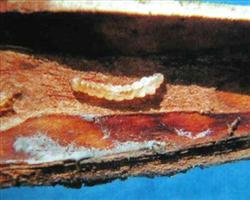
5 Control Methods for the Apple Flatheaded Borer
Nursery stock quarantine: The apple flatheaded borer is a quarantine pest and can be spread to new areas with nursery stock. Therefore, quarantine work at the time of nursery stock shipment must be strictly strengthened to prevent its spread. Protecting natural enemies: During the mature larval and pupal stages, the apple flatheaded borer has two species of parasitic wasps and one species of parasitic fly; in orchards that are not frequently sprayed with pesticides, the parasitism rate can reach 36...
-

How to Grow Flat Peaches? Detailed Explanation of Planting Methods and Management Techniques
How to Grow Flat Peaches
-

Ruipan 21 is a new extremely late-maturing flat peach cultivar
The flat peach is a variant of the peach and a unique resource of our country. The Institute of Forestry and Pomology, Beijing Academy of Agriculture and Forestry Sciences launched a flat peach breeding program in the late 1970s, and several cultivars bred from it have already been widely promoted in production, but extremely late-maturing cultivars with a fruit development period of more than 160 d are still rare. 'Ruipan 21' (see color photo on the inside back cover) is an extremely late-maturing flat peach cultivar obtained from the cross 'Fantasia' x 'Ruipan 4' (1996), and was approved by the Beijing Municipal Crop Variety Approval Committee in 2006.
-
Introduction to the new flat peach variety Ruipan 21
The extremely late-ripening white-fleshed flat peach variety "Ruipan 21", bred by the Institute of Forestry and Pomology of the Beijing Academy of Agriculture and Forestry Sciences, recently passed variety approval in Beijing. All types of fruiting branches of this variety can bear fruit, mainly long and medium fruiting branches, with a high natural fruit-setting rate. The fruit development period is about 166 days, and the annual growth period is about 208 days. The fruit is large, with an average single fruit weight of 235.6 grams and a maximum fruit weight of 294 grams. The skin is moderately thick and difficult to peel. The flesh is yellow-white, with no red streaks beneath the skin, and red near the pit. The flesh is of the hard-melting type, juicy, with few fibers, sweet flavor, and relatively firm.
-
How are flat peach varieties? Introduction to excellent flat peach varieties
Flat peach 1. Zaolu flat peach variety characteristics: The tree posture is open, and the tree vigor is moderate. All types of fruiting branches can bear fruit, mostly compound flower buds, the starting node of flower buds is the 1st to 2nd node, and it is high-yielding. The flower is rose type, with a large amount of pollen. In the Zhengzhou area of Henan, the fruit ripens on June 10, and the fruit development period is 67 days. The chilling requirement is 750 hours. The fruit is medium-large, with an average single fruit weight of 68 grams and a maximum of 95 grams. The fruit shape is flat, the fruit apex is sunken, and the suture line is shallow; the base color of the peel is creamy yellow, 50% of the fruit surface is covered with a red blush, the fuzz is medium, and it is easy to peel
-
Introduction to the New Flat Peach Variety 'Ruipan 20'
The extremely late-ripening white-fleshed flat peach variety 'Ruipan 20', bred by the Institute of Forestry and Pomology of the Beijing Academy of Agriculture and Forestry Sciences, recently passed variety approval in Beijing. This variety can bear fruit on all types of fruiting branches, mainly on long and medium fruiting branches, and has a high natural fruit-setting rate. The fruit development period is about 160 days, and the annual growth period is about 208 days. The average single fruit weight is 254.7 grams, and the maximum fruit weight is 350 grams. The fruit's longitudinal diameter is 5.86 cm, transverse diameter 8.37 cm, and lateral diameter 9.28 cm; the fruit is flat in shape, with
-
A Complete Analysis of the Key Points of Large Flat Apricot Cultivation and Management
1. Planting method Before planting, soak the seedling roots in water for 24 hours, take them out and dip them in a water-retaining agent, then plant them. After planting, irrigate thoroughly, and once the water has seeped down, cut the trunk back to a height of 80-100 cm. With the main trunk as the center of the planting hole, cover with 1 m x 1 m plastic film, press the edges of the film down firmly with soil, and leave the area around the planting pit slightly higher. Years of practice have proven that covering with plastic film after planting both retains water and raises soil temperature, causing the tree to sprout early and grow quickly. One week after planting, slip a plastic bag over the trunk, with a bag length of 40 cm and a width of 10 cm. To prevent
-
What kind of peach is Zaolu flat peach? Introducing this peach tree variety
It was bred by the Beijing Institute of Forestry and Pomology by crossing SahuaHong and ZaoxiangYu. The fruit of this variety is flat and round, with a sunken fruit apex; the fruit is red, with a yellow or yellow-white background color, and the fruit surface is uneven. The average single fruit weight is about 103 grams, and the largest fruit is 185.2 grams; the apex cavity has cracking to varying degrees. At maturity, the skin peels easily, and the stone is semi-clinging. The flavor is fragrant and extremely sweet, and the soluble solids content is 12.5-18.8%. The flesh is soft and melting, milky white, and very juicy; in the Weihai area, the fruit ripens in mid-June, with a development period of about 70 days. Suitable for protected cultivation.
-
Introduction to the new oil flat peach variety Ruiyoupan No. 1
The late-maturing white-fleshed oil flat peach new variety "Ruiyoupan No. 1", bred by the Institute of Forestry and Pomology of the Beijing Academy of Agriculture and Forestry Sciences, recently passed variety approval in Beijing. This variety can bear fruit on all types of fruiting branches, mainly on long and medium fruiting branches, with a high natural fruit-setting rate. The fruit development period is about 145 days, and the annual growth period is about 208 days. The average single fruit weight is 80.9 grams, and the largest fruit weight is 114 grams. The base color of the peel is light green, with more than 3/4 of the fruit surface covered by a purplish-red blush, and no fuzz. The peel is moderately thick and cannot be peeled off. The flesh is light green to yellowish-white, with no red streaks beneath the skin and red near the pit.
-
What is the introduction performance of the early yellow flat peach? Detailed explanation of cultivation and management key points
The early yellow flat peach was bred by the Zhengzhou Fruit Research Institute of the Chinese Academy of Agricultural Sciences through hybridization using 8-21 as the female parent and a French flat peach as the male parent, and was named in 1997. It was introduced to Toutunhe Farm at the end of the last century. Through nearly ten years of trial planting observation, this variety is relatively suitable for the local natural conditions and can be developed and promoted in the **suburbs of towns along the economic belt on the northern slope of the Tianshan Mountains. 1) Overview of the introduction site. Toutunhe Farm is located in the western suburbs of Urumqi and belongs to the 12th Division of the XPCC. The soil is half sandy and half clay, and the soil pH is moderately acidic. It belongs to a mid-temperate semi-arid climate zone, with four distinct seasons,
条件筛选