-

What to Do About Aflatoxin Poisoning in Bamboo Rats? A Detailed Guide to Bamboo Rat Farming Techniques
Yunnan Baoshan Shenken Agriculture Bamboo Rat Farming Technique Series - The Key to Success or Failure in Bamboo Rat Farming: Aflatoxin Poisoning in Bamboo Rats Deaths from aflatoxin poisoning in bamboo rats during the...
-

What causes aflatoxin poisoning in pigs
Aflatoxin is a toxin produced by Aspergillus flavus. It is not easily destroyed in the external environment, and ordinary heating and boiling cannot break down the toxin (Bt toxin is only broken down when heated to 268°C to 269°C). It is a liver-cancer-causing substance. Aspergillus flavus is widely distributed in nature and readily parasitizes and multiplies in corn, peanuts, rice, wheat straw, as well as cottonseed cake, soybean cake, wheat bran and rice bran, producing toxins and causing ordinary grains and their by-products to become moldy and spoiled. At present,
-
Detailed Explanation of the Pathogenic Characteristics of Duck Aflatoxin
(1) Production of aflatoxin Aflatoxin, like other mycotoxins, is one of the metabolic products produced by toxigenic fungi during their growth and reproduction in a substrate. This toxin was discovered in 1960 during the investigation of the cause of "Turkey X disease" that affected 100,000 turkeys in the United Kingdom. The following year, it was further found that peanut meal contaminated with Aspergillus flavus could induce liver cancer in rats, confirming that aflatoxin is a carcinogenic mycotoxin. The main fungi producing aflatoxin are specific strains of Aspergillus flavus and Aspergillus parasiticus, while Aspergillus wentii and
-
What are the prevention and treatment methods for aflatoxin poisoning in pigs?
1. Cause: Corn, soybeans and cottonseed are all easily infected by Aspergillus flavus. At the suitable temperature of 24°C-30°C and a relative humidity above 80%, it can multiply in large numbers and produce this toxin. When the above seeds and their by-products are used as feed to feed pigs, poisoning can occur after about 15-25 days. 2. Symptoms: In acute cases, pigs may be seen falling to the ground and dying during movement, or dying within two days after symptoms appear. Sick pigs do not eat, the mucous membranes are pale, the hindquarters are weak, walking is unsteady, the feces are dry, and there is bleeding from the rectum. Sometimes sick pigs press their heads against the wall.
-
What are the prevention methods for aflatoxin poisoning in pigs?
Persistently refusing to feed moldy feed is the fundamental preventive measure. Preventing feed from becoming moldy is also an important part of prevention. 1. After grains mature, harvest them promptly, dry them thoroughly, and store them in a ventilated place to avoid mold. 2. Strengthen the storage of feed, taking care to keep it dry; especially in warm and rainy areas or seasons, more attention should be paid to preventing feed from becoming moldy. 3. Do not feed pigs grains or food that have already become moldy and spoiled. 4. Once a pig is found to be poisoned, immediately stop feeding the moldy feed and switch to fresh feed.
-
What are the pathological changes of aflatoxin poisoning in pigs?
In acute cases, anemia and hemorrhage occur, with massive bleeding in the thoracic and abdominal cavities, and petechial spots often on the serous membrane surfaces. Hemorrhage occurs in the subcutaneous muscles in front of the thigh and under the scapula. The liver is enlarged with bleeding points. In the part of the liver adjacent to the serous membrane there are pinpoint or ecchymotic hemorrhages, obvious hemorrhages are common on the epicardium and endocardium, and hemorrhages are often present throughout the body muscles. In chronic cases, there is proliferation and sclerosis of the liver bile ducts, yellow fatty degeneration of the liver, white spots or necrotic lesions on the liver surface, and effusion in the thoracic and abdominal cavities. The renal cavity is pale and swollen. The systemic lymph nodes are congested and edematous.
-
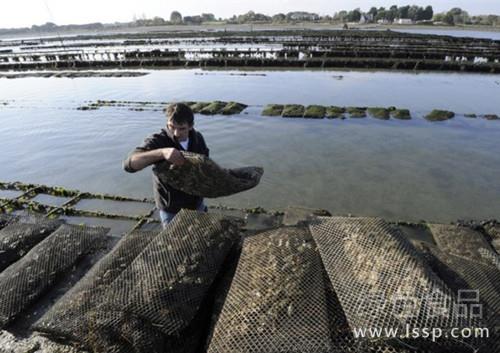
Oyster mudflat farming has good returns, key points for high-yield vertical farming
Oyster mudflat farming has good returns; key points for high-yield vertical oyster farming
-
What to Do About Aflatoxin Poisoning in Pigs? Detailed Treatment Methods
Aflatoxin poisoning in pigs is a toxic disease characterized by liver damage, caused by pigs eating feed contaminated with aflatoxin. Cause: Aflatoxin is a toxin produced by Aspergillus flavus, and it is not easily destroyed in the external environment. Ordinary heating and boiling cannot decompose the toxin (B1 toxin is only decomposed when heated to 268°C-269°C). It is a liver-cancer-causing substance. Aspergillus flavus is widely distributed in nature and readily parasitizes and reproduces in corn, peanuts, rice, wheat grains, as well as cottonseed cake,
-
How to prevent and treat aflatoxin poisoning in deer
Aflatoxin poisoning is a fungal toxin poisoning disease shared by humans and animals and is seriously harmful. It mainly attacks the liver, causing bleeding, digestive dysfunction and neurological symptoms as its features, and it has carcinogenic effects. [Cause]: Because feed is poorly kept and stored, or because it rains for a long time during the grain harvest period, the grain spoils, and some toxic molds (such as Aspergillus flavus and Fusarium) often parasitize it, leading to mildew. Eating a large amount of this kind of feed can cause poisoning. Among them, Aspergillus flavus is relatively strong in toxicity, and deer are even more likely to be poisoned after eating this kind of moldy
-
Flat Rock Scorpion
Distribution: most regions of South Africa vs Africa, Tanzania region. Food: feed juveniles pinhead crickets and mealworms; feed adults crickets and even pinky mice. Size: adult male: 17CM~20CM; female: 13CM~15CM. Some keepers have raised them to 36 cm. Suitable temperature: 25°C~30°C (day), 20°C or above is fine (night). Suitable humidity: 40%~60%. Temperament: appears calm but reacts quickly, easily stressed. They are the heaviest in the scorpion family.
条件筛选