-

Detailed Explanation of Key Cultivation Techniques for Schisandra chinensis in Flat Land
Schisandra chinensis is a multifunctional, multi-purpose, highly efficient wild economic plant. Its fruit is a precious traditional Chinese medicinal herb renowned both domestically and internationally, beneficial to the human body by tonifying qi, nourishing the kidney, astringing the lungs, restraining essence, promoting fluid production, quenching thirst, improving intelligence, and calming the mind. As medicine, it mainly treats conditions such as lung deficiency with wheezing and coughing, spontaneous sweating, night sweats, chronic diarrhea, dysentery, seminal emission, neurasthenia, forgetfulness, palpitations, insomnia, weakness of the limbs, acute and chronic hepatitis, and diminished vision. It can also be made into a series of health foods such as Schisandra wine, Schisandra beverages, Schisandra tea, and Schisandra honey; its stems, vines, and roots
-
Identification and Control Methods of the Lingzhi Flat Bug
The flat bug Mezira membranacea branacea (Frab.) belongs to the order Hemiptera, family Aradidae. This insect was first discovered on log-cultivated lingzhi (Ganoderma lucidum) in Baoxi Township, Longquan City in 1994. In recent years, it has caused very serious damage in log-cultivated lingzhi production areas, with its range of damage expanding day by day, greatly affecting the yield and quality of log-cultivated lingzhi. The lingzhi flat bug is mainly distributed in Longquan, Zhejiang, China; Shaowu, Fujian, China; Nanning, Guangxi, China; Hainan Island, China; Taiwan, China; and Japan. Damage characteristics: The flat bug sucks the sap from lingzhi mycelium and primordia
-
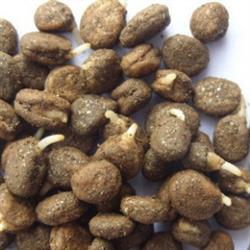
How should ginseng seeds be treated before flat-ground planting?
How should ginseng seeds be treated for flat-ground planting? Please explain the method. Before planting ginseng, you can refer to the following methods for treatment: after the water seeds are dried until the skin turns white, spread them in sunlight at a temperature of around 25°C and turn them for 30 minutes; this uses ultraviolet light to kill bacteria on the seed coat. Mix weathered sand (river sand also works, but it has a high bacterial content...) with ginseng seeds at a ratio of 5:1, keeping moisture between 15% and 18%, that is, it forms a ball when squeezed in the hand and breaks apart when released. Store the mixed ginseng seeds with moderate moisture in a jar or wooden box, or dig a pit in ground that does not accumulate water, wrap it with mesh netting, and build a rainproof and sun-shading shelter above. Before the seeds crack, control the temperature at 18°C-20°C. After the cracking rate reaches 80%, lower the temperature of the seed storage container to 13°C-15°C. Too high a temperature and too much moisture easily cause seed rot. Ginseng seeds stored in sand should be turned once every 10-15 days to ensure consistent moisture in the container. When moisture is low, supplement with a warm water spray; when moisture is high, dry them in the air promptly.
条件筛选