-

How are fermentation additives used when composting mushroom substrates?
How do you use fermentation additives to compost mushroom substrates?
-
Biological fermentation is a good method in edible mushroom cultivation
Biological fermentation is a good method for cultivating edible mushrooms
-
Methods for Using Biological Fermentation Agents and Fertilization Techniques in Edible Mushroom Cultivation
How to Use Biological Fermentation Agents for Cultivating Edible Mushrooms
-
Key Technical Points of Indoor Secondary Fermentation for Agaricus bisporus Production
The compost that has undergone outdoor pre-fermentation is moved indoors, and through artificial temperature and air control, the compost is sterilized and fermented under specific environmental conditions, further enhancing the specificity and selectivity of the compost, so that the compost is fermented into a substrate more suitable for mushroom growth. This process is called indoor secondary fermentation. (1) Principle: Secondary fermentation is a biochemical reaction process in which the activities of various types of thermophilic microorganisms promote changes in the physical and chemical properties of the compost. Secondary fermentation can be divided into two stages. Stage one: raise the pile temperature
-
Key Points of Compost Fermentation Technology in the Cultivation of Agaricus bisporus (Button Mushroom)
Compost fermentation is divided into the one-phase fermentation method and the two-phase fermentation method. (1) One-phase fermentation method: 1 day before building the heap, cut the rice (wheat) straw into sections and drench it thoroughly with clean water so that it fully absorbs water, then leave it piled for 1 day. 7-10 days before building the heap, wet the dry manure with clean water or urine water, then build it into a heap for fermentation. When building the heap, arrange 1 layer of manure and 1 layer of straw, piling them layer by layer; start watering at the fourth layer, and from the fourth layer to the eighth layer add all of the cake fertilizer, superphosphate, gypsum and half the amount of urea layer by layer. After building 10 layers, the heap height reaches about 1.5 m, the four sides are basically vertical, the top of the heap is shaped like a turtle shell, and the very top is covered with 1 layer of manure. To maintain aeration, 2-3 ventilation holes can be inserted from top to bottom with bamboo tubes at the top of the compost heap. To keep warm and retain moisture, the top of the heap should be covered with straw mats, and plastic film should be used on rainy days. When piling the material, the water content of the compost is required to reach saturation. On the second day after building the heap, measure the material temperature within 50 cm; under normal conditions the material temperature will rise to 70°C. If it does not reach this temperature, find out the cause and take remedial measures as soon as possible. During fermentation, turn the heap once at intervals, supplement auxiliary raw materials, and adjust the water content and pH of the compost. On the second day after building the heap, the material temperature begins to rise, and on the third day the temperature at the center of the heap reaches its highest point (74-80°C). When this temperature is reached, the first turning can be carried out 6-7 days after building the heap. On the day before turning, water the upper part of the heap first, then water layer by layer during turning; after the heap is rebuilt, a small amount of water should flow out around it, indicating that the amount of water added is appropriate. When building the heap, still add the remaining urea from the fourth layer to the eighth layer. 2 days after the first turning, the material temperature can reach as high as 75-80°C. 5-6 days after the first turning, carry out the second turning. The focus of the second turning is to adjust moisture; the appropriate water content is when the compost is squeezed tightly by hand and 3-4 drops of water can be squeezed out. On rainy days, when covering with plastic sheeting, prop it up with wooden sticks so that the inside of the material is ventilated, prevent anaerobic fermentation, and keep the material temperature at 60-65°C. Generally, the third turning can be carried out 4-5 days after the second turning, using the same method as above. If there are lumps of manure, crush them before mixing them in. 4 days after the third turning, carry out the fourth turning. First check the water content of the heap; the method is that when the compost is squeezed tightly by hand, 1-2 drops of water between the fingers is just right. If the moisture is insufficient, adjust it with 1% lime water. If the moisture is too high, spread it out to air for a while first, and rebuild the heap when the moisture is appropriate. At the same time, prepare 0.5% dichlorvos and spray it to kill insects. 3-4 days after the fourth turning, the temperature inside the material is still around 50°C and tends to stabilize; carry out the final turning. During the turning, adjust the water content of the compost to 60%-63% and the pH to 7.5-8.0, and at the same time check whether residual ammonia gas and pests remain in the compost. If there is an ammonia smell, formaldehyde can be used again to neutralize it; if there are insects, 0.5% dichlorvos can be used to kill them. From heap building to entering the house, the compost generally needs to be turned 4-5 times, and the intervals between turnings are usually 7, 6, 5, 4 and 3 days. During the heap-building process, the moisture of the compost should first be wet and then dry, the heap should first be large and then small, and the turning intervals should first be long and then short. Following this principle, the heap temperature can be maintained above 50°C for a long time.
-
How to use fermentation aids in mushroom cultivation substrate
Using fermentation aids to make edible mushroom substrate has the characteristics of fast fermentation, thorough fermentation, being able to ferment at both high and low temperatures, greatly shortening the conventional fermentation production time, reducing labor intensity, and lowering costs; it also has the characteristics of "broad-spectrum" fermentation (it can ferment almost all organic materials that need fermentation) and "strong adaptability" (it has relatively loose requirements for environmental conditions). Comparative trial demonstrations of the Jinbaobei edible mushroom cultivation substrate fermentation aid produced by Beijing Huaxia Kangyuan Technology Co., Ltd. show that this fermentation microbial agent is more
-
Detailed Explanation of the New Fermentation Technology for Shiitake Mushroom Seasoning Sauce
Shiitake mushroom seasoning sauce is a new type of premium condiment. In addition to retaining the unique aroma of shiitake mushrooms, it also contains appropriate proportions of alcohol, sugar and amino acids. It is savory and mellow with a pleasant taste, rich in nutrients, delightfully fragrant and easy to use. Its fermentation technology: 1. Brewing raw materials. Main ingredients: shiitake mushroom mycelium, dried shiitake mushroom powder, fresh koji juice, yeast liquid; auxiliary ingredients: edible sugar, lactic acid, etc. 2. Enzyme liquid culture. Take 2 liters of fresh koji juice at a concentration of 8-10 Baume as the culture medium, put it into a long-necked bottle, use sterilized silk cotton as the bottle stopper, place it in a small pot
-
What is the reason that shiitake mushroom fermentation heats up quickly?
Developing and utilizing natural resources to grow shiitake mushrooms is a fast path to wealth, and using crop by-products to cultivate shiitake mushrooms is an effective way to lower production costs and improve economic returns. When making shiitake cultivation substrate, if the fermentation speed is too slow and the temperature is low, it will seriously affect the quality of the substrate and production efficiency, thereby greatly reducing the economic returns of mushroom growers. So how can shiitake cultivation substrate be fermented quickly? Below is a method for rapid fermentation using Jinbaobei starter culture, which is absolutely convenient and practical. Using this method to cultivate shiitake
-
Mushroom fermentation agent helps mushrooms achieve high yield, high quality, and time savings
Using a fermentation aid to make edible mushroom growing substrate allows fast and thorough fermentation, working at both high and low temperatures, greatly shortening the fermentation production time, reducing labor intensity, and lowering production costs. It also has the characteristics of broad-spectrum fermentation and strong adaptability (it can ferment almost all organic matter that needs fermentation, and has relatively loose requirements for environmental conditions), and can be widely used for button mushroom (white mushroom), Agaricus edulis (double-ring mushroom), oyster mushroom (Pleurotus), Hypsizygus marmoreus (small oyster mushroom), straw mushroom (rice-straw mushroom, Chinese mushroom), silver-thread straw mushroom
-
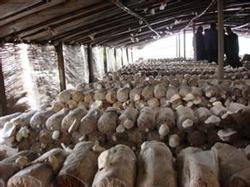
Detailed Explanation of Fermentation Methods for White Bailing Mushroom Cultivation Substrate
White bailing mushroom is a rare mushroom species developed in recent years. Its cultivation technology is becoming increasingly mature, and the marketability of its products is also getting higher and higher. It is believed that in the near future, white bailing mushroom will, like enoki mushroom and shaggy mane mushroom, become an ordinary member of the edible mushroom family and be commonly cultivated by the vast number of mushroom farmers. From the current situation, white bailing...
条件筛选