-

Cultivating new farmers requires both real measures and distinctive features
Cultivating new farmers with distinctive features and real measures
-
Features and Applications of Fully Openable Roof Film Greenhouses
Fully Openable Roof Film Greenhouse
-
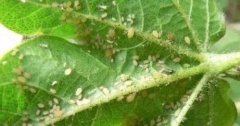
Morphological Characteristics and Damage Symptom Identification of the Cotton Aphid on Flowers
Among the common insect pests of flowers, the cotton aphid causes very serious damage. Let us take a look below at the harmful habits and morphology of the cotton aphid. Damage habits: The cotton aphid is a very common aphid on general herbaceous flowers, occurring on plant buds, young leaves, or flower buds and corollas
-
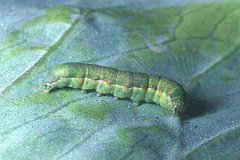
What do beet armyworm larvae and adults look like? A detailed breakdown of their morphological features
We know that the beet armyworm is a pest, but do you understand its ecological habits and morphology? Let's take a look together. Ecological habits: The adult beet armyworm hides by day and comes out at night, resting on the undersides of leaves or in dark places during the day, and beginning activity and mating after sunset.
-
What are the characteristics of tulips? A comprehensive analysis of their growth features
Tulips are also known as grass musk and foreign lotus. Their characteristics are: 1. They prefer warm, moist, sunny or semi-shaded environments. They have strong cold resistance, and in winter, with proper protection, the bulbs can overwinter in the open field. They dislike the intense summer heat, so from June to September the aboveground parts gradually wither and enter dormancy. The optimal growth temperature for tulips is 15-18°C, the rooting temperature needs to be above 5°C, and the suitable temperature for flower bud differentiation is 17-23°C; above 35°C it will be inhibited. About one month after the mother bulb blooms, it gradually withers, while new
-
Detailed Explanation of Notoginseng's Morphological Characteristics: A Comprehensive Understanding of the Plant's Features
Notoginseng is a perennial herbaceous plant, 30-60 cm tall. The main root is fleshy, mostly short conical in shape. The rhizome is short and thick, commonly known as "sheep intestine head." The above-ground stem is erect, smooth and hairless, solitary, unbranched, with longitudinal stripes. 3-6 palmate compound leaves are whorled at the top of the stem, with long petioles; the leaflets number 3-7, oblong-elliptic to obovate, 5-15 cm long, with finely serrate margins and bristles on the veins on both sides. The umbel is solitary at the top of the stem, with numerous flowers, bisexual, yellow-green when first opening, white when in full bloom; the calyx and corolla each have 5
-
What kind of snake is the tiger keelback? An introduction to its physical features and habits
Tiger keelback (Rhabdophis tigrinus), with a total body length of nearly 1000 mm. The dorsal surface of the body is emerald green or grass green; on both sides of the front part of the body there are thick black and orange-red patches arranged alternately, and on both sides of the nape there is a pair of thick black "eight"-shaped markings. Distribution: widely distributed across the country; found in Tianjin, Hebei, Shanxi, Inner Mongolia, Liaoning, Jilin, Heilongjiang, Jiangsu, Zhejiang, Anhui, Fujian, Taiwan, Jiangxi, Shandong, Henan, Hunan, Hubei, Guangxi, Sichuan, Guizhou, Yunnan, Tibet, Shaanxi, Gansu, Qinghai, Ningxia and other places
-
Product Features and Uses of Yubao Insecticide
This product is a new generation of green aquatic insecticide, with advantages such as high efficiency, safety, no pollution, no damage to water quality, and no effect on fish appetite. It is quite safe for eels, mandarin fish, white pomfret, California bass, etc., and can be used to kill aquatic pests such as anchor worms (needle worms), Sinergasilus (gill worms), fish lice, and water fleas (mites) in eel ponds. Dosage: 50 ml (one liang) per mu (water depth 1 m). Directions: first dilute the medicine with a small amount of water, then splash it evenly over the whole pond. Note: this product is best applied in the evening
-
Recipe and Features of Milk Fish Rolls
Ingredients: Mandarin fish. Seasonings: salt, MSG, yellow wine, fresh milk, water chestnut flour, stock. Method: (1) Remove the internal organs and bones from the mandarin fish, slice it into pieces, roll them into fish rolls, and coat with starch. (2) Briefly fry the fish rolls in oil, then remove them; add stock and seasonings to the pan, and after the fish rolls come to a boil, add the fresh milk and thicken with water chestnut flour. Features: tender; fresh, smooth, with the fragrance of milk.
-
What are the characteristics of hydrangea? An introduction to its morphological features and growth habits
Shrub, 1~4 m tall, branchlets stout, lenticels prominent. Leaves opposite, large and glossy, obovate to elliptic, 7~15 cm long, margins coarsely serrate, glabrous on both surfaces. Terminal large corymb, flat-spherical, up to 30 cm in diameter, almost entirely composed of sterile flowers; flowers initially white, mostly turning pink in alkaline soil and blue in acidic soil.
条件筛选