-
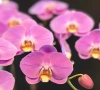
Key precautions after repotting a Phalaenopsis orchid and what it fears most
You finally finish repotting your Phalaenopsis orchid, only for its leaves to turn yellow and its roots to rot within a few days? Don't let all your hard work go to waste! Below, let's talk about the "major taboos" of aftercare following repotting. Beginners must avoid them! 1. Waterlogging Phalaenopsis orchid roots absolutely hate being smothered! After repotting, if the pot holds standing water, the roots will turn black and rot within a few days! Guide to avoiding pitfalls: 1. Choose one with large
-

What are termites most afraid of? Here is how to deal with termites at home
Snakes, insects, rats and ants are the species many people fear most appearing in their homes, and among the ant-like creatures, the most detested is probably the termite. So if termites appear at home, how do you treat them? What are they most afraid of? Let's learn about it together with the Tutuliu editor below.
-
The most effective treatment for a scorpion sting, and what scorpions fear most
The scorpion is a venomous animal, but it can be used as medicinal material, so many breeders raise them to make money, but during breeding there can be stings, and if not handled properly they can cause life-threatening danger, so what is the most effective method for a scorpion sting? What does it fear most? 1.
-
Homemakers United Foundation criticizes hasty import of ractopamine pork, fears people may need to bring their own rapid test strips, food safety hard to guarantee
Will we have to bring our own ractopamine rapid test strips from now on? Homemakers United Foundation blasts hasty import of ractopamine pork, says "broken pot" makes food safety hard to guarantee
-
The latest on lotus: it needs water but also fears water
The lotus is an aquatic plant and cannot survive without water. "Fearing water" means that if the water level is too high, it will struggle to bloom, or even the whole plant will suffer; because varieties differ, their requirements for water depth also differ. For example, the red lotus growing in Wuhan East Lake, at a water depth of 1.5 m, shows only a few floating leaves, and the standing leaves are all submerged in the water; without standing leaves it cannot bloom. If the standing leaves are submerged for more than 10 days, there is a risk of drowning; even if submerged for 3~5 days, although it can still maintain survival, it will not bloom easily that year.
-
What does the pear psylla fear most? Teach you effective control methods
Friends who have never planted pear trees are relatively unfamiliar with the pear psylla, while those who grow pear trees at home should be fairly familiar with it. It is one of the main pests of pear trees in China, mainly because the larvae suck the sap from pear tree leaves and tender shoots, seriously affecting the yield and quality of pears.
-
What conditions are needed for growing okra?
1. Temperature Okra likes warmth and fears severe cold, and has strong heat tolerance. When the air temperature is 13°C and the soil temperature is around 15°C, the seeds can germinate. However, the optimum temperature for both seed germination and the growth period is 25-30°C. When the monthly average temperature is below 17°C, flowering and fruiting are affected; when the night temperature is below 14°C, growth
-
Cabbage seedling supply flashes red: highland plantings increase and overlap with lowland growing season, raising fears of a market collapse
Cabbage seedling supply flashes red! More and more highland cabbage is being planted, and overlap with the lowland growing season could be the fuse for a market collapse
-
Lotus needs water but also fears water: how do you manage water scientifically when planting?
Lotus needs water but also fears water
-
条件筛选