-

Is the anteater viviparous or oviparous? The South American animal that eats ants and termites
The anteater is distributed across the forests, grasslands, deciduous forests and rainforest areas of Central America and South America, from the southernmost tip of Mexico to the vast regions of Brazil and Paraguay. So is it viviparous or oviparous? According to South American animal records, the anteater is a mammal, and each year
-
What do termites eat to grow, what are their natural enemies, and how to tell if you have termites at home and get rid of them
Termites, also called chongwei or "flood ants," are a common insect in tropical and subtropical regions. They reproduce quickly and like to eat wood with a pine-resin scent, man-made fibers and other materials, so people pay close attention to them. So what do termites eat to grow? How do you tell if your home
-
What are termites most afraid of? Here is how to deal with termites at home
Snakes, insects, rats and ants are the species many people fear most appearing in their homes, and among the ant-like creatures, the most detested is probably the termite. So if termites appear at home, how do you treat them? What are they most afraid of? Let's learn about it together with the Tutuliu editor below.
-
How Do Termites Reproduce? Detailed Explanation of Reproduction Methods and Process
Termites are a type of ant, with a total body length reaching 60-70 mm, and the queens of some species can even exceed 100 mm, with body colors ranging from white, pale yellow, reddish brown, all the way to black. So, how do termites reproduce? 1. How do termites reproduce? Termites lay eggs
-
Control Methods for Termites in Pineapple Cultivation
Termites are also called insect officers, commonly known as white ants, large water ants, rising-water ants and shed insects, etc. They are insects of the class Insecta, order Isoptera. It is one of the five major pests worldwide. Symptoms: Termites damage roots, stems and leaves, often living in groups on them, and can induce pineapple wilt and sooty mold,
-
-
What to do when white ants (termites) infest Ganoderma lucidum?
The white ant (Coptotermes formosanus Shiraki), also known as the termite or house termite, belongs to the class Insecta, order Isoptera. 1. Morphology and habits: Each colony contains three morphological forms and different functional types of termites. The large-winged ant (a type of reproductive ant), also called the flying ant, has a body length of 7.5-8.5 mm, wing length of 11 mm, a nearly round brown head, inconspicuous secretory pores, and 21 antennal segments. The thorax and abdomen are yellowish-brown. The wings are grayish-white and transparent, with the wings and front margins pale yellowish-brown. The soldier ant has a body
-
How to Control Termites in Ganoderma lucidum Cultivation? Detailed Methods
Termites, also called white ants, belong to the order Isoptera, family Termitidae. Termites occur mainly in hilly and mountainous areas, and are less common in plain areas. Termites are a large family, most abundant in tropical and subtropical regions. In the cultivation of Ganoderma lucidum and other edible fungi, ants mainly bore into and feed on log segments. Damage characteristics: termites bore into and feed on log segments, causing the bark and wood of the log segments to separate, inhibiting the growth of Ganoderma lucidum mycelium and the formation of fruiting bodies. This in turn reduces Ganoderma lucidum yield. Morphological characteristics: winged adults are 27-29.5 mm long, with a wingspan of 45-50 mm, head
-
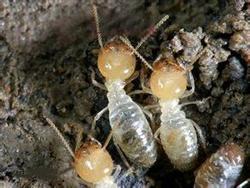
Detailed Explanation of the Harm Caused by Sugarcane Termites and Control Methods
The main sugarcane termites are Odontotermes formosanus and Macrotermes barneyi. Sugarcane is subject to termite damage throughout its entire growth period, with the most severe damage occurring during the germination stage after planting. When attacking seed cane, they mostly invade through the cut ends at both sides, boring into and feeding on the internal tissues of the stem, preventing the seed pieces from sprouting. In the mid-to-late stages, they bore in through the underground cane stem, causing the interior of the stem to become hollow, leaves to turn yellow or tips to dry out, and the entire plant to wither and die.
-
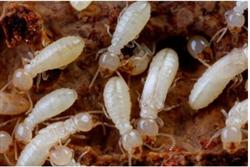
Control methods for pineapple stem borers and termites
How to control stem borers and termites in pineapple? Please give some advice. For pineapple stem borers and termites, you can refer to the following control methods: When rice straw or wheat straw is used as mulch in pineapple plantations, stem borers often cause damage, biting and eating the heart leaves and young stems of pineapple. You can spray a 500-800 times diluted dimethoate solution for control. Termites near...
条件筛选