-

How to control rice false smut? Detailed explanation of its occurrence characteristics and control techniques
I. Occurrence characteristics. Rice false smut occurs only on the panicle, generally from the flowering stage to the milk-ripe stage of rice. In infected grains, the pathogen grows inside the glumes, forming false smut about 1 cm in diameter that replaces the grain. The optimum temperature for the germination and development of the rice false smut pathogen is 25-30°C; above 34°C or below 12...
-

Grafting and Cutting Propagation Techniques and Overwintering Management Tips for Golden False Acacia
The golden false acacia (Robinia pseudoacacia 'Frisia') has an umbrella-shaped crown. Its leaves are golden yellow in spring, turning yellow-green in summer and yellow-orange in autumn. In early summer it bears fragrant white flowers in pendulous racemes. It is a tree species with very high ornamental value.
-

What are the maintenance and care precautions for the false aralia?
1. Provide appropriate shade in summer and plenty of sun in autumn and winter; the suitable temperature is 20°C-29°C. In winter the temperature should not fall below 5°C. 2. When the temperature reaches above 30°C, pause fertilizing. When it drops to 10-13°C, stop all forms of topdressing. When its leaves show physiological yellowing
-
What causes the false aralia to drop its leaves?
First, the temperature fluctuates too much. Its optimal growing temperature is 20-25°C, and in winter the temperature should preferably not drop below 3-10°C: if the temperature changes greatly within a short period, it will cause a large number of leaves to fall. Therefore, once it is growing steadily in a spot indoors, generally do not move it around casually: second, the potting soil is too dry
-
A Detailed Guide to Making a False Asparagus Bonsai
1. Tree form: The false asparagus (Asparagus densiflorus 'Myersii') comes in many tree forms, including the straight-trunk style, slanting-trunk style, curved-trunk style and cliff style, each with its own character. The straight-trunk style is sturdy, upright and rustic; the slanting-trunk style is vigorous and powerful; the curved-trunk style twists and winds like a coiled dragon; the cliff style resembles a steep mountain with a dragon's head peering out. 2. Choosing a pot: The specific shape of the pot is not fixed
-
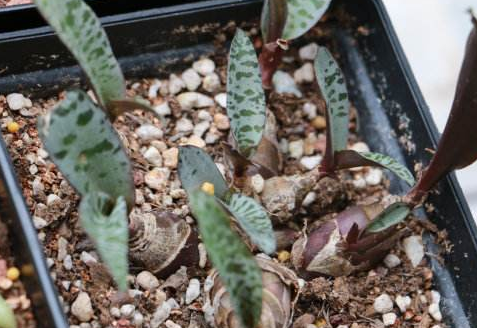
What are the propagation methods for the African false hosta (Ledebouria petiolata)?
Division For African false hosta (Ledebouria petiolata), division can be done at any time except winter; usually the plant is separated at the bulb, the old and withered leaves are trimmed off, and the divisions are planted elsewhere. Sowing African false hosta (Ledebouria petiolata) can be done in spring, summer and autumn; generally a soft brush is used to help with pollination, and once the seeds are ripe they are harvested and grown in a seedbed, with a moderate amount of thin fertilizer applied during the growing period.
-
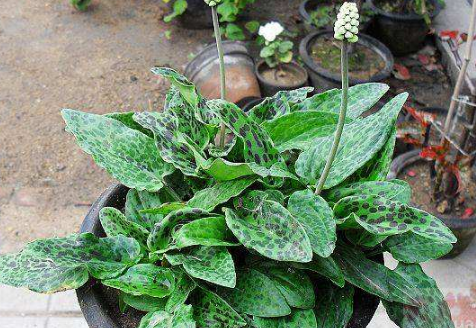
How to Grow and Care for the African False Hosta (Ledebouria kirkii)
1. Light The African False Hosta loves light, and its growth is closely tied to how much light it receives. Plants grown in ample light stay adorably compact and short, while a lack of light makes them leggy and hurts their ornamental value. If you notice new leaves coming in wider and larger than the old ones, with paler color, that is a sign the plant needs a lot more light.
-

Key Cultivation Techniques and Field Management Methods for False Daisy
Cultivation Techniques for False Daisy
-
What to do about false rooting in rose cuttings? Teach you effective prevention methods
Autumn is a great time for softwood cuttings of roses. At present, cuttings are still the main method of propagating roses. It can not only maintain the characteristics of superior rose varieties, but also has a high propagation coefficient, a short production cycle, low input and quick results, and is still adopted by many flower growers. However, in the process of rose cuttings, "false rooting" often occurs due to lack of experience or improper methods. That is to say, 5-10 days after the rose is cut, the axillary buds on the cutting have already sprouted or produced shoots and leaves, and it looks as if it has taken root, but soon it wilts and dies. To avoid rose cut
-
How to distinguish true from false before introducing fragrant flower locust?
Nursery stock identification methods Currently the fake and inferior fragrant flower locust nursery stock sold on the market generally falls into the following four types: (1) Red flower black locust substituted for fragrant flower locust. The red flower black locust and the fragrant flower locust both have papilionaceous purplish-red corollas; the red flower black locust blooms once a year, bears pods, and is grafted using black locust as rootstock. The fragrant flower locust blooms twice a year, does not bear pods, and is propagated from root segments. (2) Aged root stock. Perennial fragrant flower locust root stock, due to aging, has an extremely low germination rate. According to trial plantings, fragrant flower locust root stock over two years old is not suitable for use as planting material, and even less should it be sold on the market
条件筛选