How to Grow and Care for the African False Hosta (Ledebouria kirkii)
1. Light
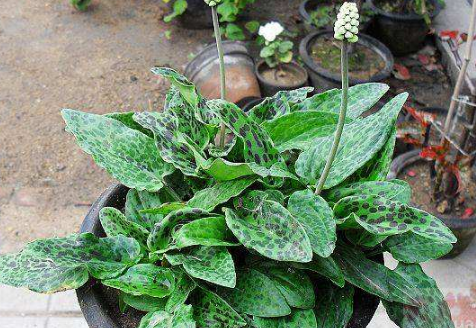
The African False Hosta loves light, and its growth is closely tied to how much light it receives. Plants grown in ample light stay adorably compact and short, while a lack of light makes them leggy and hurts their ornamental value. If you notice new leaves coming in wider and larger than the old ones, with paler color, that is a sign the plant needs a lot more light.
2. Temperature
The ideal growing temperature for the African False Hosta is 20-30°C. Below 10°C the plant stops growing, so keep it warm in winter.
3. Water
The African False Hosta grows from a bulbous root, so when watering, just keep the soil moist and never let water stand in the pot. In the high heat of summer, water once every two days. If the leaves droop and lose their color, it is time to water properly.
4. Choosing a Container
Grow the African False Hosta in a wide, shallow pot. As it grows it puts out many side shoots, which crowd the plant, block light and cause leggy growth, so divide it regularly as well.
How to Grow the African False Hosta and Points to Note
Chinese scientific name: Youdian Baihe (African False Hosta)Latin scientific name: Drimiopsis kirkiiAlso known as: Baowen Hongbao (Leopard-spotted Red Treasure)Kingdom: PlantaeFamily: LiliaceaeDistribution: South AfricaThe African False Hosta is a perennial herbaceous plant in the family Liliaceae, native to South Africa. It grows about 10-15 cm tall, with a thick, purplish-red stem shaped like a wine bottle. At the top of the stem sit 3-5 fleshy leaves, silvery-green with irregular spots and purplish-red undersides. It blooms in spring and summer with panicles of small green flowers about 0.3 cm across, each with 6 petals joined at the base into a bell shape and purplish-red stamens.1. Morphological Characteristics
Baowen Hongbao - Cultivating the African False HostaScientific name: Drimiopsis kirkii
Family: Liliaceae
Plant characteristics: perennial herbaceous plant, about 5-30 cm tall. Leaves: lanceolate, fleshy, sharply pointed at the tip, grayish-green on the surface and scattered with dark green, oil-stain-like spots. Flowers: slender stalks, each bearing dozens of small white flowers at the tip.
Uses: suitable for beautifying shaded garden spots or for growing in pots.
[African False Hosta] What Is the African False Hosta Like_An Introduction to Growing It!
The African False Hosta looks completely different from a lily. Its leaves are covered in irregular spots of all sizes, and it has purplish-red bulbs, making it highly ornamental. How to grow the African False Hosta is a question many flower lovers care about. This article gives you a thorough introduction to growing the African False Hosta, so don't miss it!
The Appearance of the African False Hosta
Native to South Africa, it is a perennial herbaceous plant with deep green leaves marked by rain-drop, oil-stain-like patterns. Its plump, short bulbous rhizome is slightly red and shaped like a wine bottle, giving it a cute look. Spring and summer are its flowering season, when it opens mini green flowers about 0.3 cm across; the tiny blooms are nothing much to look at, and it is the thick, patterned leaves and bulbous rhizome that are the real ornamental highlight. Varieties include long-leaved, small-leaved and spoon-leaved forms. In winter it goes dormant and its leaves wither.
Planting the African False Hosta
A newly purchased African False Hosta needs strictly controlled watering to prevent leggy stems and leaves or root rot. Especially after flowering, keep the potting soil slightly moist, and mist the leaves when the air is dry. When new leaves sprout, you can apply one dose of diluted cake fertilizer water.
The African False Hosta likes light, but should not be exposed to direct sunlight. With enough light, the leaves are a healthy deep green and the patterns are clearly visible; in weak light the plant grows soft and leggy, the leaves become narrow and long, and the leaf color and patterns fade and dull, in severe cases even causing the plant to topple and the leaves to drop. In everyday care, watch the new leaves as they emerge: if they are wider and paler than the old leaves, that means there is not enough light. As for water, since it tolerates drought and fears dampness, just water once the soil has dried out completely.
How to Grow the African False Hosta: Propagation Tips
The African False Hosta can be propagated in several ways: by division, leaf cuttings and seed. Division and leaf cuttings are the most convenient. When dividing, bury the roots in the soil but leave the bulb exposed above the surface; for leaf cuttings, cut the leaves into 3 cm sections to use as cuttings, and keep the medium from becoming too wet or waterlogged. Apart from winter, propagation can be done in any season.
African False Hosta Knowledge Link Q1: Can the fleshy African False Hosta be grown indoors?
The most common form of the African False Hosta at flower markets is a small 3-inch urn planter; its patterned leaves and plump bulbs make it very appealing. Growing the African False Hosta requires plenty of light: with enough light the plant stays short, sturdy and compact; without enough light it grows leggy, stretching out its overall shape and losing its ornamental value. If you want to place it in a bright spot indoors, it can grow, but it really will not thrive. It is better to put it outdoors in a spot with ample light so you can grow an African False Hosta with vivid, glossy leaves; just move it indoors for 2-3 days of viewing now and then.
Q2: How do you choose an African False Hosta when buying?
When choosing an African False Hosta, look for a potted plant with a short, sturdy habit and dense foliage; the leaves should be broadly lanceolate, pale silvery-green on the surface with dark green spots. The flower stalks should be upright, with the tops covered in small bell-shaped flowers in pale purple-green. For seedlings, the bulbs should be plump and full, with a purple, fresh outer skin.