-

Almond Variety Selection and Management Characteristics Explained (Part 2)
As a nut-producing fruit tree, the almond differs somewhat from other peach varieties in cultivation. 1. Site selection. Almonds have strong adaptability and a long lifespan, and can be planted on hillsides, slopes, around the home, and in courtyards, but the following points should be noted: (1) Almonds bloom early, so mid-mountain areas and open ground where late frosts are unlikely to occur should be chosen; (2) Almonds are light-loving, so sunny slopes or shady slopes with a small gradient should be chosen; (3) Almonds are not tolerant of waterlogging, so well-drained plots should be chosen. 2. Planting. In autumn, plant after leaf fall and before the ground freezes
-
What to Do About Retained Placenta in Sheep? Key Points of Prevention and Treatment Explained
I. Prevention The main preventive method is to strengthen the feeding and management of pregnant sheep: feed formulation should follow the principle of not making pregnant sheep overweight; a proper amount of exercise must be ensured every day. II. Treatment Within 14 hours after birth, one may wait for it to shed on its own. If more than 14 hours have passed, appropriate measures must be taken, because by then the placenta has begun to rot, and if it remains in the uterus it can cause severe inflammation of the uterine mucosa, leading to temporary or permanent infertility, and sometimes even septicemia. Therefore, when more than 14 hours have passed, the following methods should be adopted as early as possible
-
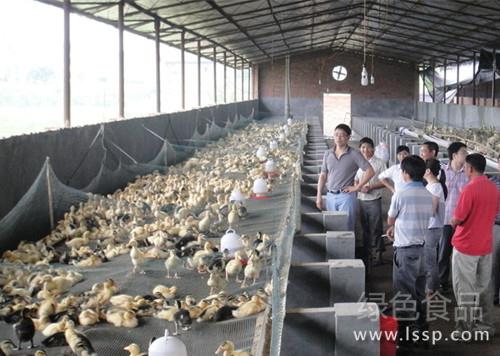
Raising Ducks in Confinement Can Save Labor: Key Management Techniques Explained
Raising Ducks in Confinement Can Save Labor: Key Management Techniques for Confined Ducks
-
How to Prevent Bud Drop in Phalaenopsis Orchids? Practical Methods Explained
To prevent bud drop in Phalaenopsis orchids, pay attention to the following points: The indoor temperature must be suitable. From autumn and winter, when Phalaenopsis orchids go from bud formation to blooming, the temperature generally needs to be above 5°C. If the temperature is too low, it easily causes yellowing leaves or bud drop. Reasonable pot soil moisture. When Phalaenopsis orchids are forming buds and growing flower buds, only keep the soil slightly moist; avoid watering too much or too frequently, as overly wet pot soil easily causes bud drop. The ambient air humidity can be higher; when the temperature is high at noon, sprinkle some water on the ground. Fertilization must be sufficient. Every time a Phalaenopsis orchid blooms, it needs a large amount of fertilizer
-
What does the anestrus period in dogs mean? Explained in one article
The anestrus period is also called the anestrous phase. This period is counted from the time the female dog is weaned; if she is not pregnant, it is counted from the 60-day metestrus period. The anestrus period lasts 90-140 days, with an average of 130 days. The clinical signs are the same as usual; behavior, posture, and body appearance are all normal. The egg cells in the body develop slowly, the endometrium begins to proliferate slightly, estrogen increases slightly, there are foam cells and various white blood cells in the vagina, and the vaginal epithelium is thin, with only 2-8 layers.
-
Key Points and Operation Methods of Goji Berry Pruning Techniques Explained
I. Pruning during the young stage 1. Trunk-establishing pruning: Before the seedlings sprout, cut off the sprouts below 40 cm (branching zone) on the main trunk base stem, and cut the top at a plant height of 60 cm to 70 cm. 2. Summer pruning: From late April to late July, at intervals of 15 days, cut off the sprouting shoots within the branching zone of the main trunk, and cut back the lateral branches retained on the branching zone at 20 cm to 25 cm to promote the sprouting of secondary fruiting branches; among the vigorous branches growing upward from the lateral branches, select and retain 2 to 3 branches growing in different directions from the main branch, and cut them at 30 cm
-
How to Mix Fish Feed? Nine Practical Formulas Explained
1. Suitable for grass carp or silver carp and bighead carp: rice straw powder 70%, soybean cake 15%, cottonseed cake 10%, cornmeal 5%, plus bone meal 1%, salt 0.5%, and an appropriate amount of vitamins. 2. Suitable for cage-cultured grass carp: soybean straw or peanut vine 60%, soybean cake 15%, rapeseed cake (or cottonseed cake) 10%, cornmeal 10%, fish meal 5%, plus clam shell powder (or bone meal) 1%, salt 0.5%. 3. Suitable for grass carp: green grass powder (or peanut vine, sweet potato vine) 45%, soybean cake 15
-
How to Mix Fish Feed? Nine Practical Formulas Explained
1. Suitable for grass carp or silver carp and bighead carp: rice straw powder 70%, soybean cake 15%, cottonseed cake 10%, cornmeal 5%, plus bone meal 1%, salt 0.5%, and an appropriate amount of vitamins. 2. Suitable for cage-cultured grass carp: soybean stalks or peanut vines 60%, soybean cake 15%, rapeseed cake (or cottonseed cake) 10%, cornmeal 10%, fish meal 5%, plus clam shell powder (or bone meal) 1%, salt 0.5%. 3. Suitable for grass carp: dried green grass powder (or peanut vines, sweet potato vines) 45%, soybean cake 15%, rice bran 15%, wheat bran 10%
-
A detailed explanation of the processing flow of Xizi Liren tea, explained in one article
Xizi Liren tea is produced in the area of the eastern slope of Dongbai Mountain in the southeast and the Longmen Mountain range in the western mountainous area of Zhuji City, the hometown of Xishi. The main peak of Dongbai Mountain, Taibai Peak, and the main peak of Longmen Mountain, Sanjie Peak, both have elevations higher than 1000 m. Here, mountains surround the area, peaks rise one after another, appearing and disappearing in undulation, with lush trees, year-round shrouding clouds and mist, and ever-flowing clear waters. The entire climate environment forms the high-mountain wonder of "fog everywhere in the morning and evening on clear days, clouds all over the mountain on rainy days." Tea trees grow for a long time under diffused light and are nourished by rain and dew, so the buds and leaves are plump and tender and rich in internal substances, which lays a good material foundation for the unique quality of Xizi Liren tea.
-
What Is Dog Ear Cropping? Methods and Precautions Explained
For some dogs, ear cropping surgery must be performed to make them look more majestic or better-looking, such as Doberman Pinschers, Great Danes, Pit Bulls, and other dogs. In fact, for some breeds, ear cropping, like tail docking, is a traditional custom; without ear cropping, inexperienced people will think the dog is not purebred. Ear cropping is the removal of the drooping part of the dog's ear so that the ear stands erect, making it more full of dignity and charm. When cropping a dog's ears, it is best to do it at 2 months of age, and the cropping varies according to the breed. The width of the dog's face, the length of the head
条件筛选