-

What to Do About Mushroom Spawn Degeneration? Causes and Countermeasures Explained
Causes of and Countermeasures for Mushroom Spawn Degeneration
-
How to Fertilize Edible Mushrooms? Practical Methods and Techniques Explained
How to fertilize edible mushrooms?
-
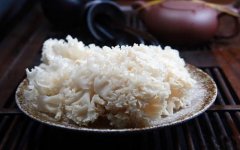
Differences Between Cauliflower Mushroom and Snow Fungus, Price Per Jin and Shelf Life Explained
The superoxide dismutase content in cauliflower mushroom ranks first among all edible fungi, earning it the title of King of Ten Thousand Mushrooms, so its price is relatively high, but artificially cultivated ones are much cheaper. How much is cauliflower mushroom per jin? Jinxiang County, Jining City, Shandong Province
-
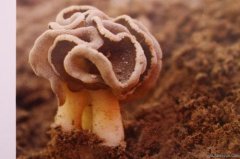
Differences Between Helvella and Morel Mushrooms, Prices and How to Eat Them Explained
How much do Helvella mushrooms cost? Helvella is a very rare type of mushroom, and the price is very high; dried Helvella generally sells on the market for 250 yuan to 500 yuan per jin. Many people mistake Helvella for morel mushrooms, so let's take a look at the differences between them.
-
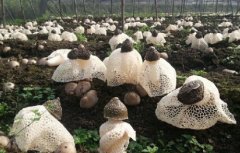
What Varieties of Bamboo Fungus Are There? Growth Environment and Premium Producing Areas Explained
There are many varieties of bamboo fungus, such as yellow-skirt, variegated, spiny-backed, long-skirt, short-skirt, red-skirt bamboo fungus, etc. Among them, the yellow-skirt bamboo fungus is toxic and cannot be eaten, otherwise food poisoning will occur. The biggest characteristic of the yellow-skirt bamboo fungus is that both the skirt and the stipe are yellow.
-
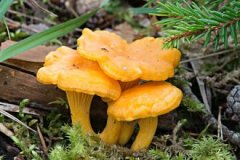
Are chanterelles poisonous? Toxicity level and price per jin explained
What kind of mushroom is the chanterelle? Some people say it is poisonous, so is it actually poisonous or not? It does have a certain level of toxicity, but at the same time it is also an edible mushroom, and people with itchy skin should avoid it. In the wild mushroom trading market, chanterelles currently cost 100 yuan per kilogram
-
How to Grow Brown Mushrooms for High Yield? Key Cultivation Techniques Explained
1. Cultivation season. Based on the biological characteristics of brown mushrooms, which fruit at temperatures ranging from 16°C to 32°C and begin fruiting 40 to 45 days after spawning, spring cultivation generally involves spawning in March to April with fruiting from May to July; summer cultivation involves spawning in June to July with fruiting from August to October. Each region should select the optimal cultivation season based on local climatic conditions. 2. Cultivation site. For field bed cultivation of brown mushrooms, a light-blocking, rain-proof shade structure must be built. The shed height is 2 to 2.2 m, with grass curtains or shade nets covering the roof and surrounding sides. Inside the shed, the beds are shaped into a turtle-back form, with a designed bed width of 60 to 8
-
What are the good methods for forcing oyster mushrooms to fruit? Explained clearly in one article
In oyster mushroom cultivation, some spawn bags fail to fruit after being fully colonized, or after the first flush is harvested, the second-flush primordia are slow to appear. In both of these cases, as long as the bags are colonizing normally and the spawn's temperature type is suitable, the following measures can all bring about successful fruiting. 1. Temperature difference stimulation: raise the temperature of the mushroom shed during the day and ventilate to cool it at night, artificially widening the temperature difference to stimulate fruiting. 2. Light stimulation: after the spawn bags are fully colonized, roll up the straw curtains of the mushroom shed every day and let sunlight shine in for a period (do not expose them to direct light when the light is intense). For trenches or mushroom houses where sunlight is inconvenient, artificial light can be used.
-
Key Processing Techniques and Practical Methods for Oyster Mushrooms Explained
Apart from a portion being sold fresh, oyster mushrooms can also be processed for storage; many methods are used for processing, among which the main ones are divided into two methods: drying and salting, briefly described as follows: 1. Drying method generally uses air-drying, sun-drying, oven-drying, etc. Sun-drying is an economical method that requires no equipment. They can also be air-dried or wind-dried. However, this method is limited by weather conditions. In production, the oven-drying method is commonly used: build a drying room, the heat source can be charcoal fire or coal briquettes, and for drying, refer to the form of a tobacco curing barn. There should be no smoke inside the room, and exhaust equipment is required. Initially, the temperature is controlled at around 35°C
-
Key Points and Methods of Edible Mushroom Strain Preservation Explained in Detail
Strains are a major biological resource and the primary means of production in edible mushroom cultivation. After a superior strain has been selected and bred, its excellent traits must be kept unchanged, or changed as little and as slowly as possible, so that production performance is not reduced and it can be used in production over the long term. Therefore, strain preservation is of great significance in edible mushroom production. I. Principles of strain preservation There are many methods of strain preservation, but the principles are much the same. First, select excellent pure strains. Use the spores, spore bodies and vegetative forms of microorganisms; second, according to their physiological and biochemical properties,
条件筛选