-
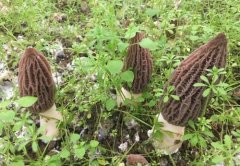
Morel Cultivation Techniques Explained: Growing Methods and Growing Conditions
What benefits do morels have? Why do so many people grow morels? And how do you grow morels? Want to know? Let's find out together. According to tests, every 100 grams of morels contains 28.1 grams of crude protein and 4.4 grams of crude fat, along with as many as 20 amino acids
-

How to Ensure Full Seedling Emergence in Summer-Sown Sesame? Key Technical Points Explained
Ensuring full seedling emergence from a single sowing of summer sesame is an important measure for increasing summer sesame yields per unit area. However, during the summer sesame sowing period, temperatures are high and the weather is changeable. If drought occurs, seedlings are easily "baked to death," causing severe gaps in the stand; if heavy rain occurs, seedlings are easily "smothered to death," also causing gaps in the stand. It is recommended to use the double-layer sowing method to achieve full seedling emergence from a single sowing of summer sesame. For mechanized sowing, sow 0.7 kg per mu using a 24-row seeder, of which 12 rows sow at a deep layer with a depth of 3-4 cm, and the other 12 rows sow at a shallow layer with a depth of 0.2 cm, with two passes of compaction before and after sowing. For manual sowing, first
-
Tulip Propagation Methods and Cultivation Techniques Explained in Detail
Tulips are also called "dry lotus" and are world-famous bulbous flowers. The flower stems are stiff and upright, holding the blooms high above, with neat flower shapes, rich and lustrous colors, beautiful and elegant. They can be planted in the ground, in pots, or used as cut flowers, with extremely high ornamental value. I. Propagation Techniques 1. Bulblet propagation. Tulips renew every year, drying up after flowering, and beside them a new bulb and several bulblets are produced. The number of bulblets varies by variety; early-flowering varieties produce few bulblets, while late-flowering varieties produce many. The number of bulblets is also related to cultivation conditions. Generally, 9-
-
Two Methods for Processing Fresh Peach Flavor Explained in Detail
The process flow for canned peach jam is: material selection → processing → grinding → blending → softening and concentration → canning → sterilization. 1. Raw material selection: Choose fully ripe peaches with relatively high acid content and a strong aroma as raw materials. 2. Raw material processing: Remove diseased, insect-damaged, and rotten fruits from the raw materials. Wash the good peaches in 0.5% alum water to remove fuzz, then rinse clean with clear water, cut in half, peel, and remove the pits. 3. Grinding: Grind the trimmed and washed peach pieces with a meat grinder with a plate hole diameter of 8-10 mm.
-
Eight Measures for Safe Rice Seed Use Explained in Detail
1. Select varieties rationally. Rice blast is the main disease affecting harvest, and the resistance differences among varieties are very obvious; choosing varieties with strong resistance is one of the most effective preventive measures. In old rice blast areas and shaded cold-waterlogged fields, first, when purchasing seeds, carefully understand the resistance of the variety; second, new varieties should only be promoted after small-scale trial planting; third, use imported Fuji No. 1 for prevention at the early stage of disease onset and during the booting and heading stages. In mountainous areas with high humidity, for hybrid late rice it is not advisable to choose two-line hybrid late rice combinations, to prevent damage from rice false smut.
-
How to prevent and treat common diseases of broodstock? Explained clearly in one article
1. Vibriosis. The pathogen is Vibrio alginolyticus. When fish are affected, they move sluggishly, frequently swim to the surface, and reduce or stop feeding; the ends of the caudal, pelvic and dorsal fins become congested and inflamed, the tissue between the fin rays gradually breaks apart, and in severe cases the fin rays rot; the eyes bulge outward, and the body surface of diseased fish shows ulcerative lesions in variable locations, which in severe cases rot into a deep hole with exposed bone; Vibrio can be isolated from the blood and internal organs, and the mortality rate is relatively high. Prevention and treatment methods: 1) Immunize the fish with a vaccine. 2) Medicated immersion, usually with 100 ppm
-
How to Grow Potatoes? Key Cultivation Techniques Explained in One Article
1. Pre-planting preparation: In mid-February, prepare seed potatoes, pesticides, chemical fertilizers, agricultural film and other farming supplies. Take the seed potatoes out of the cellar and place them indoors at about 12°C to sprout. 2. Cut the seed potatoes: Make sure each piece of seed potato has at least 1-2 eyes and weighs about 30 grams. Treat the cut seed potato pieces with a seed dressing. The powder formula is: add 250 grams of 70% thiophanate-methyl wettable powder to 50 kg of fossil powder. 3. Sow early at the right time: Generally sow from March 5 to 15, with a row spacing of 90 cm and a plant
-
How to improve the body color of adult eels? A practical farming method explained
The body color of eels plays a decisive role in sales. Raising eels with good body color is the eager hope of all farmers and a subject that many feed manufacturers have been exploring. To solve the eel body color problem, you must first understand the causes of eel body color and the factors that affect it. The production of eel body color: eel body color is mainly the result of the combined action of multiple factors such as carotenoids, melanin, pterins and guanine. Factors affecting eel body color: 1. In feed
-
Reindeer Raising Methods and Technical Key Points Explained
Reindeer (Kangifertarandus) belong to the order Artiodactyla, family Cervidae, and are animals native to the Arctic and subarctic regions. In our country, reindeer mainly inhabit the dense forests on the northwestern slope of the Greater Khingan Mountains, with an activity range in the area of 120°15′ to 123°35′ east longitude and 51°15′ to 53°15′ north latitude, and they have strong cold resistance. Reindeer have high economic value; their velvet antlers, hides, meat, and milk can all be utilized, and because of their peculiar appearance and docility, they also have high ornamental value in zoos. Reindeer at Harbin Zoo
-
What are the propagation methods for Panax notoginseng? Explained in one article
Seed propagation is mainly done by raising seedlings and then transplanting them. 1. Seed treatment: generally select seeds set by robust, pest- and disease-free 3-year-old plants. When the fruit ripens in November to December, harvest it, wash off the flesh, and sow promptly, because after the seeds are stored for one week the germination rate drops greatly. Before sowing, disinfect the seeds with 0.2-0.3 degrees Baume lime-sulfur solution for 10 min, or with 200-300 times zineb for 15 min, then sow.
条件筛选