-

Can You Still Eat Ginger After It Sprouts? Everything Explained Clearly
Can you eat sprouted ginger? Will it cause poisoning? We ask knowledgeable readers to help explain. In daily life, ginger bought from the store often sprouts before it can be used, and many readers have raised the question: can sprouted ginger still be eaten? Therefore, Zhongdi Network has compiled information on sprouted ginger, and below is a detailed explanation of whether ginger can still be eaten after it sprouts...
-

What does virus-free potato mean? This article explains it in detail for you
What is a virus-free potato? What characteristics do virus-free potatoes have? We also ask knowledgeable readers to help explain. Zhongdi Web has compiled the disadvantages of non-virus-free potatoes and the advantages of virus-free potatoes. The following is a detailed list for readers' reference. Disadvantages of non-virus-free potatoes: Potatoes are rich in nutrients and have a short growth period...
-

How to Force Oyster Mushrooms to Fruit? Key Cultivation Techniques Explained
Oyster mushrooms are not fruiting at all now. How do you force oyster mushrooms to fruit? I hope fellow growers can give some guidance. In oyster mushroom cultivation, some bags fail to fruit after the mycelium has fully colonized, or after the first flush is picked, the second-flush primordia are slow to appear. In both of these situations, as long as the bags have colonized normally and the strain's temperature type is suitable, the following methods can be used...
-

How to Grow Lotus Root for High Yield? Key Growing Techniques Explained
How can lotus root be grown for high yield? We hope experienced readers will share their advice. Zhongdi Web has summarized the key points for achieving high yield in lotus root cultivation, listed below for readers' reference. Point 1: Choose high-quality lotus root planting stock: you can use a mid-season variety such as the large purple-red lotus root, whose main rhizome has 4-5 nodes. Point 2: Disinfect the...
-

How to manage mint cultivation? Key technical points and methods explained
How to manage mint well? Please explain in detail. 1. Mint management methods. 1. Mint seedling preparation: After transplanting in early April, when the seedlings are 10 cm tall, fill in gaps, keeping plant spacing at about 15 cm, that is, leaving 20,000 to 30,000 plants per mu. 2. Cultivation and weeding: Carry out cultivation and weeding 3 times between March and April. Because mint...
-

How to manage cassava planting well? Key technical points explained in detail
How to manage cassava planting well? Please give guidance. To grow cassava, you can refer to the following methods for management: In the early growth stage of cassava, pay attention to trapping and killing pests, deep middle plowing with light hilling, applying fertilizer for strong seedlings, and replanting missing plants. In the middle growth stage of cassava, the stems and leaves grow rapidly and the tuberous roots begin to form. Field management includes the following four techniques, ...
-
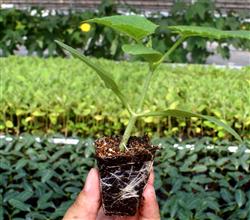
How to manage grafted cucumber seedlings? Key technical points explained in detail
How to manage grafted cucumber seedlings? Is there anything to watch out for? Experienced gardeners, please help guide us. The survival rate of grafted seedlings is very closely related to the management techniques after grafting. Zhongdiwang has compiled the management methods for grafted cucumber seedlings, listed below for gardeners' reference. 1. Cucumber gra...
-

What are the pest and disease control methods for peach trees? Explained in one article
What are the pest and disease control methods for peach trees? When should which pests and diseases be controlled on peach trees? We ask experienced netizens to help explain. Peach trees are easy to grow, but their resistance to pests and diseases is weak, and they are most susceptible to damage from aphids, red spider mites, longhorn beetles, and are also prone to brown spot disease, leaf curl disease, gummosis of the trunk, etc. Therefore, Zhongdiwang has compiled...
-

What kind of fertilizer is eucalyptus-specific fertilizer? Explained clearly in one article
What is eucalyptus-specific fertilizer? An introduction to the differences. Eucalyptus-specific fertilizer, or eucalyptus fertilizer for short, is mainly designed for the rapid growth of eucalyptus, the fast nutrient cycling within the stand, and the high demand for soil nutrients, and is further formulated based on the fact that soils in southern China commonly lack trace elements such as boron and zinc. The difference between eucalyptus fertilizer and ordinary compound fertilizer lies in...
-
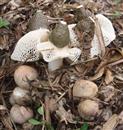
How to Grow Dictyophora indusiata (Bamboo Fungus) with Standardized Cultivation? Key Technical Points Explained
How do you grow bamboo fungus with standardized methods? What should you pay attention to? We also ask experienced growers to kindly share their know-how on standardized bamboo fungus cultivation techniques. Zhongdi Web gives a detailed introduction below for growers' reference. 1. Environmental requirements for bamboo fungus: Nutritional requirements of bamboo fungus: bamboo fungus is a nitrogen-loving fungus, and nitrogen is the raw material necessary for bamboo fungus to synthesize proteins and nucleic acids. If the nitrogen level is too low, the mycelium will not grow thick and strong, and yields will be low. Generally, bamboo powder and sawdust are deficient in nitrogen sources. When building piles for fermentation, add urea to the substrate, and apply additional urea to the cultivation site to increase nutrients in the cultivation site, promote thick and vigorous mycelial growth, and raise yields.
条件筛选